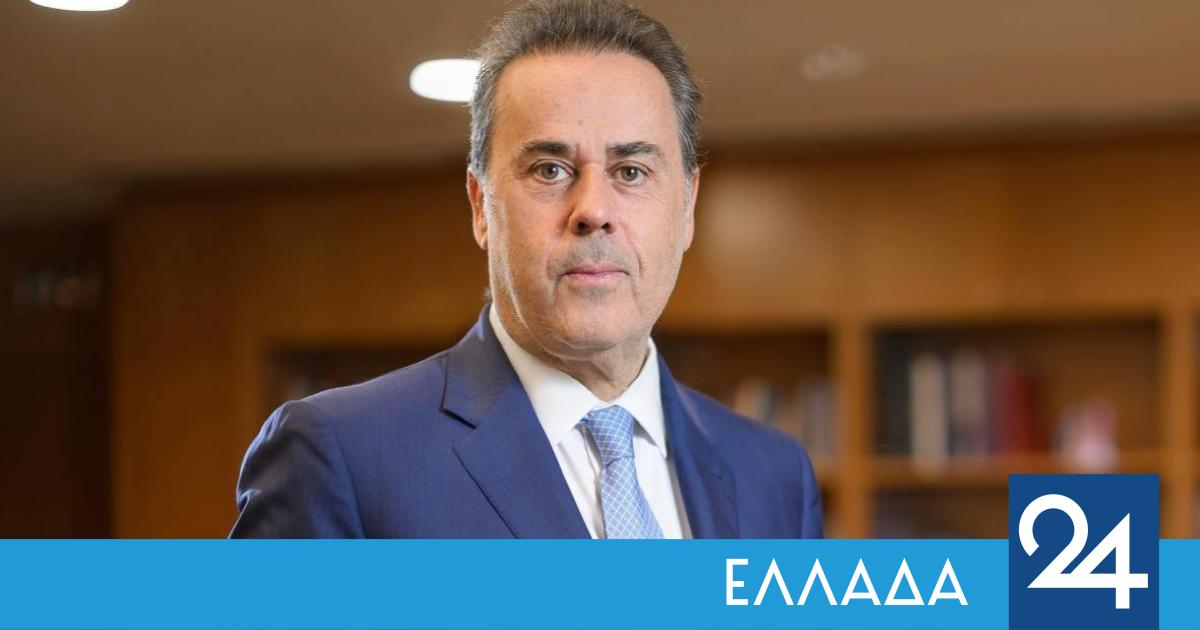
The government’s strategy for the formation of a new model of sustainable development, with spatial planning, environmental protection and energy transition at the forefront, Minister of Environment and Energy Stavros Papastavrou told RES-MPE. As he stressed, Greece “for the first time acquires a coherent, holistic framework for spatial planning”, which attempts to put an end to fragmentation and arbitrariness by setting clear rules for the development of tourism, renewable energy and industry.
The Minister stressed that the Government is promoting the three key Special Spatial Plans in parallel, while placing particular emphasis on the protection of the natural environment, with restrictions on the installation of energy projects in forests, Natura areas and national parks. At the same time, it highlights the importance of energy security for the country’s geopolitical stability, noting that now more than 50% of electricity comes from renewable energy sources. Papastavrou also referred to the Special Environmental Studies for Natura 2000 protected areas, the National Marine Parks and the Antinero programme, referring to a comprehensive reform that links development with sustainability and social cohesion. In fact, he made a special reference to the strengthening of the Greek-French axis, with the creation of a group for the protection of the seas, following an announcement at the EU Council of Ministers in Paris.
In particular, Mr. Papastavrou stressed: “Greece has been changing in recent years – and changing with a plan. For the first time, our country is acquiring a coherent, holistic spatial planning framework that responds to the needs of today, preparing our country for tomorrow.” As he said: “For the government of Kyriakos Mitsotakis, bringing order to space is a profound political choice. By setting rules, we prevent arbitrariness, help the many, promote transparency, efficiency and equality. Spatial planning shows how we decide how to live, how to develop, how to protect our land and how to ensure that we leave future generations a better Greece than the one we inherited.
New development model with three new Special Spatial Plans
It is recalled that the Ministry of Environment and Energy is simultaneously proceeding with the adoption of three key Special Spatial Planning Frameworks: The other day we presented the NSP for Tourism, last week the NSP for Renewable Energy was put to public consultation and soon to follow, the NSP for Industry.
According to Papastavrou: “These plans work in a complementary way, shaping a new model of development where economic progress coexists with environmental protection and social cohesion.
For example, in tourism it is stipulated that the first 25 metres from the coastline are put under full protection. No construction, no landscaping. Only utilities are allowed, such as access for disabled people and ambulances.”
As for the new Spatial Plan for Renewable Energy which was put to public consultation last week, the Minister of Environment pointed out: “In the energy sector, Greece has already made leaps and bounds. Today, more than 50% of the electricity we consume comes from Renewable Energy Sources, and by 2024 our country has become a net exporter of electricity. This is an environmental success, at the same time as a matter of national power. Energy security is now a prerequisite for national independence and geopolitical stability.
The new Special Spatial Framework for Renewable Energy Sources sets clear limits and guidelines. It provides for a ban on photovoltaic systems in forests, woodlands and Natura areas. It prohibits the installation of wind farms in areas above 1200 m altitude, national parks and landscapes of outstanding natural beauty. For the first time, specific suitability areas for the development of wind farms are defined.
.
Because the energy transition must respect nature and the local community. Only then can it be truly sustainable.”
He added that “we are taking steps on storage. On April 1, 32 MW came into the system, with two batteries. And we are moving fast: we are already at 210 MW, with an estimate to reach, by the end of the year, 700-800 MW.”
Environmental initiatives
According to Papastavrou: “For the Mitsotakis government, sustainable development, with respect to local communities and the environment, is a top priority. In line with this, our initiatives are moving on many levels. The minister noted that “last Thursday, two more Special Environmental Studies (SEEs) were approved for the Natura 2000 Network sites in Thessaloniki, Halkidiki, Preveza and Arta.”
The minister said that “last Thursday, two more Special Environmental Studies (SEEs) were approved for the Natura 2000 network sites in Thessaloniki, Halkidiki, Preveza and Arta.”
And goes on to say: “Since 2019, when the government of Kyriakos Mitsotakis took office, EAPs have been approved for an additional 247 Natura sites, which, together with the 75 EAPs approved until then, brings the total number of Natura sites protected to 322 (out of 446 in total) and now covers more than 75% of the total area of the Network in our country.”
In fact, as he made known, “within 2026 it is planned to complete the issuance of EIAs for the remaining 25%. Along with the completion of the institutionalization of the two large National Marine Parks, our country is becoming a pan-European leader in the protection of the marine environment.
“And we are not stopping there: last Wednesday I had a meeting in Paris with my French counterpart, Mrs Monique Barbut, with whom we agreed to strengthen the Greek-French axis by setting up a marine protection group within the framework of the EU Council of Ministers,” he said.
While speaking about the flood protection projects, Papastavrou stressed that: “we are strengthening Antinero, the most extensive prevention programme designed and implemented in our country for the protection of our forest ecosystems. Antinero was included in the European Commission’s ‘State of the Union’ report, published in September 2025 with the year’s achievements, as a flagship example of how EU investment is strengthening resilience to climate change, preparedness and protection of local communities.”
.
As the Minister of Environment and Energy concluded: “Greece needs growth. “Greece needs growth, but growth with a plan, rules and perspective. This is the great reform we are implementing today: to move from fragmentation and arbitrariness to organisation, sustainability and trust. For a Greece that plans its future with confidence, plan and responsibility.”