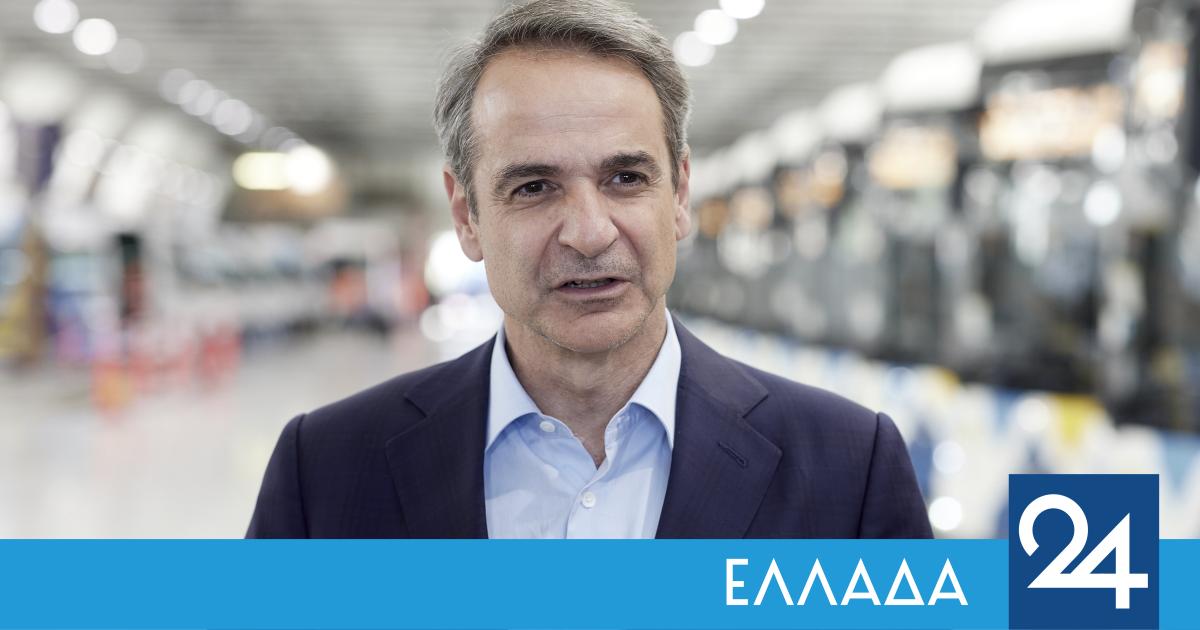
Prime Minister Kyriakos Mitsotakis made his usual Sunday post.
The entire post by Kyriakos Mitsotakis:
“Good morning! A Sunday without a review was enough to gather a lot of developments and several important issues. So today I’ll try to say as much as I can and as soon as possible.
I’m starting with the My Home II Program. As I told you two reviews ago, June 2, 2026 has been set as the deadline for contracting the loans so that not a single euro of Recovery Fund resources is lost. However, we heard concerns from citizens who have already been approved for the program but are experiencing delays in contracts, inspections or property transfers. That’s why we are now giving the opportunity to complete by the end of August the already approved applications, with funding from national resources through the Hellenic Development Bank. Simply put, those who have already entered the programme will not lose the opportunity to acquire their home due to procedural delays. In addition to the housing issue, I would like to say that the first 8 properties of DYPA in Peania, Larissa, Pyrgos and Kalamata have been “locked” and will be developed through social renting. From these it is estimated that about 400 new apartments will be created, of which about 130 will be made available to our vulnerable citizens.
Another social support programme, the “Personal Assistant”, is being strengthened ahead of its expansion from June, with a total budget of €55 million – €50 million per year and an additional €5 million for support projects. The pilot phase of the programme has shown in practice how important this service is for people with disabilities and their families, both at home and in their daily social and professional life. For many of our fellow citizens, the “Personal Assistant” means more autonomy, more freedom of movement and more meaningful participation in society. And that is exactly what is required.
To come to the public health sector, where we have already taken delivery of 28 refurbished emergency departments and 55 health centres to date, the latest this week being the two upgraded Emergency Departments in hospitals outside the basin, at “C. Gennimatas” in Thessaloniki and Naoussa General Hospital. Of course, the strengthening of the NHS is not only limited to building infrastructure and equipment, but also to personnel. Some of what we have done: the largest advertisement for permanent medical staff in the history of the NHS was issued a few days ago, 1,131 positions in one day.
In addition, NHS doctors have seen on their payslips the difference from the self-assessment tax on call-outs voted by our government, with the average annual tax relief being around 7.000 euros. This is a substantial increase in their disposable income, perhaps the largest in recent years. And very soon we are also tabling the provision for the inclusion of NHS and EHIC nursing staff in the heavy and unhealthy scheme, meeting a fair and long-standing demand.
More importantly, we have also decided to extend for another year the DYPA programme through which 500 paramedics were recruited last year in NHS hospitals. Their contribution has been essential in reducing delays in patient transfers and improving the functioning of Emergency Departments, particularly in hospitals under pressure. At the same time, this has meant that 500 of our unemployed fellow citizens, young people and many over 50 years of age who face difficulties in re-entering the labour market, have jobs.
.
One issue leads me to another and that brings me to the labour market and the extension of Collective Agreements in the Food and Confectionery sectors which affects more than 400,000 workers. The two new Contracts cover the three-year period 2026-2028 and, for those employed in the country’s tourism and food service establishments – which is the majority – pay increases up to almost 20% of the statutory minimum wage with increases in bonuses and allowances, while some 23.
An important aspect of the labour market, however, is its link to education. One way to build this connection is the “Post-apprenticeship year-apprenticeship class”, where for 2026-2027, the submission of applications from companies and private sector institutions started earlier than in any other year. Our goal is for more and more EPAL graduates to gain real work experience and meaningful career prospects in specializations that the economy and production need.
Mass transit is the next topic for today. And here I can say that something is finally starting to change in the image of public transport in Athens. In 2023, we committed to having over 1,000 new buses on the streets of the capital by the end of the four-year period. Today they have already reached 1,076. At the same time, the substantial upgrading of the old “Electric” is also starting and the first fully rebuilt train will be put into operation from next month, while 13 more will be added in the next year. I am obviously not claiming that all the problems were solved overnight. But it is the first time in many years that such a large and organized effort to renew the fleet and Athens’ public transport system as a whole is taking place.
I will change the subject and come to the solution we gave to a problem that was plaguing thousands of active farmers, mainly in Thessaly and Macedonia, but also in other regions. With an amendment tabled in Parliament, it is now possible for producers who cultivate land that appears in the Land Registry as the original property of the State and which until now has been excluded from subsidies to receive them. This is a chronic distortion that we are correcting on objective criteria, so that people who actually cultivate the land do not lose the aid to which they are entitled because of decades of bureaucratic red tape. In fact, the regulation is also retroactive for 2025 applications, provided that the relevant conditions are met. I make clear, however, that the regulation concerns only the payment of aid and does not change the property rights of the State or third parties.
I am going to continue with an important reform concerning how we organize the overall spatial development of our country: the simultaneous planning of the new Special Spatial Framework for Tourism, RES and Industry, which is being done for the first time in Greece. I will start with the new Spatial Plan for Tourism, which is already under consultation. The aim is to bring order and clear rules to tourism development, in order to protect the environment, local communities and the character of each region, without stopping the development of a sector that is a key pillar of our economy. The second of the Spatial Plans, the one for renewable energy, has also been put out to consultation, with new rules and restrictions for Natura sites, forests, small islands and tourist zones, so that the energy transition proceeds with greater balance and social consensus, and we will soon present the Spatial Plan for Industry, whose aim is for major development policies to operate in a coordinated rather than fragmented way, avoiding the contradictions of the past: land use conflicts, the absence of a plan and uncertainty.
And speaking of industry and strategic investments, a particularly important investment by Metlen, worth 340 million euros, was approved last week. EUR 340 million, enabling our country to produce gallium, a critical raw material for technologies such as semiconductors, defence systems, artificial intelligence and modern photovoltaics. And to put it in perspective, Greece will now be able to meet all of the European Union’s gallium needs.
Our philosophy around investment is to support interventions that not only address today, but strengthen our country’s position for years to come. In this direction, therefore, we have succeeded this week in achieving a particularly important goal: 100% utilisation of the loan component of the Recovery Fund. In simple terms, the EUR 17.7 billion that we have secured is now all going into the real economy and investments are being made that create growth and new jobs. With the completion of contracting by the credit institutions, total investment will exceed EUR 30 billion, with 60% of the participating companies being SMEs, absorbing EUR 5.6 billion. At the same time, through InvestEU, more than 15,000 SMEs received loans worth €3 billion.
.
In total, therefore, SMEs have been supported with almost €10 billion from the Recovery Fund, if the direct aid they have received is added. And we don’t stop there: access to cheap credit for SMEs will continue after the completion of the Recovery Fund, with an additional €2 billion through the Hellenic Development Bank, while for startups and fast-growing companies there are now 10 investment schemes that have already invested €220 million and counting. Greece is the only country that has fully utilized the CDF loans, directing them to private sector investment to create what we have been missing for years: investment.
Another review with something from the digital world and this time the news is that another transaction with the state is being digitized, the issuance of a criminal record which, until recently, took days and was done asynchronously. From now on, however, for 50% of citizens it is completed in just five minutes. Why not yet for everyone? Because in many cases additional data cross-checking or manual checking is required when there are discrepancies or different entries in the public registers. But where identification is done with complete certainty, the certificate is issued automatically and immediately.
It is another important step towards a faster state. But let us not forget that the state is not just about services and day-to-day transactions. It is also about protecting our history, identity and cultural heritage. We are therefore pleased to hand over to visitors the Palace of the Despots in the Castle Town of Mystras, the only Byzantine palace complex on European territory and a World Heritage Site of special importance for Laconia and the Peloponnese as a whole. I saw up close the impressive work that has been done. The sites have been highlighted and made universally accessible, new technologies and digital tools have been incorporated to enhance the visitor experience, while the new fire-fighting system better shields the monumental site. This is the 30th museum and cultural space to be opened to the public since the summer of 2019 to date. The exhibition “In the Light of the Courtyard: An Impression of a Glorious Enclosure”, hosted in the Throne Room at the Palace of the Despots and made possible thanks to the generous sponsorship of the Martinos couple. I suggest you visit them both!
Two more news items to report. The first is the reinforcement of Direct Action with 45 new patrol cars and 45 new motorcycles through a donation from the PPC Group, which will be used for visible policing patrols in the neighbourhoods of Attica where there are greater needs.
The second concerns the further strengthening of our Armed Forces. The GSC approved the upgrade of the MEKO frigates and the acquisition of two Italian frigates Bergamini (FREMM), which will significantly enhance the Navy’s capabilities in the coming years. At the same time, we are proceeding with the purchase of new crypto devices to enhance the confidentiality of the Armed Forces’ communications.
The week, however, requires me to end with sports. For the first time in two decades, financial support for sports federations reaches EUR 31.3 million. This year alone, €4.2 million more was allocated than last year, and the total funding is almost double the amount we received in 2019. Amateur sport needs constant support, a plan and a perspective, and that is what we are trying to put into practice.
.
One of the two things you’ll probably do today, you’ve already done: read the review. Now all that’s left is the Euroleague final, which brings the eyes of all of basketball Europe to our country this year. It is a great success for Greece that, after so many years, it is hosting this great competition again, with Olympiacos being present in the grand final. So, good luck to the reds. Have a good Sunday!