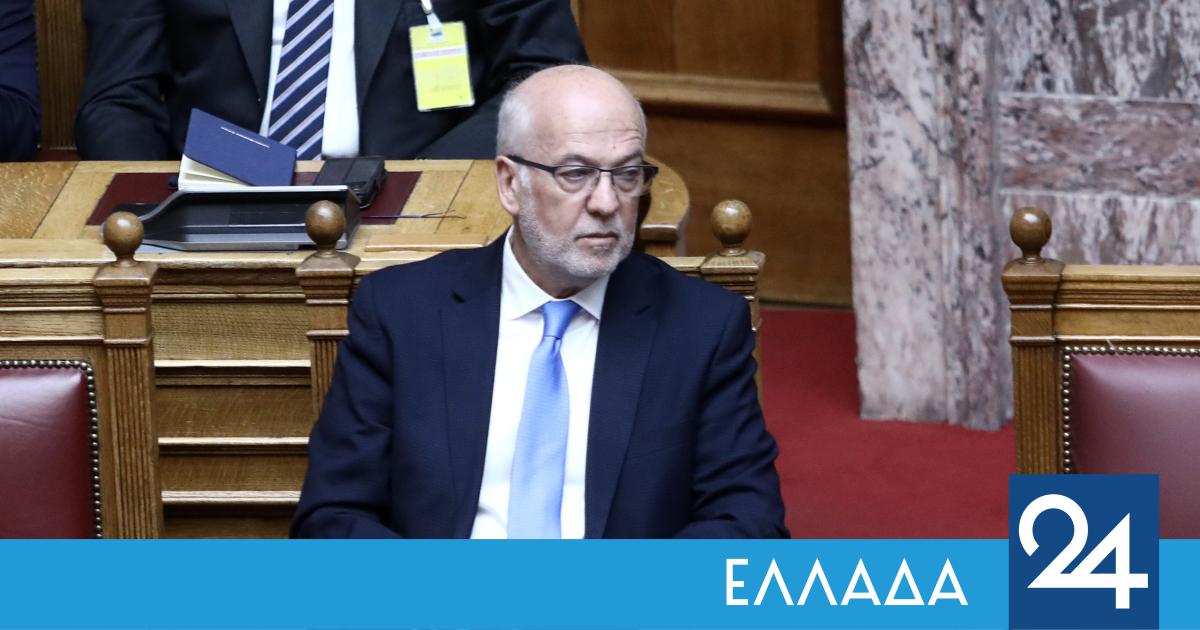
The Minister of Justice, G. Florides, in the context of the discussion of the bill for the reform of the Law of Succession, where the specific provision was included in the form of an amendment.
Referring, in fact, to the recent arrival of the European Public Prosecutor, L. Kovesi’s recent visit to Greece, her visit to the Ministry of Justice and her participation in the Delphi Forum, he conveyed “word for word” what she said at the conference: “I had this discussion with the Minister of Justice about the changes in legislation. I understood,” says Ms. Covesi, “that they want to do something to speed up the process. I really welcome that and I agree that we need to do something.”
Accordingly, said Mr. Florides, “when we are discussing here that we have taken an initiative which may limit the rights of European prosecutors, this obviously cannot be related to the truth.” He stressed, in fact, that he made “a legislative improvement so that there is no doubt, beyond the statements I have made here, that the founding law on the European Public Prosecutor’s Office that defines the investigative powers, which is certainly compatible with the regulation, is not undergoing any change whatsoever. The investigative rights that the European Public Prosecutor’s Office has, it continues to have. I would also like to remind you that investigators exist in all the cases handled by the European Public Prosecutor’s Office. I remind you of the 717 case. Does it not have an investigator there? There is an investigator. What are we talking about here? That simply, the investigator, because it concerns political cases, [. . . .] should be an experienced judge. He should be an appellate investigator. And he is appointed by the plenary. And if we talk about the plenary of the Athens Court of Appeal, it has 250-300 appellate judges… Consequently, the framework is this,” the Justice Minister said.