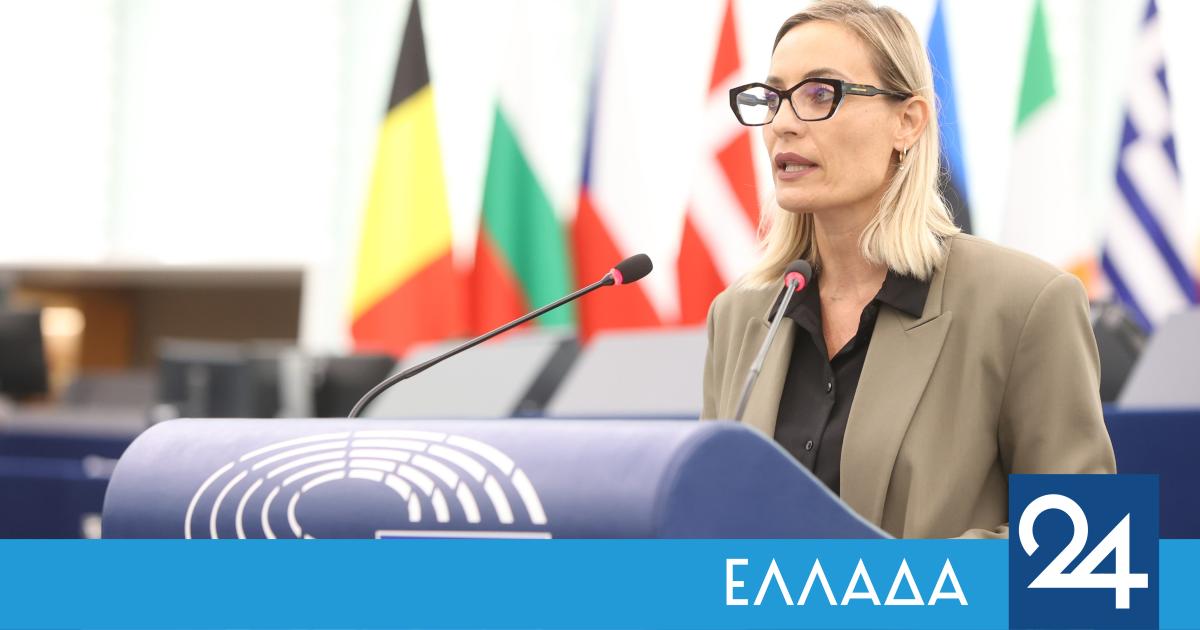
The European Parliament’s plenary session in Strasbourg adopted by a large majority the report on “the transition to a caring society and closing the gender gap in care”, with rapporteur Eleonora Meleti, MEP for the New Democracy and the EPP, according to a statement.
As noted, “it brings to the centre of the European debate an issue that directly concerns millions of citizens: care as the foundation of society and the unequal distribution of care that still weighs mainly on women”
The report highlights that “caring is not an invisible or secondary activity, but an everyday reality that concerns everyone, as sooner or later every person will find themselves in the position of either providing or needing care”. As Meleti noted, “this dossier is not just about professionals or informal carers, it is about each and every one of us”, stressing that “too often care is taken for granted, undervalued and not recognised as much as it deserves, despite the fact that it is a pillar of social cohesion, dignity and the very quality of democracy.”
Today, in Europe, 6.2 million citizens are working professionally in the care sector, while 53 million people are employed in the care sector. people are informal carers in their families and homes, looking after elderly, disabled or sick people, often at considerable personal cost to their professional, financial and mental lives. At the same time, the burden of caregiving remains unevenly distributed, disproportionately affecting women and reproducing social and occupational inequalities, it is noted.
The report sets out specific priorities for a “more equitable care society”, including:
Supporting family and informal carers, improving working conditions and pay for professional carers, certifying skills and recognising the experience of informal carers, implementing flexible working policies and ensuring insurance and pension cover, providing psychological and financial support for those who bear the daily burden of caring, developing home and community care structures so that people can live with dignity in their homes and communities, and special care for parents of disabled children and for young carers who are often deprived of care at crucial times in their lives.
Mrs. Meleti stressed that care cannot be seen as an individual obligation or an invisible burden, but as a collective responsibility of society, noting that “care should not belong to parties, but to people” and underlining that the adoption of the report by the plenary is now a clear political choice in favour of a more just and humane European society, which actively recognises those who care and those who need care.