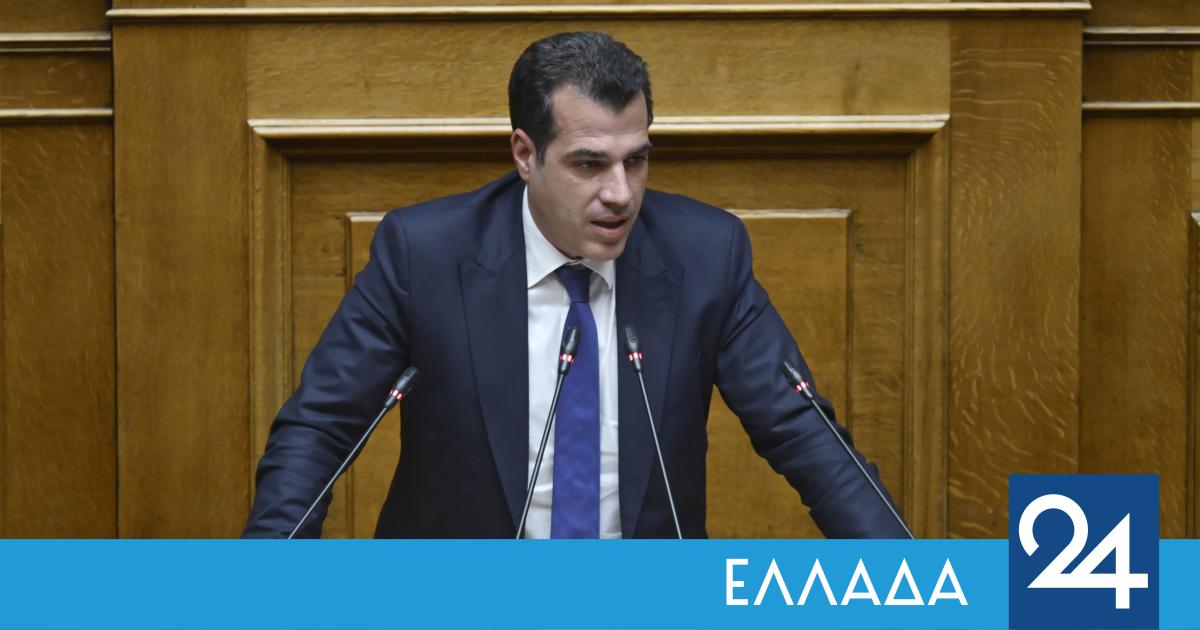
The Ministry of Immigration and Asylum has recorded a reduction of more than 30% in migration flows in the first five months of 2026 compared to 2025, according to a statement by the Minister, Thanos Plevris, following a meeting on Crete. He said that in the East Aegean islands, the reduction exceeds 65%, but the main problem in managing the migration issue this summer is expected to be the flows from Libya to Crete.
The Minister noted that these flows are still moving at the same levels as in 2025, a year in which they were already increased compared to previous years. For this reason, he said, a full management plan has been drawn up, starting with strengthening cooperation with the Libyan and Egyptian authorities. According to him, a first level of deterrence is already being observed, as the main objective is to prevent vessels from leaving the North African coast, while a comprehensive deterrence framework will be implemented both on the ground and at the level of incentives and disincentives.
“But there will be flows,” he stressed, explaining that they will be managed by strengthening the occupancy of structures throughout the country, but also by operating two sites in Crete – one in Chania and one in Heraklion. These spaces will be closed and will be used to separate migrants and refugees based on their profile upon their illegal arrival on the island.
As he explained, those deemed migrants will be transferred to closed structures to follow the deportation process, while those with a refugee profile will be taken to open structures to complete asylum procedures.
Pleyris said that in Chania the space has already been found and operates as a closed structure even in a part of the urban fabric, without – as he said – there is no nuisance to the local community. This, according to the minister, is achieved because the plan is based on rapid decongestion, transfer to closed structures and deportation where necessary or an asylum procedure for those transferred to open structures.
For Heraklion, the minister disclosed that the ministry has looked at different sites and has come up with a specific proposal that meets the requirements without creating a burden on the local community, as it is also a closed structure. At the same time, he said, a series of compensatory interventions are planned to upgrade the area.
The site under consideration is located in the Malades cooperative, as he informed both the Regional Governor of Crete Stavros Arnaoutakis and the Mayor of Heraklion Alexis Kalokairinos. The Minister acknowledged that there are strong concerns and reactions, noting that a discussion has already taken place, during which objections and alternative proposals were raised.
As he said, a similar discussion will be held with Heraklion MPs, noting that the ministry is prepared to exhaust all possibilities to find a place that meets the requirements without creating problems. He stressed, however, that although other proposals are being considered, “the key point is that there must be space.”
“If there are proposals for alternative sites, we are willing to discuss them,” he said, expressing confidence that there is a fertile field of understanding with the local government and with MPs. He stressed, however, that to make it possible both to prevent and manage the flows, requires the operation of both sites, both in Chania and Heraklion.
The Minister also noted that it has been ensured that the transport will be carried out by means of the Ministry’s own means, so as not to burden Crete during a period of increased tourist traffic. He said the ministry fully understands the need to support the island, as had happened in other regions that have been subjected to migratory pressure in previous years.
At the same time, he stressed that this support requires both the reduction and prevention of flows, as well as the direct management of those arriving on the island through closed areas, so as to speed up the transfer of those who are entitled to asylum to open structures and those who must be deported to closed structures.
“All this can be done without any burden on local communities,” he noted, stressing that these are direct management procedures, as the local government had requested last year.
Pleyris said that overall planning is underway and expressed hope that the moves that have been made will lead to a reduction in flows. He admitted, however, that he is not optimistic that this summer there will be similar reductions in Crete to those in the East Aegean, noting, however, that this is the short-term goal.
“At some point we should not be concerned about the flows from the Libyan part as well,” he said, adding that the ministry is working in this direction and seeks to assume an even greater weight in management so that migrant flows are limited and, as long as they exist, do not create problems either in Greece as a whole or especially in Crete during the tourist season.