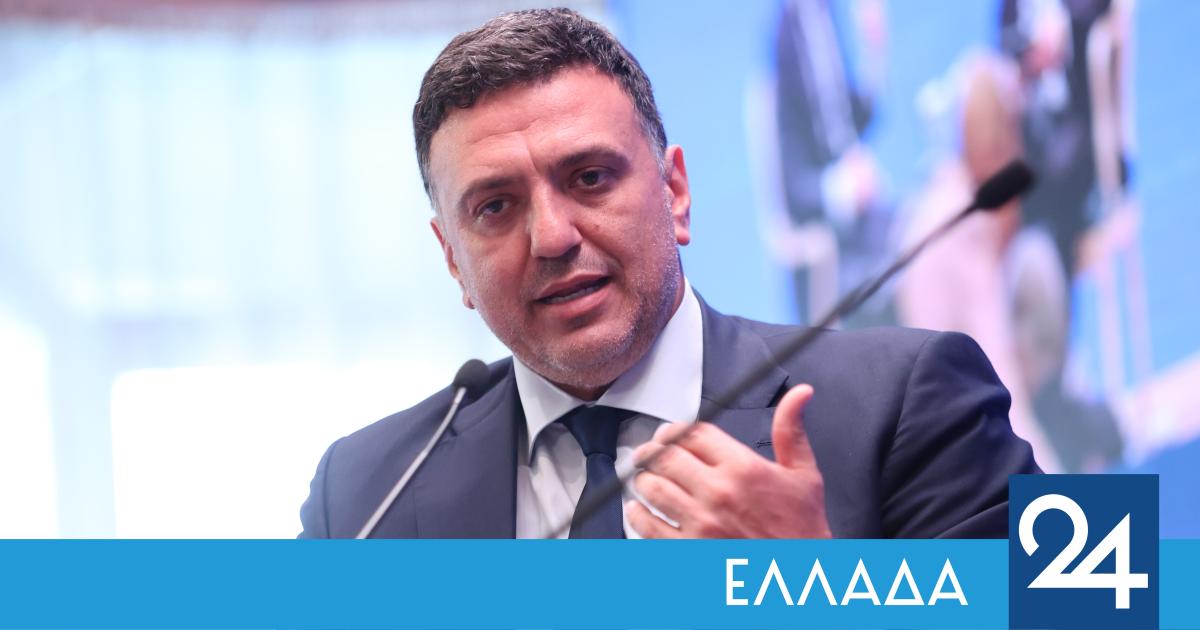
Shipping, energy security and geopolitical developments dominated the speech of the Minister of Shipping and Insular Policy Vassilis Kikilias, who declared the opening of the 10th Maritime Conference of Nauteboriki on “shipping Between Global Powers”.
The Minister pointed out that the crises in the Middle East and Ukraine directly affect the European economy, energy prices and the overall cost of living for citizens.
He stressed that the military conflict in the Middle East and the ongoing crisis in Ukraine demonstrate that international instability is not a remote problem that only affects the shipping community, but a factor that affects inflation, energy prices, fuel availability and the functioning of the real economy as a whole.
As Mr. Kikilias, 80%-90% of global trade is carried by sea, making shipping a critical pillar for the stability of markets and the survival of economies.
He noted that the way in which governments manage the new geopolitical crises will determine even their political resilience, noting that political upheavals and shifts in correlations are already taking place in many countries.
The Minister placed particular emphasis on the need for Greece to play a more interventionist role in European forums, exploiting the dynamics of Greek shipping.
He noted that the country has about 20% of the world fleet, despite the fact that it accounts for only 2% of European GDP.
At the same time, he argued that the Greek government has pursued a more active strategy of defending the country’s maritime and energy interests, forming common positions with other European maritime powers such as Cyprus, Malta, Italy and Spain.
He also made special reference to green transition policies, warning that excessive taxation of shipping in the context of Europe’s environmental goals could cause transport costs to skyrocket, energy prices to rise and a new wave of inflation.
Mr. Kikilias defended the use of LNG as a transitional fuel, noting that only 0.5% of the global quantities of biofuels needed to operate fleets are currently produced. He said Europe cannot on the one hand invest in FSRU, energy infrastructure and geostrategic projects and on the other hand discuss banning LNG from 2027.
In conclusion, the minister linked shipping to growth and opportunities for the younger generation, urging young people to turn to the maritime and port infrastructure professions.
He said that shipping can offer high quality studies, well-paid jobs and substantial prospects for social advancement, especially at a time when housing and demographic problems are putting pressure on Greek households.