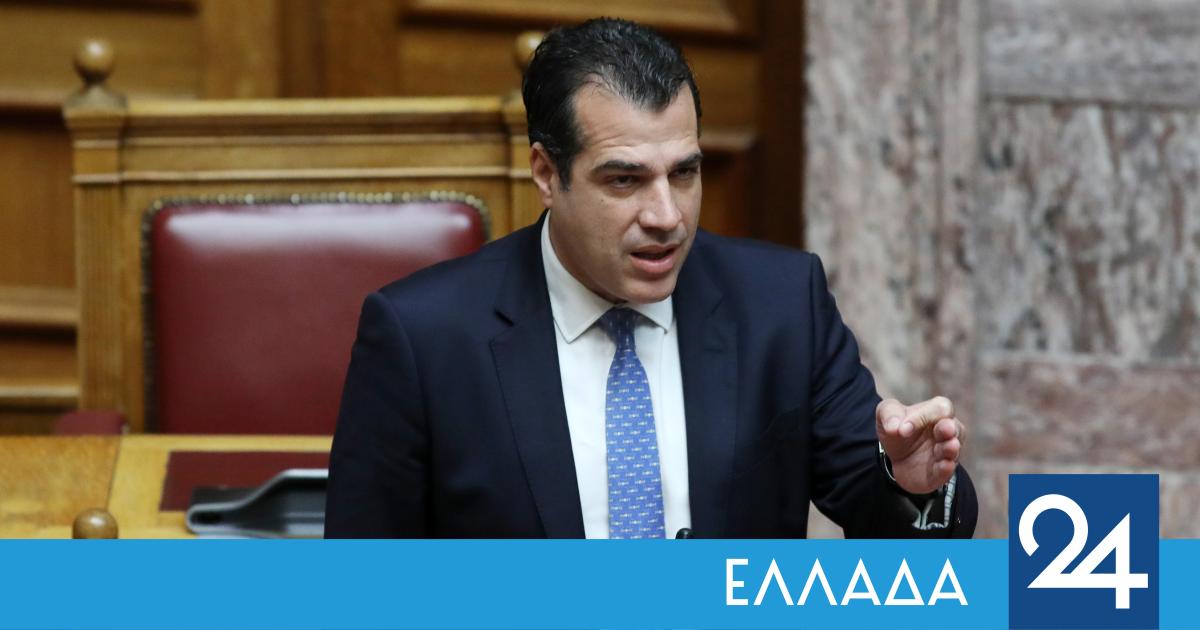
Migration flows to Crete are at last year’s levels, with the government insisting on the creation of accommodation structures despite the opposition of local authorities, while a stricter European framework for returns is being promoted, as Thanos Plevris pointed out.
The minister in charge, speaking this morning on ERT, said that in 2025 around 19 were recorded.000-20,000 arrivals, while the target for this year is to maintain the same level, combined with a “very large decrease from the East Aegean”
Pressure from Libya and deterrence operations
He made particular reference to Libya, home to some 500,000 migrants seeking to reach Europe. According to him, some 1,200 illegal arrivals to Crete were recorded in the first fortnight of May, while there were 530 deterrents, which he described as a “first” as a sign of cooperation from the eastern side of Libya.
He stressed that the deterrence is more difficult compared to the Aegean Sea, as “if one is in international waters it is a very difficult process,” and pointed to cooperation with Libyan authorities and the Ministry of Maritime Affairs.
Crete infrastructure: “We will proceed even without consensus”
The minister admitted that there is a serious problem finding sites in Heraklion, noting that multiple proposals by the ministry (camps, sites in Kalami and Gazi) have been rejected, with no counter-proposal from the local government.
“The ministry will proceed with the sites,” he made clear, warning that otherwise “the management will be done at the port,” which he described as unsustainable, given that Heraklion is a key gateway.
In contrast, in Chania – he said – there is “very good cooperation” and assured that “there will be no problem in the summer”
Plevris stressed the new European Pact on Migration, noting that currently only 20% of those who are refused asylum are eventually returned to their countries of origin.
With the new framework:
- Asylum applications will be processed within 12 weeks
- There will be increased pressure on third countries for returns.</li
Those without a refugee profile will be placed in detention</li
At the same time, he announced an agreement by five countries (including Germany, Denmark and the Netherlands) to set up return centres outside the EU, where those who cannot be returned directly will be taken.
“The logic is that if someone is in a third country, they are most likely to choose to return voluntarily to their own country,”