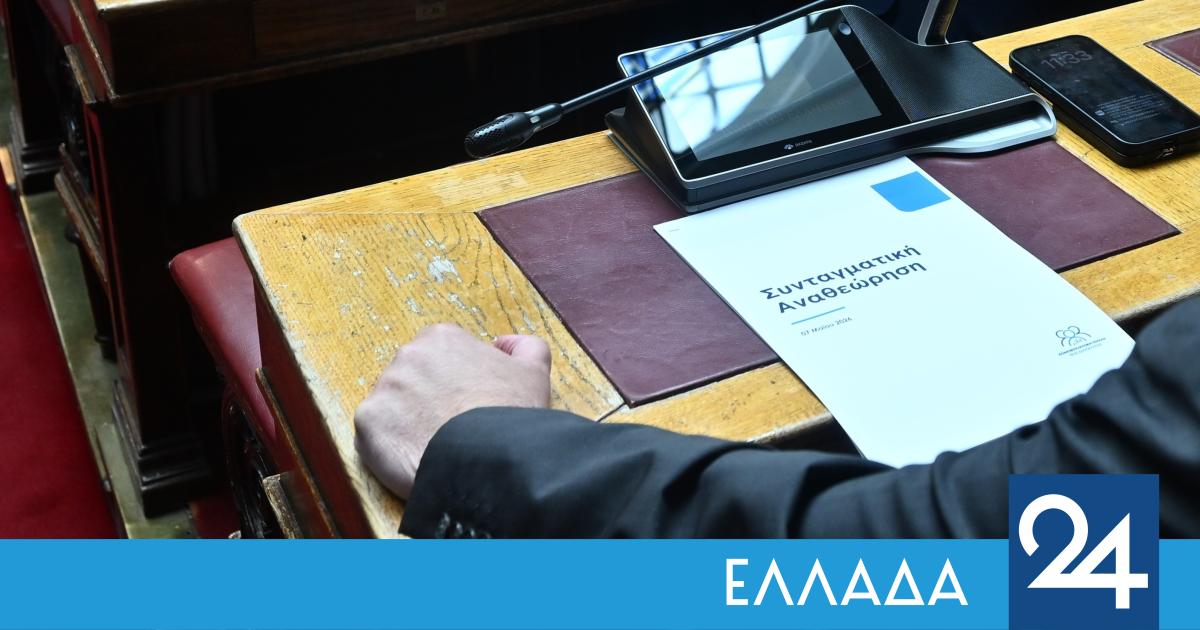
The draft of the proposed changes for the constitutional revision is now in the hands of the MPs of the parliamentary group of the New Democracy. The text that was distributed includes 30 articles proposed for revision and will form the basis of the internal debate, after the processing of the proposals submitted by the members of the parliamentary group.
The process began following a letter sent on February 2, 2026 by Prime Minister and President of the New Democracy party, Kyriakos Mitsotakis, to the party’s MPs. In his letter, he presented the main guidelines of the government’s proposal for the revision of the Constitution, while inviting MPs to actively participate with comments and proposals.
According to the introduction of the text, the aim is to adapt the Constitution to modern needs and challenges, fifty years after the adoption of the 1975 Constitution. As noted, the interventions are aimed at shaping a more functional and effective institutional framework for democracy and public administration.
During the three months of consultation, the ND MPs submitted a series of proposals, which – as stated – not only complemented the initial thoughts, but also highlighted new issues that are considered to be in need of constitutional enshrinement. Thus, a list of 30 articles considered crucial for revision was formed.
Among the key proposals are:
- constitutional provisions on artificial intelligence,
- changes to the media framework,
- possibility of establishing non-state, non-profit universities,
- enhance protection of property and property rights,
- provisions on climate change and animal protection,
- introduction of postal voting for voters within Greece,
- amendments to the article on the responsibility of ministers,
- new way of selecting supreme court officials,
- as well as changes to the evaluation and tenure system for civil servants.
The proposals also include regulations on the functioning of political parties, the governability of the electoral system, fiscal balance, decentralisation and transparency in the public administration.