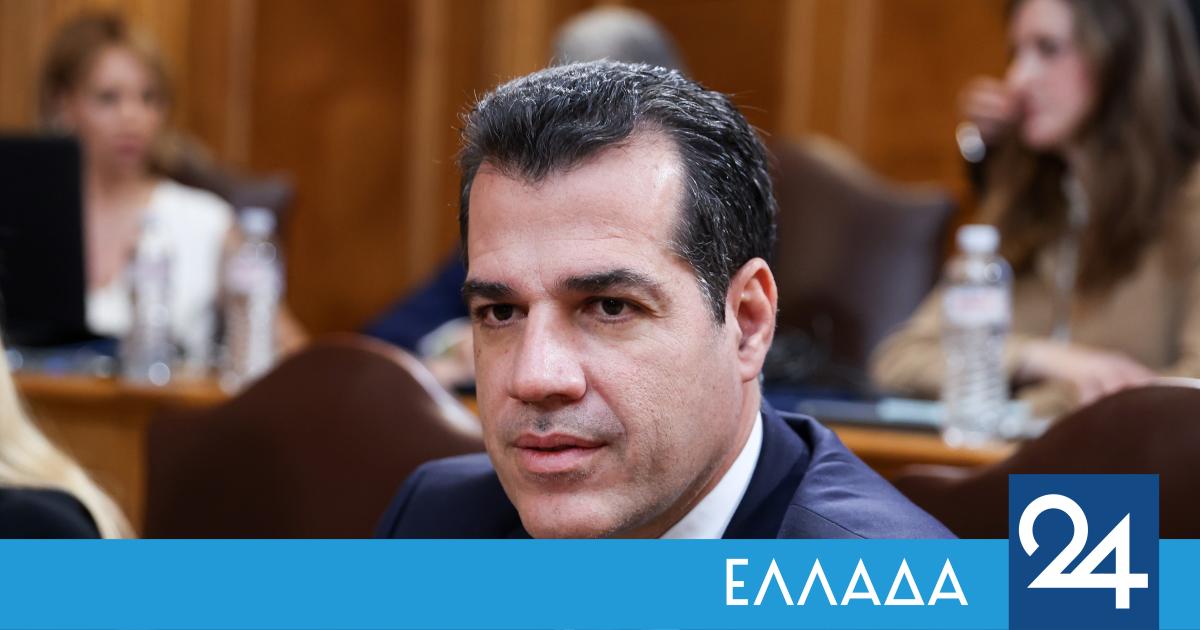
Greece’s full support for the implementation of the New Pact on Asylum and Migration was reiterated by Immigration and Asylum Minister Thanos Plevris during the Justice and Home Affairs (JHA) Council of the European Union in Luxembourg. During his intervention at the Council, the minister stressed that Greece is completing the necessary preparations at institutional and operational level in order to be ready to implement the new European framework in time.
He stressed that the success of the Pact requires substantial European cooperation, a balanced distribution of responsibilities among Member States and the strengthening of joint action in critical areas of migration policy: “The success of the Pact depends on intensifying and increasing the return of illegal migrants to their countries of origin or to third countries and not on the transfer of the problem to the frontline countries,” the Greek minister said, according to a ministry statement. Moreover, Plevris highlighted the importance of the return policy as a key condition for the credibility of the New Pact on Migration and Asylum.
In this context, he referred to the ongoing debate at European level on innovative tools for managing illegal migration, such as return hubs, which can contribute to enhancing the overall effectiveness of the European system.
At the same time, Mr. Plevris advocated the review of the protection framework provided to Ukrainian men of military age, in the context of the ongoing discussion among EU member states. He stressed, however, the need to take measures to avoid further burdening the asylum system and called for a more comprehensive review of the procedures for granting international protection, including temporary protection and asylum, especially in cases of young men entering the European Union illegally. Specifically, according to sources at the Ministry of Immigration and Asylum, Plevris, in his statement, argued that the protection regime including asylum from EU countries should be drastically restricted or abolished for single young men from third countries who are of military age and enter the EU illegally.
The Council’s discussions took place in an environment of heightened geopolitical uncertainty, with developments in the Middle East causing deep concern among member states as to the possible impact on migration flows and the overall stability of the region. Greece underlined the need for constant vigilance and European coordination in the face of new challenges that may arise.
In the margins of the Council’s work, the minister held bilateral meetings with his counterparts from the Netherlands, Finland, Sweden, Switzerland and Bulgaria. Discussions focused on the latest developments on migration, the implementation of the New Pact on Immigration and Asylum, the protection of the external borders of the European Union and the strengthening of cooperation between Member States to effectively address common challenges.The Minister was accompanied by the Secretary General for Migration Policy, Ms Nadia Papakosta, the Head of the Asylum Service, Mr Marios Kaleas, and the Diplomatic Advisor of the Ministry, Mr Nikolaos Yiotopoulos.