The Ministry of Economy and Finance and the Bank of Greece are co-organizing for the first time in 20 years in Athens, the informal meeting of the Economic and Financial Committee (EFC), which will take place on 27 and 28 April 2026 at the Stavros Niarchos Foundation Cultural Centre.
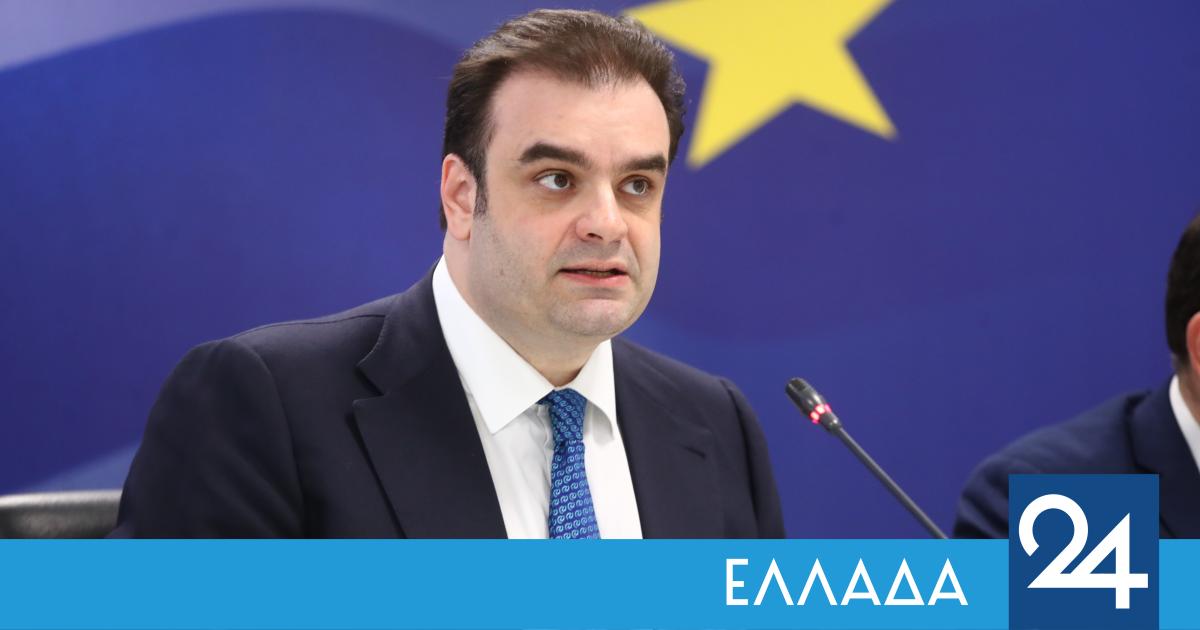
Kyriakos Pierrakakis, Minister of Economy and Finance and President of the Eurogroup, welcomed the opening of the meeting, stressing the importance of strengthening coordination and cooperation between Member States at a time of increased challenges.
More specifically, the greeting of Kyriakos Pierrakakis:
“I am very happy to be here today. I think it’s an excellent opportunity. I will start by talking a little bit about my country and about your visit to Athens. It is a very good opportunity to see how Athens has changed in recent years. This is the Stavros Niarchos Foundation Cultural Center, a real jewel.
It is part of a broader, I would say, substantial change that has taken place in Greece in recent years, which is clearly reflected in the data, in the fiscal and economic data. But it is also reflected in the picture that you will see when you walk around Athens. It is very different from what it was ten years ago, at the height of the existential crisis the country experienced.
You are all economists, you know the economic analysis of the Greek crisis and its wider implications. But I would argue that there was another, less visible element: social capital.
In my previous life, before I became a minister in 2019, I was a research director at a non-partisan think tank in Athens, which you may know. It’s called DianeOsis. It’s the largest think tank in Greece. We were implementing the Greek participation in the World Values Survey. And there it was absolutely clear, and it was the subject of our studies, that Greeks have very low levels of trust and very low levels of social capital.
.
This is particularly evident in the south of Europe. To very simple questions such as “do you trust others?” or whether there is social capital through foundations, we scored very low. In contrast, in the Nordic countries the results were almost the opposite.
Thus, foundations such as the Niarchos Foundation began to emerge and intensify their activities, especially during the years of crisis. This cultural centre, created through a very significant donation from the Niarchos Foundation, is now part of the state’s property. It has been granted to us, we are managing it, and we are trying to make it a multiplier and catalyst, both for the cultural scene and for the overall landscape of Athens.
It’s very important. If you walk around the Niarchos Foundation, as you do around many of Attica’s iconic landmarks, you can see that these are places of substantial transformation. As William Faulkner used to say, “show, don’t tell”. We want to show you, beyond Greek hospitality, especially our capital, Athens, while you are here.
I should also add that last week we announced a 4.9% primary surplus. Who among us would have imagined that ten years later Greece would have surpluses close to 5%, one of the lowest unemployment levels in its history, positive growth rates, and at the same time a policy mix acceptable to society? That not only would it be acceptable, but that it would become a now well-established policy mix through a radical change of mindset? Very few.
It was hard to imagine. We pursued it. We were optimistic by will, not by expectation. But we achieved it. A generation achieved it. And that is an important legacy of cooperation between a Member State, the European Commission and European partners, and the delivery of change. That’s what we need to achieve at the European level as well.
And for that we expect a lot from you. You are the intellectual, scientific and technical catalyst for this effort. I say this with absolute sincerity. We expect a lot from you as ministers.
Because we have been talking for years about the Capital Markets Union, the Banking Union. I was told in the Netherlands that the completion of the Capital Markets Union was a priority already 10 years ago. What has changed now? With the individual agenda items on the Savings and Investment Union making progress, I would say the framework.
It was mentioned in the discussion earlier. It is no longer just uncertainty based on broader developments, it is a context that is completely unpredictable. So that makes the European leaders, the governments, all of us, the main responsibility for implementation. Especially in terms of the obvious benefits. With things that have not been done for years.
.
This was, after all, the core of our country’s political strategy: to do everything that had not been done for decades. And we did it to a very large extent. Reforms in the labour market, in the financial system and so on. Because, on the one hand, you have to take these steps, and on the other hand, you have to respond to the uncertain and the unpredictable. So we have a dual policy direction that we need to discuss.
The good and bad thing about Europe at the same time is that we know what the key elements of the agenda are. They are there, right in front of us. We just haven’t implemented them for a long time and we need to start moving them forward. We all understand that because we represent member states.
There are specific national interests in promoting the Savings and Investment Union. We all agree in principle, but we all have an asterisk. I think the job of this group is very much to identify precisely the technical points of this policy and agenda where we can achieve convergence more quickly.
There are areas where we agree more readily than others. Some issues are harder to agree on quickly. Let’s identify those we can agree on immediately, as a matter of priority, and let us ministers play the role of catalyst for their implementation, after you have completed the necessary technical and scientific preparation.
We need to move quickly. And if we do, it will be crucial for Europe. We all know how important that will be. Let’s do it. That’s why I think the word “strategy” should become synonymous with “implementation.”
I might add that, in my opinion, there are new debates emerging. I mentioned the obvious ones, the benefits we will get from what we have failed to implement over the years.
But there are new challenges. In Washington we were discussing the Straits of Hormuz, energy, the impact on inflation, measures that need to be temporary, targeted and tailored. We also discussed artificial intelligence and its impact on the economy.
And it is obvious, at least to those of us who come from a technology background, as I do to some extent, that Europe lacks a coherent strategy for technology policy. And I say that very directly. The Member States do. There are countries that want to develop autonomous technological solutions and others that seek synergies. But we do not have a common European approach to how we manage technologies. And to the criticism that this is not the responsibility of a finance minister, I would say this:
If finance ministers do not have a clear view of where investment is being directed, in which technologies, in which infrastructure models, then they will simply end up managing the price of options that they have not worked out in depth themselves. We need to know the impact that our funding choices have on technology policy and its implementation. And there needs to be a strategy behind those decisions. A strategy that addresses both the regulatory framework for AI and the clear direction in terms of the technology choices we make.
Overall, I hope that this will become more integrated into our discussions. Many of my colleagues want it. And I hope that it will become more and more part of the discussions in the Eurogroup. Because at the end of the day, we will either shape the decisions that we have ahead of us for the future or we will be shaped by them. And we do not have the luxury of the latter. We have to focus on the former.
With these thoughts, I welcome you back to Athens. I truly hope you enjoy the hospitality and have a great time in the Greek capital. Thank you very much.”
The meeting brings together senior representatives of the European Union Member States, the European Commission, the European Central Bank and other European institutions to exchange views on critical economic policy issues.
The papers focus on key issues facing European economies, highlighting the role of informal exchanges in building trust and shaping common European approaches.
As part of the event, the programme includes an official dinner, at which the Deputy Minister of National Economy and Finance Thanos Petralias and the Governor of the Bank of Greece Yannis Stournaras will address the audience.
The event confirms Greece’s active role in European economic processes and its contribution to strengthening dialogue and cooperation within the European Union.
.