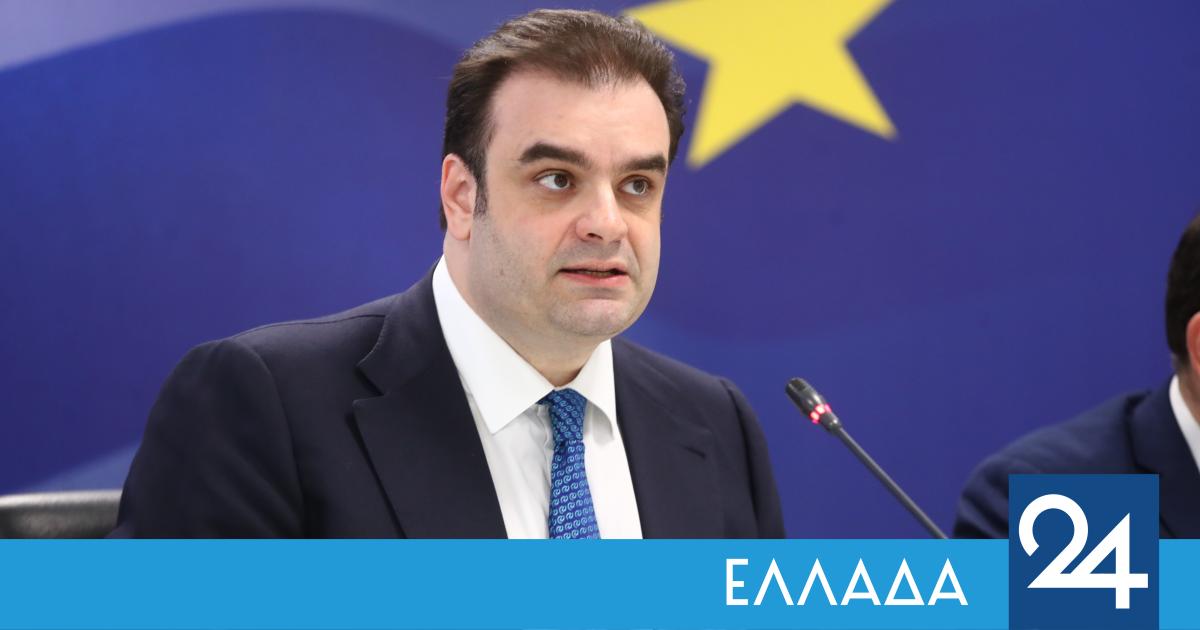
The need to be prepared for the most difficult scenarios was underlined by Eurogroup President Kyriakos Pierrakakis, following the conclusion of the Eurozone Finance Ministers’ Council in Brussels today.
“Citizens are feeling the pressure in their daily lives, especially the most vulnerable,” he said, noting that businesses operating in a particularly demanding environment are under similar pressure. He stressed that “our responsibility to them is to be prepared for even the most difficult scenarios”, making specific reference to the possibility of a prolonged disruption in the Strait of Hormuz, which could further burden economic activity.
As he stressed, dealing with such crises requires close European coordination, which he described as a “prerequisite” for the effective management of critical issues.
Against the challenges, the Eurogroup President underlined that Europe has strong foundations: “The euro area has demonstrated its resilience,” with inflation close to target before the latest shock and the labour market remaining strong, with historically low unemployment. “This is our foundation and we are building on it with planning, consistency and responsibility,” he added.
He added.
Referring to the support measures, he noted that member states were acting in a coordinated manner, emphasising the Commission’s recommendation that these should be “targeted and temporary”, in line with fiscal rules and the objectives of the Green Transition. “Maintaining this balance is not easy, but it is absolutely necessary,” he acknowledged.
He made particular reference to the conclusions of the International Monetary Fund, noting that “when measures are not targeted, they end up benefiting the rich much more than the poor.” He said that this is “an important policy lesson” and confirms the line taken by the European Commission. He said that according to the IMF, “around 70 percent of the total cost of the 2022 measures were either not targeted or distorted prices”, and warned of inequalities in energy subsidies, where if not properly designed, they can disproportionately benefit higher incomes.
In conclusion, Pierrakakis stressed the importance of the energy transition, noting that European households have already benefited from improved energy efficiency and the shift to renewable sources. He underlined that the EU is strengthening its strategy for energy independence by investing in clean energy, interconnections and common networks, noting that “current developments show that we need to accelerate”.
Asked whether we are in stagflation, Pierrakakis replied that “we are in a stagflationary trend,” but we are not in full stagflation at this point. He said that forecasts are being revised down for growth and up for inflation, which confirms the pressure on European economies.
For his part, Economic Affairs Commissioner Vladis Dombrovskis admitted that what Europe is currently facing is a “stagflation shock”, meaning a slowdown in economic growth with a simultaneous rise in inflation. Referring to the most recent data, he said that inflation in the eurozone is at 3%, which is mainly due to the rise in energy prices, with an annual increase of 10.9%, further weighing on economic activity.
B. Dombrovskis stressed that “as a result of the war in the Middle East, energy prices have soared”, with oil prices topping $125 a barrel. He said higher energy prices were affecting “every aspect of the European economy, businesses and households”, leading the EU “on a path of weaker growth and higher inflation”. He added that “the overall outlook remains highly uncertain”, with more details expected in the Commission’s spring economic forecasts to be published later this month.
In a more optimistic tone, V. Dombrovskis noted that “our economies are now better prepared to absorb the energy shock than in 2022”, noting that since the Russian invasion of Ukraine Europe has diversified its gas supplies and accelerated the development of renewable energy sources.
Referring to the political response, he stressed that the war “will have serious consequences for Europe’s public finances” and underlined that “sound public finances are our key asset for maintaining macroeconomic stability”. As he noted, the room for manoeuvre is already limited due to higher deficits, higher interest rates and the need for greater defence spending.
“We cannot repeat the mistakes of the past,” he said, noting that support measures should be “temporary and targeted” and should not increase overall energy demand – a position he said was echoed by the International Monetary Fund. In conclusion, V. Dombrovskis said that the Commission is closely monitoring developments and “remains ready to adjust its policy response if necessary.”
The Commission will continue to monitor developments closely and “remains ready to adjust its policy response if necessary.
Finally, the head of the European Stability Mechanism (ESM), Pierre Gramenia, warned of increased uncertainty and market pressures. He said “in recent weeks the market reaction has seemed overly optimistic”, but progress on the reopening of the Strait of Hormuz has slowed, leading to a renewed rise in oil prices. At the same time, he noted that eurozone sovereign bond spreads are widening, albeit at a milder pace than in March, stressing that “even if the conflict is resolved soon, its economic impact will last longer than the conflict itself”. He also warned that a steeper repricing by markets could further aggravate financial conditions, negatively affecting growth and further limiting already tight policy space.