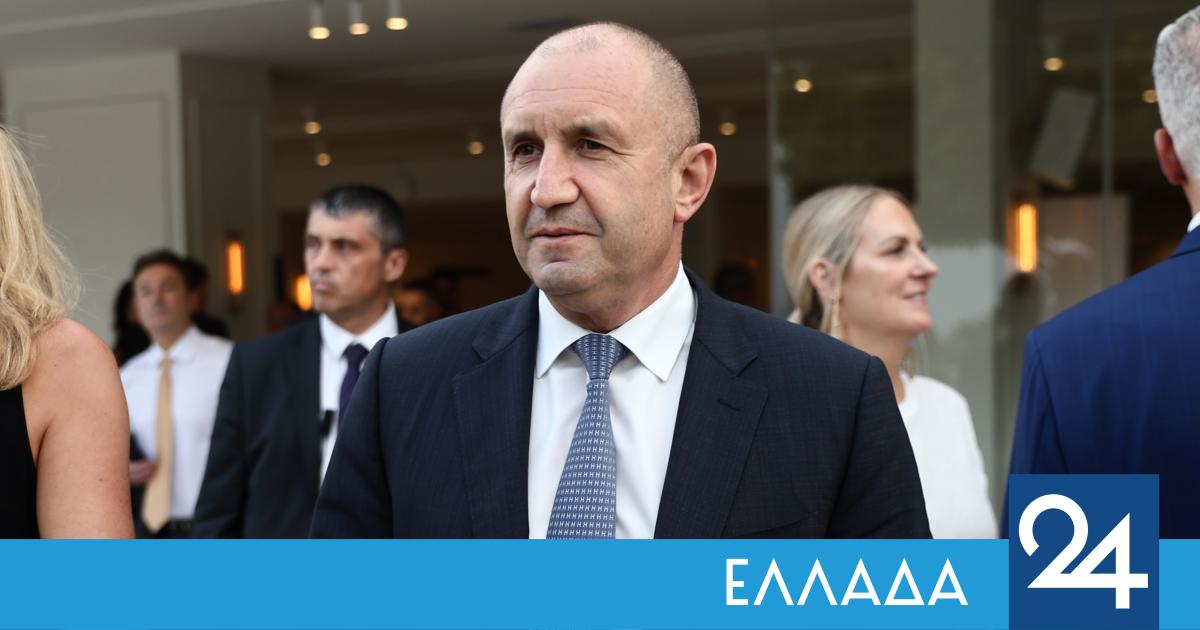
The political formation of Bulgaria’s perceived Russia-linked former president Rumen Radev is reported to have won self-reliance in early parliamentary elections held yesterday (Sunday) in the Balkan country, overturning predictions that Radev would win a victory, but not strong enough to allow him to form an independent government.
According to exit polls by various companies, the centre-left coalition Progressive Bulgaria, led by Rumen Radev, secured close to 45 percent of the vote, securing more than 130 seats in the country’s 240-member parliament.
In second and third place respectively, with almost equal shares of around 12.5 percent, are former prime minister Boyko Borissov’s previously ruling GERB (centre-right) party and the centrist coalition “Continuing Changes – Democratic Bulgaria”, while the fourth place is occupied by the “Movement for Rights and Freedoms” of controversial business tycoon Delian Peevski.
The turnout in the elections exceeded 50 percent.
The percentage obtained by the coalition led by Rumen Radev is the highest of all elections in Bulgaria in recent years, leading to a parliamentary majority, and is much higher than what polls in Bulgaria predicted before the elections.
The big loser in Sunday’s election was described as Boiko Borissov’s GERB, which saw its strength halved compared to the October 2024 election, when it came first with 25.5% of the vote. Meanwhile, the once powerful “Bulgarian Socialist Party” failed to cross the 4 percent threshold and remains out of parliament.
Rumen Radev, 62, a former fighter pilot, resigned as Bulgaria’s president last January and went on to form a new coalition, dubbed “Progressive Bulgaria”, to contest the parliamentary elections. He was immediately found to be ahead in voting intentions.
Rumen Radev has repeatedly expressed reservations about Western military support for Ukraine, fuelling his characterisation as “pro-Russian”. He has also expressed reservations about Bulgaria’s membership of the eurozone, calling for a referendum on it, which was not accepted by the previous government.
Bulgaria’s estimated 6.5 million voters were called to the polls yesterday for the eighth time in five years amid a political crisis, with weak government coalitions failing to survive and citizens’ faith in democratic elections waning.
Bulgaria developed rapidly after the fall of the communist regime in 1989 and joined the European Union in 2007; but it has been plagued by widespread corruption, which has sparked intense social opposition and successive political crises in recent years.
Rumen Radev during the election campaign in Bulgaria promised to eradicate corruption and ensure political stability in the country.