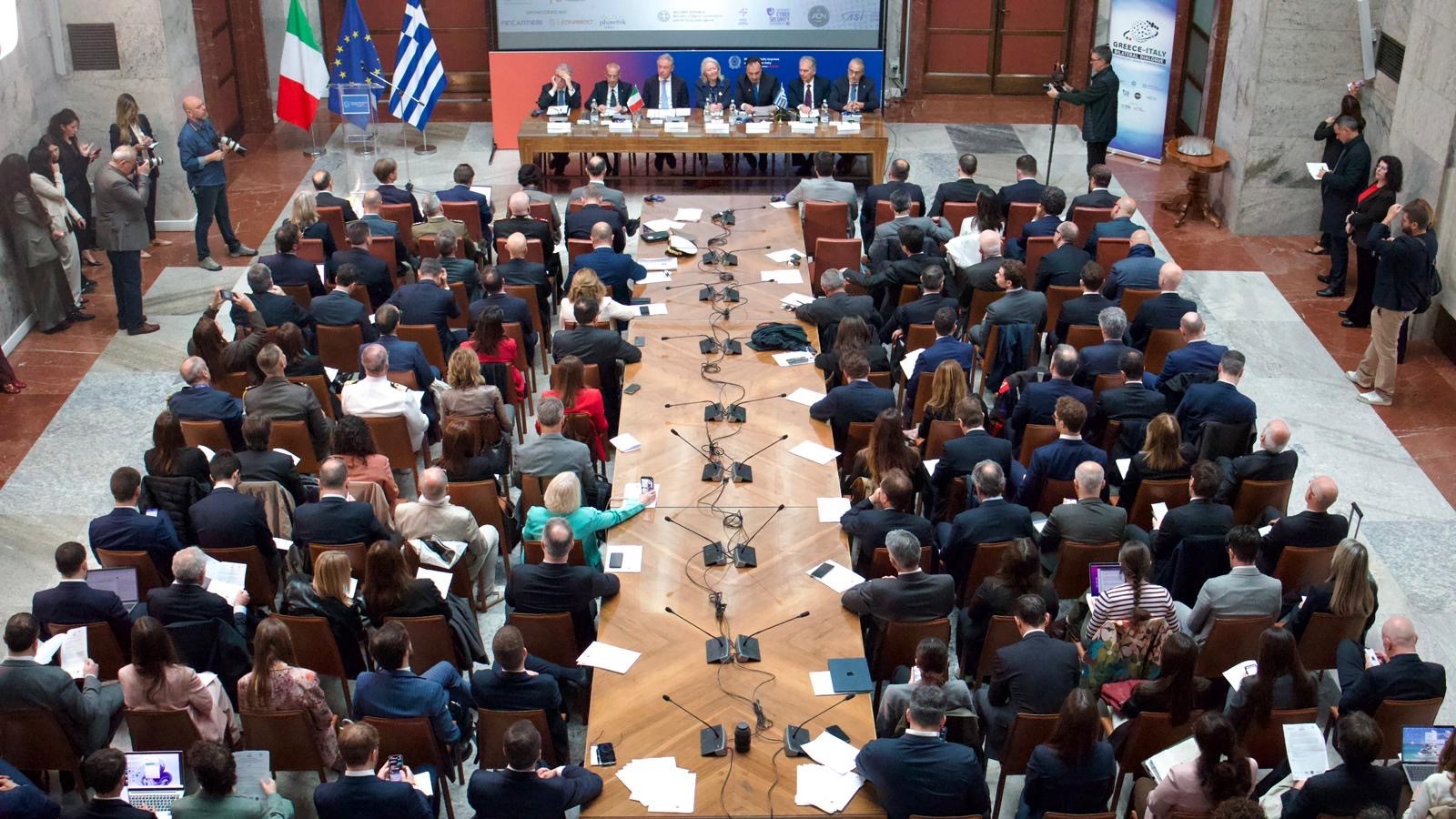
A Greek-Italian workshop on “Cooperation in the space, digital and cybersecurity sectors in a hybrid era” is underway at the Ministry’s headquarters for business and Made in Italy in the Eternal City. The conference was opened by the Minister of Digital Governance, Dimitris Papastergiou, and the Italian Minister responsible for Made in Italy, Adolfo Urso. From the Greek side, among others, the President of the Hellenic Space Centre, Emmanuel Rammos, the Director of the National Cyber Security Authority, Michalis Bletsas, participated in the proceedings, the Ambassador of Greece to Italy, Eleni Surani, the Secretary General of Telecommunications and Post of the Ministry of Digital Governance, Konstantinos Karantzalos, and Theodoros Prokos, Director of Defence Projects at Nova Ict. Meanwhile, the fruitful dialogue taking place today in Rome includes Athanasios Potsis, president of the Association of Greek Space Technology Industries and Stelios Bollanos, co-founder of Planetek Hellas.
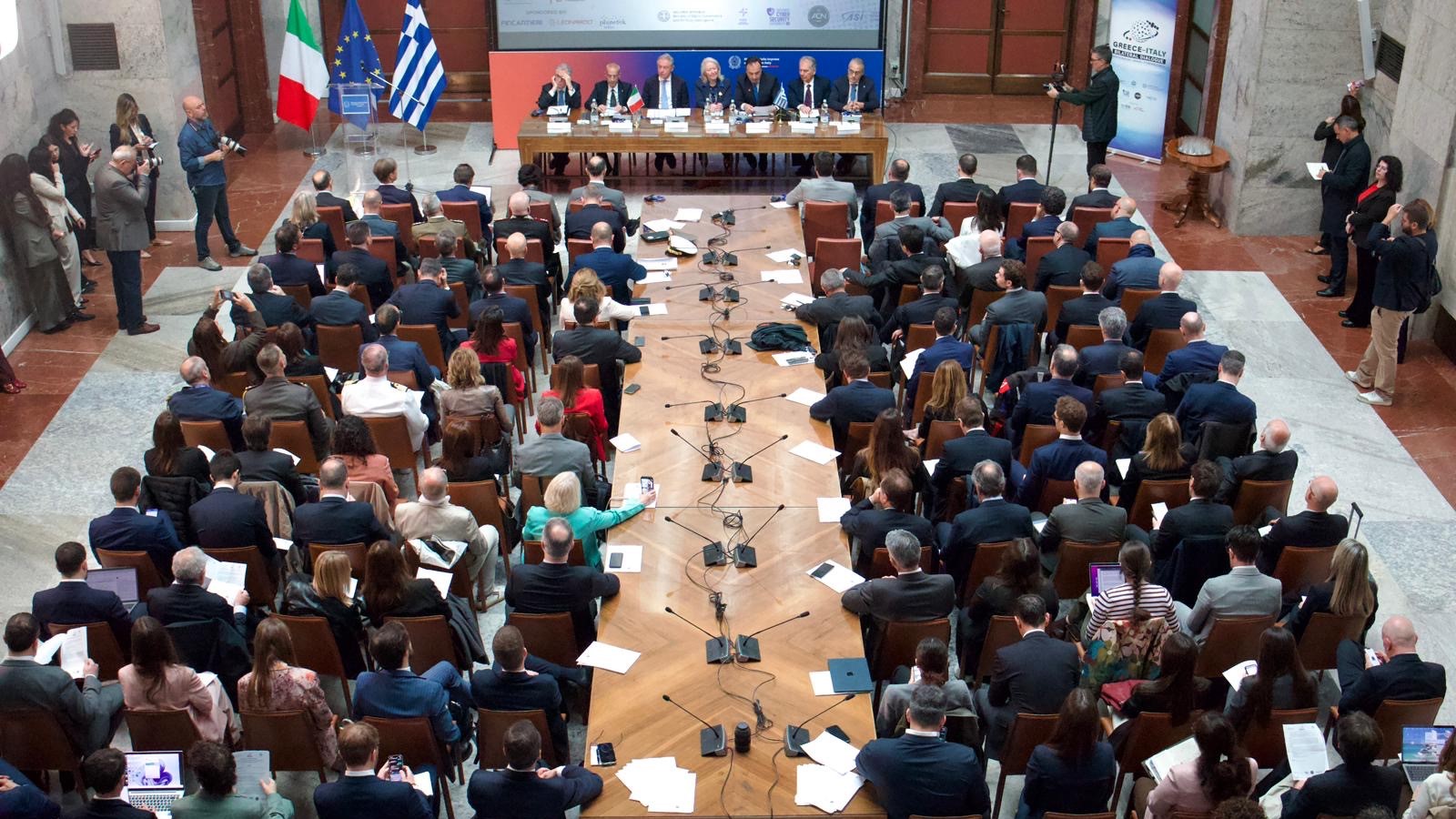
In a statement to APE-MPE on the importance of today’s initiative, Minister of Digital Governance Dimitris Papastergiou said:
“When my Italian counterpart and I signed the memorandum of understanding this time last year, neither side anticipated how quickly this would evolve from the need that is being created. A need to secure the undersea cables, based on the joint proposal that we – Greece and Italy – have put forward for a Mediterranean hub that will control and ensure the security of the undersea telecommunications and other cables, but also, now, the part of the major European artificial intelligence and data infrastructure. On the proposal, also, that we are now downloading, jointly, Greece and Italy on Gigafactories, but also on many other telecom issues, because things are evolving and technology is advancing.
Our cooperation also covers cybersecurity issues, with the need to inform citizens – at a time when things are changing rapidly – about the measures they need to take. Because, of course, in addition to systems, people play a dominant role. All this comes together, in a two-state partnership which, and with the participation of so many companies, today in Rome, shows that it should be strengthened.”
Referring to the National Microsatellite Programme, which he is also going to present today in Rome, Mr. Papastergiou added:
“The National Microdigger Program, which is funded by the Recovery Fund with $200 million from the National Recovery Fund, will be funded by a $200 million grant. It fills a gap that Greece has had in space. Until recently, we were talking, we were planning, but we did not have the financial capacity. Thanks to this programme, Greece now has 17 micro and nano satellites, and in the summer we are launching seven more optical satellites, enabling Greece and Europe (because these satellites are part of a larger group) to have daily, very regular and very accurate data on Civil Protection, border security and water quality.
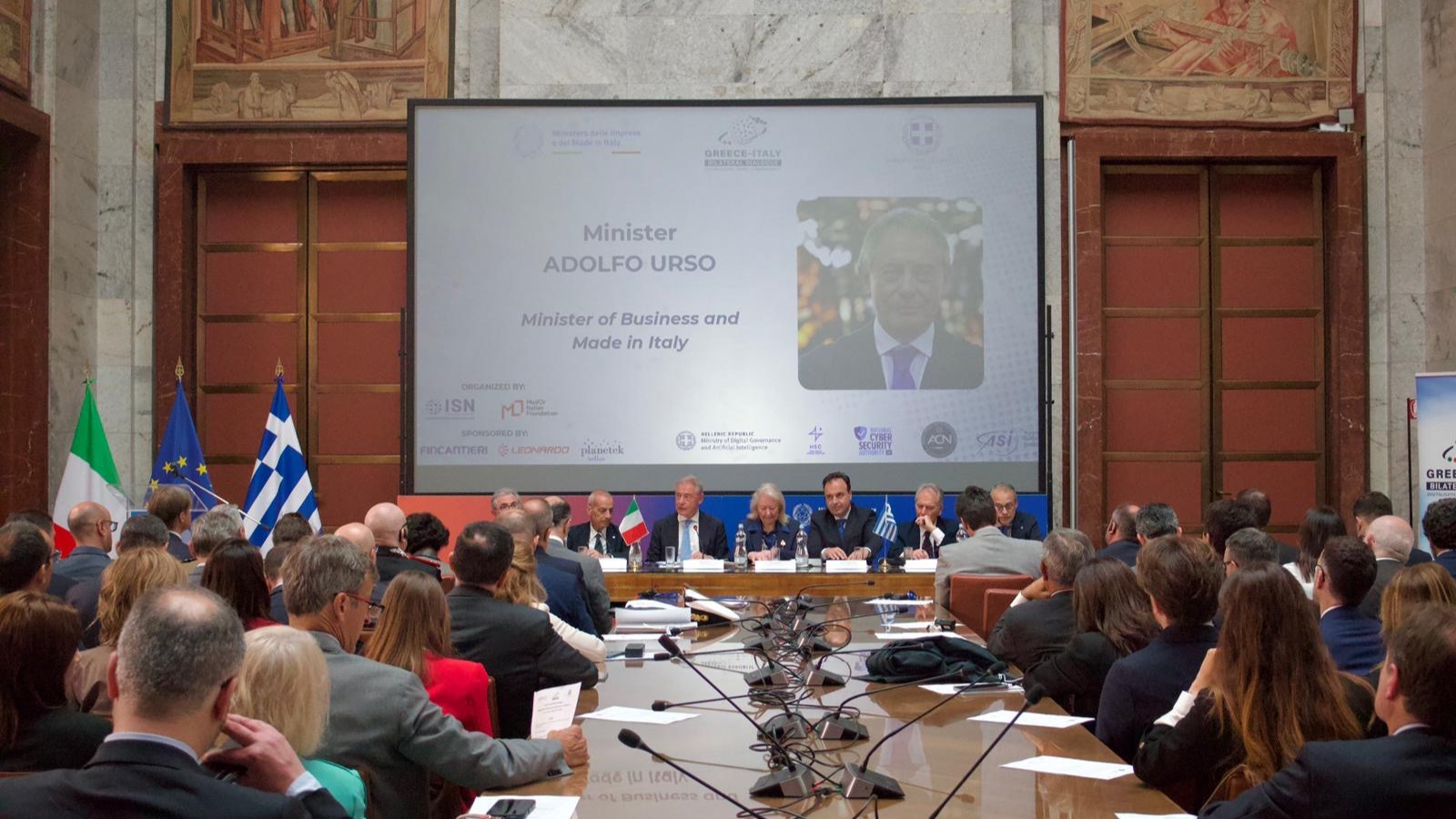
For his part, the Italian Minister in charge of Business and Made in Italy, Adolfo Urso, referring to the importance of this workshop, told APE-MPA:
“This is a very important and decisive dialogue for the future of our common European construction, so that the Mediterranean can become a meeting place for new technologies and a series of new challenges. We are talking about fibre-optic infrastructure, submarine connections, their protection and care. Together with Greece, Italy is a candidate to host the hub that will protect the undersea cables. We are also talking about access and supply and critical raw materials, key to the dual challenge of digital and green technology. Italy is a candidate to host the first hub for the storage and management of critical raw materials to overcome potential supply shocks. We are also interested in the common challenge of the sectors that will have a high growth in the future, the so-called blue and space economy, where there is full cooperation between the Italian and Greek Space Agencies. By working together, we can better help our countries and Europe to win the challenge of the future, the challenge of the sea and space. At the same time, there is also the issue of protection, the issue of cyber security. This bilateral dialogue, which follows the agreement that our two governments signed a year ago, gives us the tools to address the needs of the future. Something that Greece and Italy can do better than others, reaffirming the central role of the Mediterranean to guarantee Europe’s strategic autonomy which, unfortunately, is now under threat.”