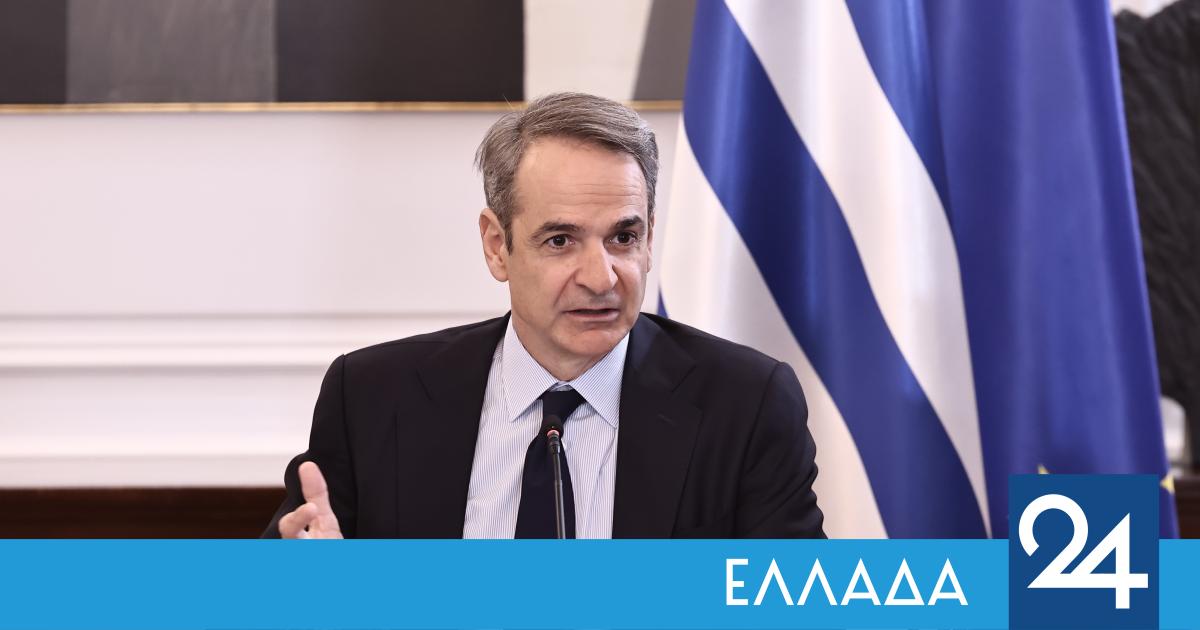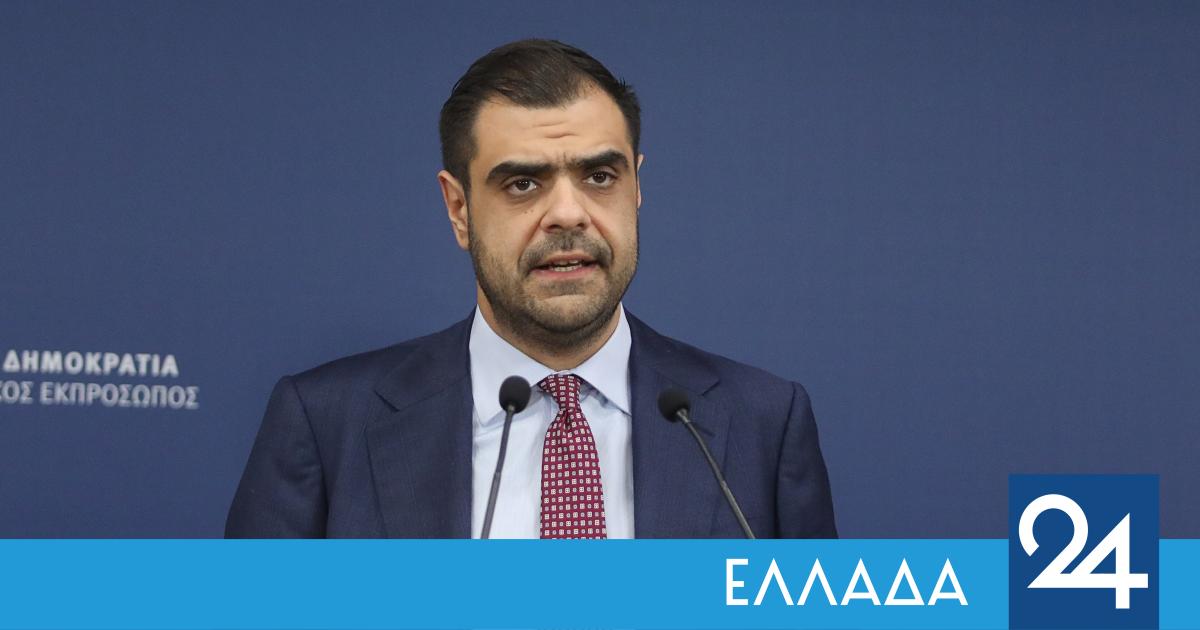
The Deputy Minister to the Prime Minister and Government Spokesman, Pavlos Marinakis, has launched a public online consultation on the draft law on the “Licensing of free-to-air digital terrestrial broadband television content providers of regional coverage”. This is a legislative initiative that aims to finally settle a decades-old institutional pending issue, which has kept regional TV stations in a peculiar status of provisionality and uncertainty.
The bill is the third intervention in a row by the competent Deputy Minister within a few months, following the legislation on transparency in the printed and electronic press last June and the law on strengthening the public character of broadcasting in November, while incorporating the provisions of the European Regulation on Freedom of the Media (EMFA).
“With the third bill introduced in a few months for the media sector, we seek to regulate the licensing of regional channels, which has remained unregulated for almost three decades,” said Deputy Prime Minister Pavlos Marinakis, noting that “our goal is to formulate a framework that will support healthy businesses, those that apply the legislation, respect employees and invest in quality information and entertainment for the public, but also a framework that will support every journalist and every employee of regional channels.”
As Mr. Marinakis, the introduction of a transparent and comprehensive licensing framework for regional channels further safeguards, at its core, the freedom of the press.
The end of the auction
The most important section of the new law is the complete abandonment of the auction model, which was introduced in 2015-2019 (N. 4339/2015). The government chooses not to set a price for licenses through bidding, considering the previous model to be a failure and unworkable. Instead, stations will pay a symbolic annual fee in support of the FCC’s oversight costs, which will be scaled according to the population of each Regional Zone.
The goal is to protect healthy businesses from unfair competition. By establishing modern and objective criteria, it ensures that the scarce frequency resource is allocated to stations that meet a strict minimum of operating conditions, while enhancing transparency in their ownership.
Technological upgrade and transition to High Definition
Technological upgrade and transition to High Definition
In addition, the focus of the reform is on the technical upgrade of the network. In cooperation with the Ministry of Digital Governance and EETT, the transition to the DVB-T2 standard is being promoted. This development significantly increases spectrum capacity, allowing all regional stations to now broadcast in high definition (HD), dramatically upgrading the product that reaches the regional viewer.
The number of licences to be advertised per zone will be determined by the maximum technical capacity of the network, however, the law explicitly states that the number of licences will not be less than the number of channels currently legally broadcasting per area.
Labor security and licensing criteria
Labor security and licensing criteria
The licensing process by the FCC will evolve in two stages:
1. Control Phase: Applicants must submit complete dossiers demonstrating tax and insurance compliance, transparent source of funds, adequate premises and minimum equity. Particular emphasis is placed on job security, as a minimum number of employed journalists and technicians is set.
2. Classification Phase: If applications exceed the available licenses, a grading system will be activated based on qualitative criteria such as local program hours and proven staff experience.
At the same time, the control role of the NCR is strengthened by increasing its staff, while strict rules are introduced for the “networking” of stations, in order to prevent the uncontrolled retransmission of the same programme without rules.
The draft bill, which was developed after extensive consultation with regional associations and the network provider (Digea), will remain available for public comment on opengov.gr until Monday, 4 May 2026 (https://www.opengov.gr/ypep/?p=1153)