Kyriakos Mitsotakis referred to the health adventure of George Mylonakis, the debate in Parliament on the rule of law and the OPEKEPE.
The post of Mitsotakis
.
Good morning and happy birthday. I hope you had a peaceful Easter with your own people.
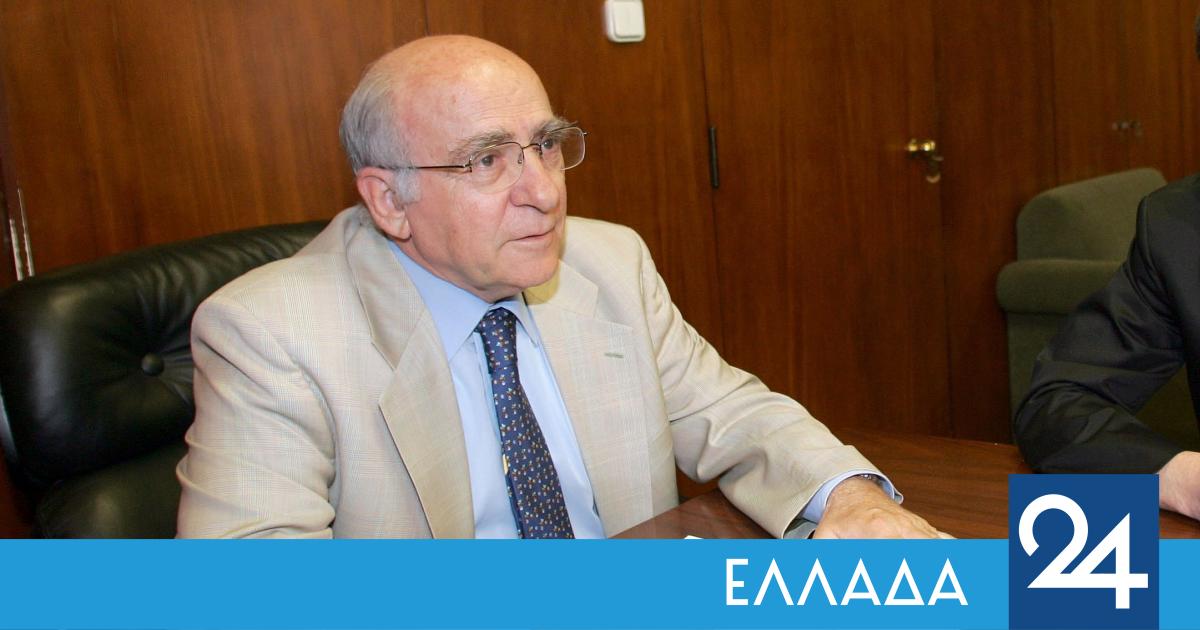
This weekly review habit started as a more personal contact with you. It is not a news bulletin, nor is it a formal service announcement. I choose to speak to you more directly in this way. And precisely because I want this relationship to be honest, I cannot begin today by writing about what happened last week as if nothing happened. One of my closest colleagues, George Mylonakis, is currently fighting a very big battle. My thoughts, everyone’s thoughts, are with him and his family, with the hope that he comes out victorious.
But at the same time, I cannot remain silent in the face of the normalization of toxicity that we have been experiencing lately, culminating in the last few weeks. I refer to the ease with which baseless accusations are hurled and the brutality of a public obsessive targeting on the basis of manufactured vile lies, emanating in many cases from character assassination contract killers who wear the mantle of investigative journalism. It is fed back by anonymous internet profiles and, unfortunately, is easily adopted even by opposition party leaders. It is both infuriating and deeply saddening. Now, more than ever, it is necessary to create a strong front against this phenomenon.
Despite the charge, I must continue. The governance of the country does not stop, and we have critical issues ahead of us that we must address. During the recent debate in Parliament, I clearly stated my position on the cases being investigated around the OPEKEPE. We have first and foremost taken responsibility for cleaning up a deeply sick organisation, without offsetting. My job is not to back down from any pathologies that cause inequalities and injustices to the detriment of real producers. I also explained that it is one thing for an MP to have a legitimate interest in serving a citizen and another for an illegal act outside of his or her parliamentary duties.
So I welcomed the decision of the 11 members of our Parliamentary Group to accept the waiver of their immunity. The quickest way to prove their innocence. We can all, obviously, have an opinion on each of the 11 cases under consideration. As Members of Parliament, however, especially at this time, we have a duty not to become either investigators or judges. The separation of functions is the foundation of the rule of law and the only way to ensure that there are no shadows in every case that will eventually be filed. More so, we must leave no room for arguments about any shadow in our attitude.
The same debate also showed that the problem of farm subsidies has a long history where the responsibilities of all parties are reflected. After all, clientelism was not born yesterday.
Today, however, they are being abolished thanks to this government’s decision to bring the OPEKEPE under the independent tax administration and to consolidate it. So, just as no one is now asking for a refund of tax to which they are not entitled, so under the new system all mediation to make irregular payments ceases. In Parliament I also expressed my support for the European Public Prosecutor’s Office. But also the need, as it is still taking its first steps, for it to prove its objectivity and that it can do its job properly. By avoiding selective leaks and staying away from any involvement in internal political competition. Above all, however, by moving swiftly through the procedures laid down so that our Members are no longer hostage to impressions. For it is Justice that must be the first to clear the landscape in good time.
We therefore remain firm in our principled position in favour of lifting immunity. As we stand firm in our belief in the swift vindication of our colleagues. Finally, there is another crucial conclusion that emerged on Thursday: that only New Democracy has a plan to finally uproot the client state and modernize public life. This effort has already begun with dozens of reforms, from EFKA pensions that come out in 40 to 60 days to the digital land registry, digital tickets for the KOK and the 100s of digital services of https://www.gov.gr/. But also with a core of 25 changes to the constitution that will lead Greece, as it marks the 200th anniversary of the birth of the new Greek state, to root out all clientelism. Bold cuts of continuity in progress and a break with the bad past. Unfortunately, the opposition did not find a single word to counter. Once again, it remained silent and inadequate in the face of today and tomorrow of the country.
I would also like to say a few words about the rule of law, which I also spoke about in Parliament. I will not repeat everything I said there, but I want to share with you some data, not ours, but that of international organisations such as the OECD, Transparency International and the European Commission. By 2023, Greece will be among the 26 countries in the world, out of 167, that the Economist assesses as full democracies. Our score is 8.1 out of 10, when the global average is only 5.2. In Europe, we rank 13th out of 27 EU countries. Obviously we still have a lot to correct. However, these figures contradict the picture presented by the opposition that things are supposedly going from bad to worse. Reforms in public administration, justice and governance are working, and this is confirmed by third parties, not by us.
I turn now to developments on the Persian Gulf front that are certainly not off our radar. We look forward to a successful conclusion of the negotiations for a definitive end to the conflict, as a possible prolongation of the crisis also increases the uncertainties for the global and European economies. Despite the exogenous pressures, and in line with the IMF’s recent assessment, Greece appears relatively resilient compared to other European economies, maintaining growth rates slightly below the Fund’s budget projections, but higher than the euro area average. In any case, we are alert to the further impact of rising inflation and if necessary we will take additional measures to support businesses and households by examining the fiscal space. Let me add that a common European response to energy price increases is under consideration. On Tuesday, the President of the Commission will present a comprehensive package of measures to address the ongoing energy crisis, which the 27 of us will discuss at the following European Council. So, in anticipation of developments.
A major news story this week for our country’s energy and economy is the signing of a contract between the ExxonMobil – Energean – HELLENiQ Energy consortium and Stena Drilling to start drilling in the Northwest Ionian Sea, in an area where estimates speak of some 200 billion cubic meters of natural gas. For the first time in almost 50 years, Greece is drilling exploratory wells. The drilling vessel is expected to start work in February 2027. If the indications are confirmed and there is gas worth exploiting, then we are talking about something that could change a lot for the country. At least 40% of the profits go to the Greek government, that is, to all citizens. New jobs, less dependence on foreign energy, investment. And of course, all this with respect for the environment and local communities. It remains to be seen what the drilling will reveal. But after half a century of waiting, the fact that we have finally got here is significant in itself.
During the Easter holidays I announced our government’s decision to ban social media for children under 15. I know that the vast majority of parents welcome it, and I understand why. It wasn’t an easy decision, but scientists have long been ringing the bell about the effects of addictive scrolling on children’s physical and mental health. The regulation comes in over the summer and comes into force on 1 January 2027. Greece is one of the first countries in Europe to take this step, but as I have said before, it is clear that we cannot solve this alone. The problem is global and needs a European response. That is why I raised it with the President of the European Commission. The good news is that the EU age verification application for social media is technically ready and will soon be available. Let me be clear: the aim is not to take young people away from technology. Technology can be a source of inspiration, knowledge and creativity. But such a crucial issue cannot be left to the self-regulation of the markets. Big tech companies are not just middlemen, they are responsible for what they make and how they make it.
On the national defense front now, this week we took delivery of the 50th upgraded F-16 Viper. It is another tangible step in the Air Force’s substantial upgrade, enhancing its capabilities in an increasingly demanding operational environment, while investing in indigenous expertise and support. At the same time, we are proceeding with a plan to modernize the Navy and strengthen the infantry, so that the Greek Armed Forces have modern means and high readiness in every field.
I continue with investments, where another 13 business projects were included by the Ministry of Development in the Large Investments scheme of the new Development Law, with a total budget of 320 million euros and 700 new jobs. They concern the sectors of data centres, logistics, agri-food, paper, aluminium, textiles, textile, service technologies, cement and energy. More than half of the funds are directed to Northern Greece – Macedonia and Thrace – followed by Central Greece and Epirus. Despite external adversities, the goal remains a double convergence: to reduce the gap between us and Europe in terms of income, but also to reduce inequalities within the country, so that regions outside Attica come as close as possible to the European average.
Speaking of the region, yet another infrastructure project has been put into operation. It is the new bridge at Aligarorema in Volos, one of the largest restoration projects after the devastation brought by the storms Daniel and Elias in September 2023. Construction was completed on schedule, less than a year after the signing of the contracts. The local community is getting a new, modern and safe bridge, better than the one that existed before the disaster.
.
Before I close, let me mention an intervention that is literally saving lives, the installation of modern defibrillators at all Athens Metro stations. A big thank you to the Masoutis Group and to Yannis Masoutis personally for the donation, but also to the Greek Red Cross, which undertook and already completed the training of at least 370 Metro employees, so that they can manage any cardiac incidents in a timely and correct manner.
At the end I left an important project, the return to the public of Vassilissis Olga Avenue, after its regeneration and its integration into the historical and archaeological core of Athens. Athens acquires a 4 km and 15,000 acre archaeological and cultural zone, with antiquities from the 4th century BC to the Byzantine period. The avenue connecting Panathenaic Stadium with Dionysiou Areopagitou became a modern, open urban space, accessible to residents and visitors 24 hours a day. I am glad that even those who fought against it are happy about its completion.
Rather brief this review – it was Easter, after all. See you next Sunday. Greetings!