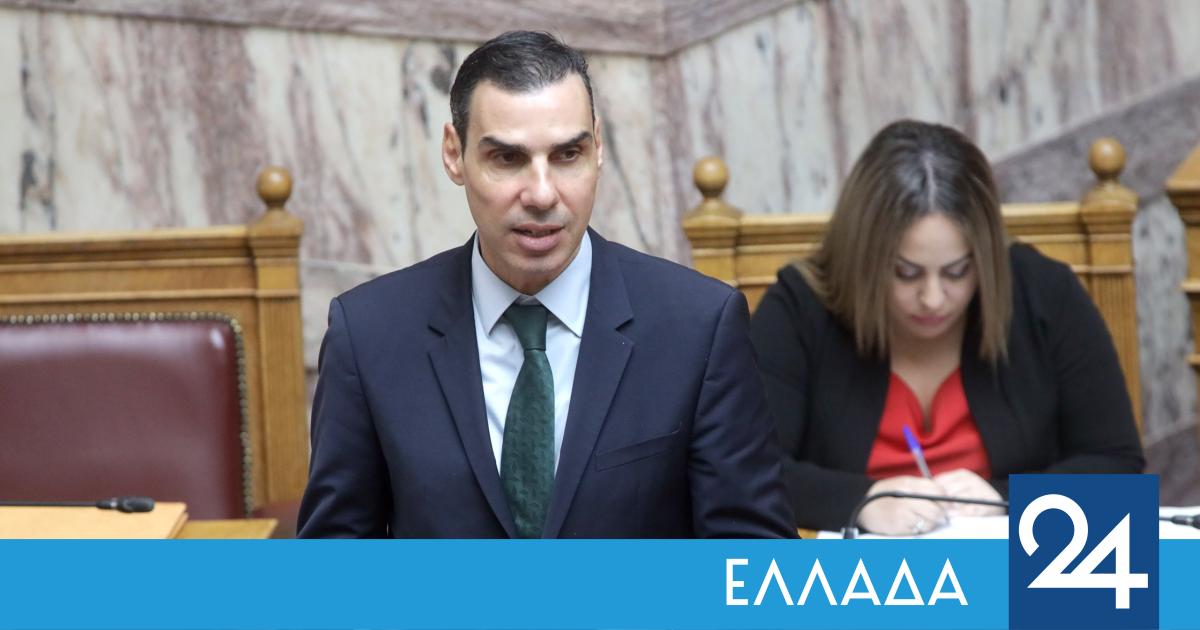
The strengthening and modernization of the National Health System, after years of pressure due to crises, was mentioned by Deputy Minister of Health Marios Themistocles, speaking to the radio station “PARAPOLITIKA”, stressing that the main priority of the last three years was the stabilization and substantial upgrading of the system.
“The National Health Service is a system that was created 43 years ago and has been burdened by two very large crises. The 10-year financial crisis, which siphoned off resources and mainly staff, and immediately after the pandemic,” Themistocleous said, adding: “The main priority of the last three years has been first to stabilise the system and then to strengthen it substantially. In this context, today the NHS has the most staff ever, while extensive building interventions and organisational changes are underway.” He said that for about 15 years no substantial renovations had been carried out in hospitals, while now wards, emergency departments and new buildings are being renovated.
Mr. Themistocleous said that important interventions are underway to upgrade public health structures. In particular, he said: “The construction of 3 new hospitals is being completed through the donation of the Stavros Niarchos Foundation, while the construction of the Thessaloniki Oncology Hospital is about to begin. At the same time, 156 Health Centres are being renovated or have already been renovated, while extensive interventions are also taking place in hospitals throughout the country.” He also made special reference to the digital upgrade of health services through the MyHealth App, through which citizens can view examinations and make appointments.
New philosophy with an emphasis on prevention
The Deputy Minister of Health stressed that “the Ministry of Health is changing its overall philosophy, leaving behind the model that operated as a “Ministry of Illness”, i.e. waiting for the citizen to get sick in order to cure him. Instead, the new approach emphasizes prevention so that citizens live longer and more good years.” In this context, he pointed out that the government has implemented five major preventive programmes and individual targeted actions, with a special emphasis on nutrition and exercise.
Emergency Departments and reducing wait times
Mr. Themistocleous referred in detail to the plan to upgrade the Emergency Departments, stating that “about 1 year ago a comprehensive plan was announced, part of which was the so-called “bracelet”, i.e. the system of electronic patient tracking. When the intervention was launched, the average waiting time in the emergency room was about 9 hours, while today it has been reduced to 4.5 hours. This is a very significant improvement”. He explained that this result came from three main interventions: the implementation of the electronic tracing system, the targeted increase in staffing in the EDs and the improvement of infrastructure. Indeed, he cited as a typical example that in many cases the distance of the CT scanner from the emergency room created delays of 10 to 15 minutes or even half an hour for the transfer of a heavy case, whereas with the new arrangement this time can be reduced to 4 to 5 minutes, decisively improving the flow and safety of cases.
Population of islands and remote areas during the summer season
Mr. Themistocleous referred extensively to the needs that arise every summer on the islands and in tourist areas, where the population can double, triple or even quintuple. As he said: “Significant incentives have been introduced for doctors and nurses in the so-called arid and remote areas. In particular, financial incentives can reach up to 600 euros per month, while through the donation of the Hadjiyoannou Foundation for the 47 small islands of the country, which concerns 80 doctors, 1,500 euros net in addition to the salary is provided, with the Ministry also covering transportation.” In addition, he said, during the summer period, staff moves from Attica to the islands and other areas are carried out, with total support of up to 2,000 euros in addition to the salary per month. As he underlined: “All these interventions have already brought a much improved picture compared to previous years.”
Incentives in arid areas
The Deputy Minister of State for Health placed particular emphasis on the measurable results of the incentives for hard-to-reach and remote areas. As he said, “of the approximately 300 seats that have remained permanently vacant since 2010, with no candidates showing up, 200 have now been filled. This is a very significant improvement, which proves that the incentives have worked,” he said.