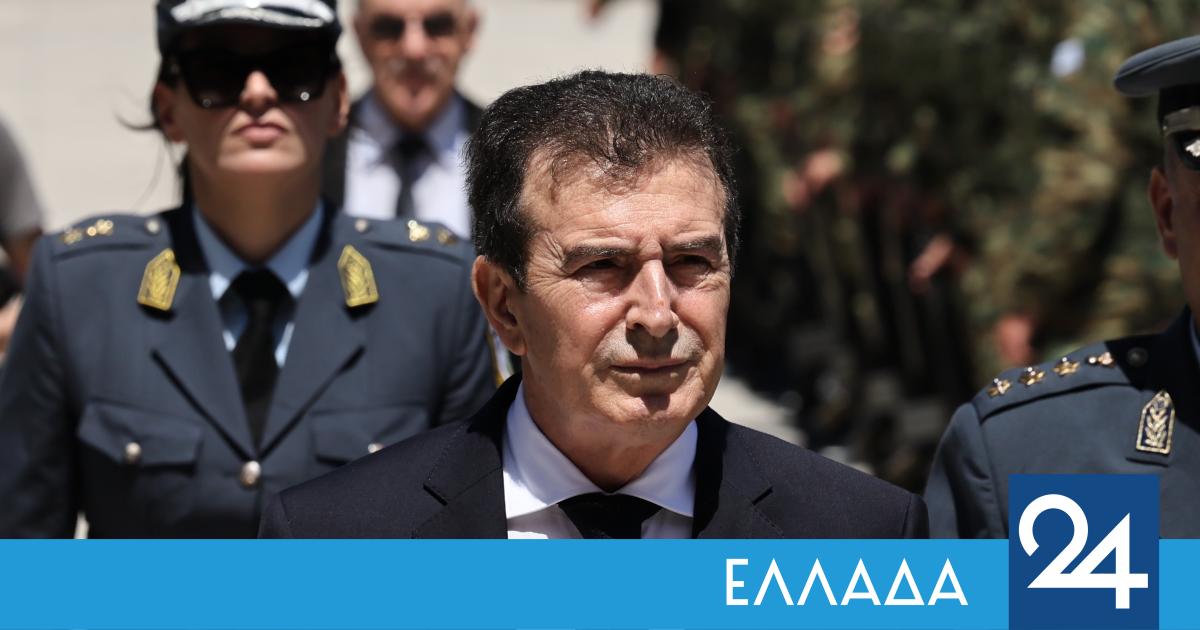
The overall situation and the Schengen area and the new priorities for 2026-2027, but also border management and security issues in Europe, against the background of the situation in the Middle East and the conflict in Iran, were at the “forefront” of the EU Council of Home Affairs Ministers.Ε., Today, Thursday 4 June 2026, in Luxembourg, which was attended by the Minister of Citizen Protection, Michael Chrysochoidis, accompanied by the Director of the Directorate of International Police Cooperation, Brigadier General Christos Tsitsibikos.
In particular, as the Ministry of Citizens’ Protection was informed, the overall situation of the Schengen area was put at the centre of the agenda, while the Commission’s report for 2026 was presented, describing how the Schengen acquis was implemented in the previous year and setting new priorities for 2026-2027.
In his intervention, Mr. After congratulating Cyprus for the significant progress it has made towards full membership of the Schengen area and thanking the Commission for what he called a comprehensive and well-structured Report, Chrysochoidis noted that the main priority of all must be to strengthen the security of the Schengen area. “In an unstable geopolitical environment, we are called upon to find effective and at the same time feasible solutions in order to strengthen the security of the Schengen area, but at the same time to maintain it as an attractive destination, especially for national economic reasons,”
The Minister also stressed that Greece attaches particular importance to the protection of the external borders and the enhancement of the effectiveness of returns and, to this end, the strict implementation of the Regulations on screening and the border return procedure, with the imposition of restrictions on free movement, is a key priority for our country.
Mr. Chrysochoidis also referred to the implementation of the Entry-Exit System, which has been in place since last April and noted that “Greece is making appropriate and responsible use of the possibility of partial suspension, with the aim of ensuring full compliance with the provisions of the relevant Regulations and providing the best possible service to travellers, in particular in the development and upgrading of border infrastructure.”
With regard to the management of the EU’s borders and internal security issues, the Council addressed the management of migration flows and asylum and the fight against cross-border crime. European Home Affairs Ministers examined security issues, based on the impact of the current geopolitical environment in the EU and with a focus on the consequences of the overall situation in the Middle East and the conflict in Iran.
Specifically on the ongoing instability in the Middle East, Mr. Chrysochoidis noted that so far, the crisis has not translated into increased migratory pressure on the European Union, but he pointed out the necessity of closer cooperation with countries of origin and transit of migratory flows, as well as the need to optimize information exchange and joint risk management to counter networks exploiting the region’s crises. He also added the importance of addressing hybrid and terrorist threats linked to the conflict.
“The European Union’s response to these challenges must be based on three interlinked pillars: strong external borders, effective cooperation with partner countries and enhanced operational preparedness against new forms of threats. Only through a coordinated, proactive and collective approach will we be able to safeguard the security of our citizens and the stability of the Union. All existing EU tools should become more interactive so that they better serve prevention rather than repression.”
Finally, a large part of the Council discussed the EU Drugs Strategy. On this point, the Minister for Civil Protection noted that this Strategy “attempts to bridge the gap between strategic planning and practical implementation, through a framework that is more measurable, more flexible and more result-oriented”. He proposed operational cooperation and, above all, the systematic use of the “follow-the-money” approach, as he said “criminal networks must be tackled not only at the level of trafficking but also at the core of their economic power”. Finally, he pointed to the need to strengthen the security of ports, maritime routes and supply chains and to strengthen the real-time information exchange network, as well as to support the new framework for action with adequate resources, modern analytical tools, technological innovation and specialised training of staff.