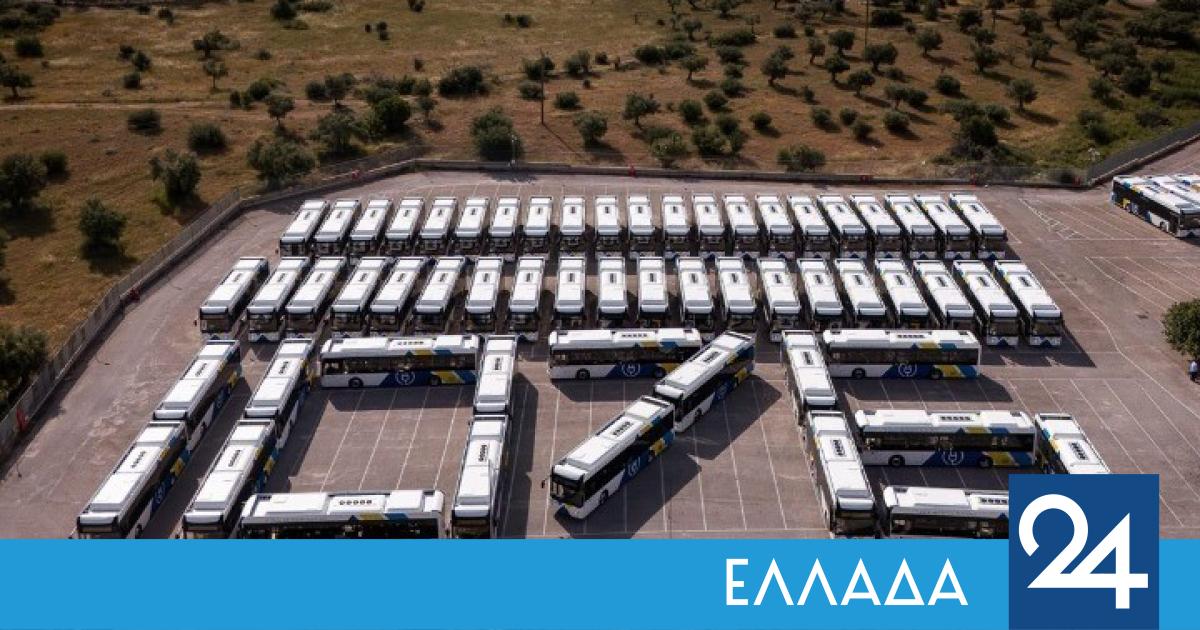
The largest bus fleet renewal in Athens’ urban transport system in recent decades is being completed, as the last new vehicles currently in the trial runs phase will be put into circulation in the coming period, according to Deputy Transport Minister Konstantinos Kyranakis.
With the inclusion of another 205 new buses, the number of new vehicles in circulation or immediately on the road reaches 1,076, while the renewal of the fleet reaches 80%. These are 125 electric buses, 13 IVECO gas buses and 67 new CNG Menarini buses, which are added to the 871 new vehicles already serving the public on a daily basis.
As Kyranakis pointed out, in 2019 the newest bus in the fleet was about ten years old, while the majority of the vehicles were built in 1999. Today, more than a third of the new buses are electric, another third run on natural gas and the rest are modern diesel-powered vehicles with new technology.
Tackling the problem of drivers
Renewing the fleet is combined with strengthening the workforce. A new call for drivers is already underway, and for the first time, candidates without a professional driving licence are being given the opportunity to participate. The new drivers will be trained free of charge at the OSY driving school, with the aim of staffing the system faster and meeting the increased needs.
The ministry’s goal is that by the end of 2026, the main lines of the network will have improved their frequency by up to 50%. Already, on several lines, waiting times have been significantly reduced, from around 18 minutes last year to between 8 and 9 minutes today, with problems of course remaining on other parts of the network. At the same time, the total number of drivers is expected to reach 3,000.
The strengthening of the fleet will continue in the coming years. By 2028, it is planned to add another 617 new vehicles through European and national financial instruments, leading to an active urban transport fleet of more than 2,000 vehicles, of which about 1,700 will be new.