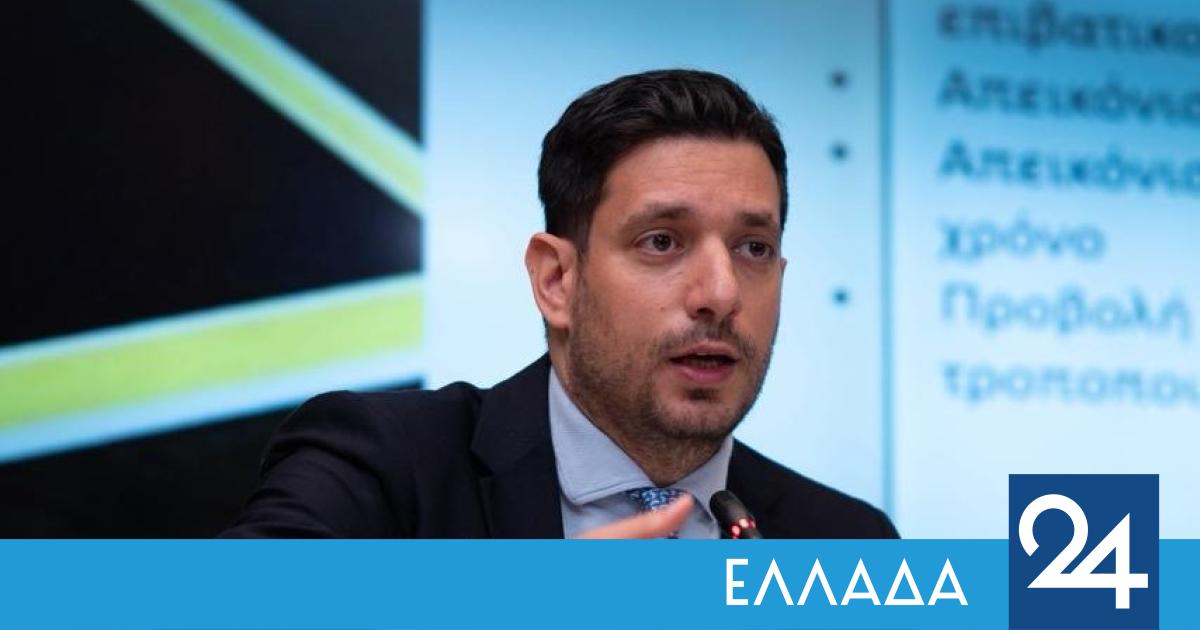
All of the Ministry of Transport’s interventions to enhance accessibility to public transport were presented by the Deputy Minister of Infrastructure and Transport, Konstantinos Kyranakis, at the inter-ministerial press conference on actions to support people with disabilities.
Mr. Kyranakis highlighted both the interventions that have already been implemented such as the strengthening of the fleet of special vehicles for free transport for people with disabilities, the universal accessibility of the public transport fleet with ramps and the implementation of the European disability card, as well as the new, integrated package of actions funded by the Social Climate Fund and already approved by the European Commission.
Accessibility, he stressed, is no longer an objective on paper, but a measurable policy with specific services and results that are reflected in the daily lives of citizens.
The full statement of the Deputy Minister of Transport, Constantinos Kyranakis
“The effort we are making at the Department for Transport – on buses, metro and rail – has a clear goal: to improve the daily lives of citizens, particularly our fellow citizens with disabilities, with measurable results and accountability.
In recent days we have presented interventions that are already being implemented. We have increased the fleet of special OSI vehicles that are available free of charge, by appointment, to transport people with disabilities – whether for work or for any daily need. The number of journeys, already at 3,000, is expected to more than double.
At the same time, for the first time, the entire OSI fleet has wheelchair ramps, while employee training has been completed to actively support equal access. At the same time, the European disability card for free metro travel has put an end to a lengthy process for passengers.
On this basis, we are now moving forward with an integrated plan of action, approved by the European Commission through the Social Climate Fund:
1. Strengthening the urban bus fleet
With funding of 129 cm. €129 million, 210 new buses are being added in Athens and Thessaloniki, with the aim of reducing waiting times by 15% and supporting areas of increased need, such as West Attica and West Thessaloniki. Completion by 2028.
2. Line 1 train upgrades
Upgrade 10 additional trains, with accessible cars (ramps, special seats, wheelchair restraint systems, customized audio announcements). The goal is to reduce frequency to 5 minutes by 2028.
3. Line 1 station upgrades
Improvements to platforms, lighting, lifts, ramps and passenger information at the 24 stations of the Electric Line. The goal is to increase daily ridership of people with disabilities from 4,000 to 10,000 by 2029.
4. Supply of 12 new trains for Metro (Lines 2 & 3)
A reduction in waiting time to 3.5 minutes and a significant increase in use by people with disabilities is expected. Completion by 2029.
5. Digital guidance at metro stations
Expansion of the Acropolis pilot system to all stations in Athens and Thessaloniki by 2028, with an application that mainly guides people with visual disabilities.
6. Upgrading 33 railway stations
Interventions in suburban and intercity stations with ramps, lifts, tactile surfaces, lighting and information in Braille. Work begins in 2027, completion by 2029.
7. Transportation services on demand
Development of on-demand transport services in Attica, Thessaloniki and the region, serving tens of thousands of citizens (disabled, elderly, vulnerable groups) by telephone or digital reservation.
8. Social leasing of vehicles
Intermediate subsidy 13.000 euros, with an additional subsidy of 2,000 euros for people with disabilities and an additional subsidy for the purchase of a home charger. The aim is to substantially reduce travel costs.
9. Subsidy for special type electric taxis
Enhancement up to 29.000 for the purchase of accessible electric taxis, filling a significant gap in service for people with disabilities.
10. Enhancing accessibility with horizontal interventions
All across the transport network, with technological solutions, staff training and continuous improvement of services based on the needs of citizens.
This project is not just a series of projects. It’s a conscious choice: to make transportation fairer, more accessible and more humane for everyone.”