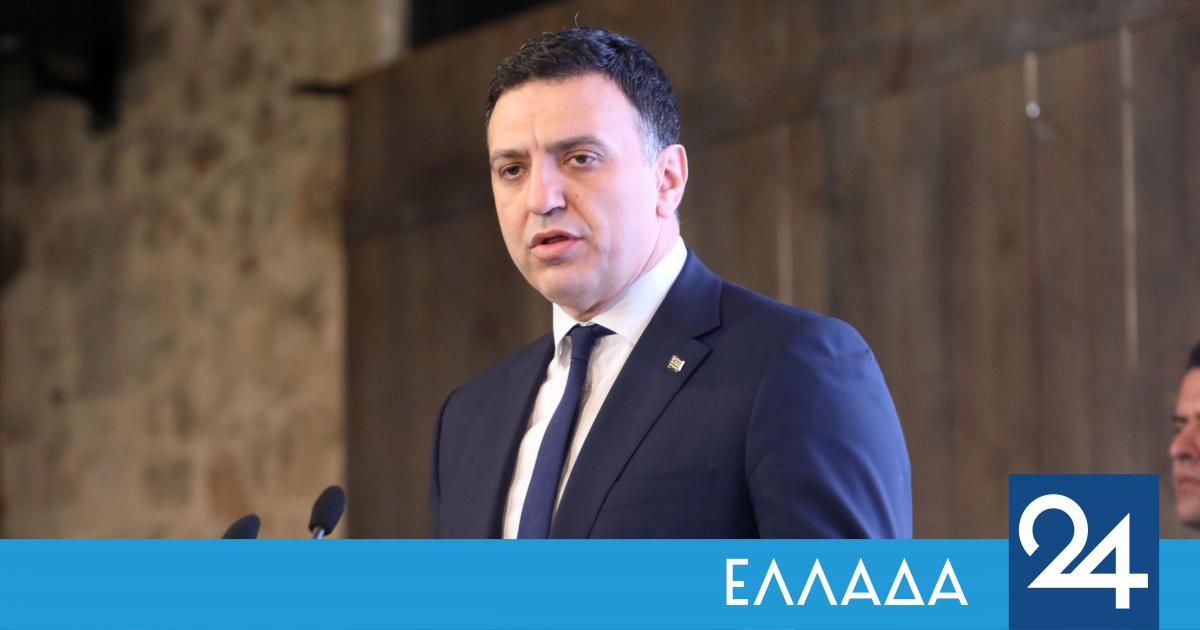
Vassilis Kikilias, Minister of Shipping and Island Policy, spoke of the need for more active and faster European intervention at the 2nd Economic Conference of Imeresia, noting that national budgets have been prepared for normal conditions and not for war conditions. “My urge, opinion and perception on this issue is that this move should be made ‘yesterday’,” he said, adding that the European Union should use its available tools in time. “The European family and European leaders must understand and see that they must intervene earlier and more timely,” Kikilias noted, linking the need for intervention to tourist flights, coastal connections and overall support for critical sectors of the Greek economy, such as tourism, shipping, services and real estate.
Referring to the possibility of the crisis continuing in June, he made it clear that “I cannot make a prediction”, stressing that the government and the ministry are monitoring developments day by day. “Engaging in such a war scenario, at a time of global instability, is relatively easy. Disengagement appears to be much more difficult,” he said, underlining the geostrategic importance of the Strait of Hormuz, through which a significant part of the world’s oil and gas production, as well as raw materials critical to the primary sector, pass. “The global economy and trade moves 80-90 per cent by sea,” he noted, explaining that any disruption to the energy or commodity chain has huge implications for societies.
More specifically, on the impact on shipping, Mr. Kikilias recalled that last year, following the intervention of the ministry and the government, port charges in all ports of the country were reduced by 50%, resulting in the restraint of ferry ticket prices, while through competition there were discounts of up to 32% on tickets, cars and cabins. He said, “this year the equation is more difficult, as every $10 increase in the price of oil equates to a $10 million charge on ferry fuel prices.” He recalled that the government has already allocated €57 million to support the shipping industry, an amount legislated and distributed to shipping companies based on costs and fuel costs.
As regards the green transition in shipping, he said that Greece supports the goal for a cleaner planet and the reduction of carbon emissions, but made it clear that the transition must be realistic and at a pace that societies and the real economy can bear. “We want our children to inherit a better planet, a better Europe, a better country.
In summing up, Kikilias said that the mandate of a government and a minister is to serve the citizens first and foremost. “In order to serve the citizens, they must be able to go to the market, the supermarket, the grocery store, the butcher and their daily life must be sustainable,” he said, adding that the transition cannot lead to new inflationary pressures and burdens on society. “It will not be bearable for the industry, it will not be bearable for the free economy and the market and most importantly it will destroy our people. And we are not prepared to let that happen,” he concluded.