“The debate on the new CAP for the period 2028 – 2034 is not only about direct payments. It is also about the future of agricultural production and the productive base of our country, food security, regional development and rural cohesion, and environmental balance.
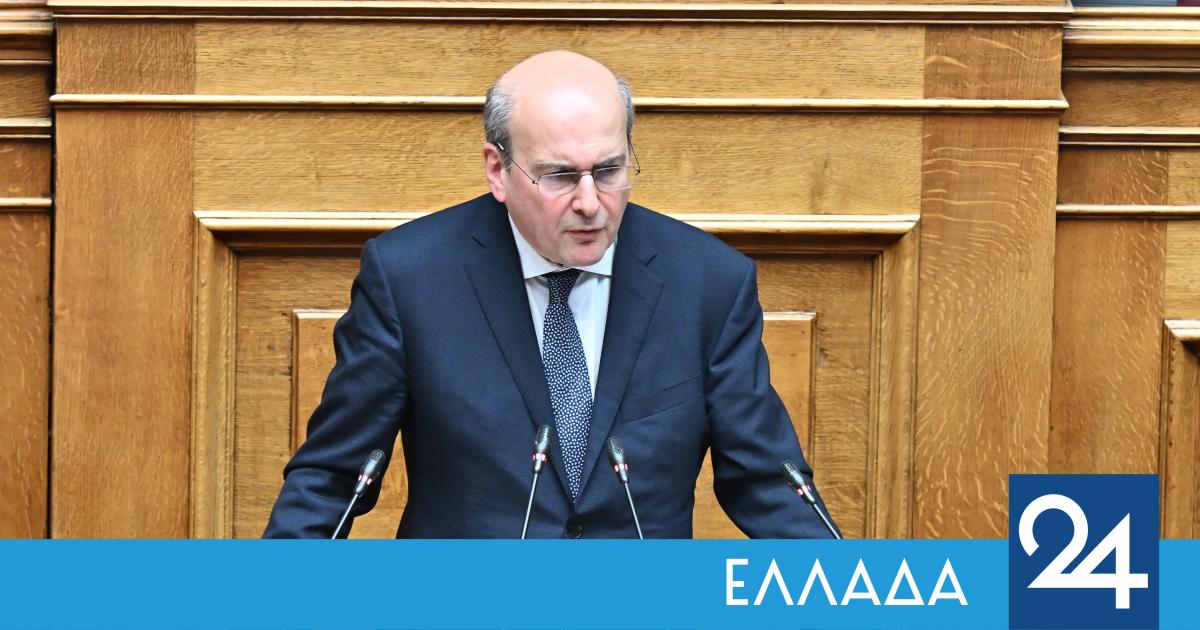
These remarks were made by Deputy Prime Minister Kostis Hatzidakis, speaking today at the event for the launch of the consultation on the new CAP, organised by the Ministry of Rural Development and Food. “The dialogue, he added, comes at a time when “old structural problems of the sector have come to meet new challenges. Asking for solutions, not only for the problems of the past, but also to create a meaningful perspective for the future.”
Kostis Hatzidakis identified five key priorities for the new CAP and for agricultural policy as a whole. These priorities are:
First, the policy for the development of the agricultural sector should serve parallel objectives:
– Ensure a fair and adequate income for producers.
– To link the competitiveness of agricultural production with sustainability and food security.
– To promote investment in infrastructure, technological upgrading, innovation and resilience; and
– To encourage renewal in the productive workforce – so that young people can live and create in the countryside with a perspective.
Second, the new CAP framework across Europe should be simpler, stable and understandable by all stakeholders – producers, operators, public authorities and local communities. Without additional bureaucracy and ambiguity. “We want to help in practice the world of production to take steps towards modernisation and progress, not to burden it with complex – and often meaningless – regulations, even for obvious things,” he said.
Thirdly, we need to acquire a logic that focuses not only on the absorption of European funds, but also on where these funds go and what results they bring. “It is a difficult debate, but we can no longer avoid it. And certainly not when we now want to support agricultural production in our country in a meaningful way.”
Teterton said there has been a very long discussion in recent months about the implementation of a new system for the payment of agricultural payments with the transition from OPEKEPE to AADE. “Its implementation already in the next period is a big gamble, and will lay the foundations for more transparency and reliability in payments and controls in the next programming period as well. We are not talking about less money. The same money will be distributed in a fairer way for the benefit of real producers.”
Second, the whole discussion on the transformation of the primary sector in Greece should not be limited to the CAP. “The primary sector, either by taking advantage of European policies or in the context of national guidelines, needs to move away from a subsidy management logic and take steps forward,” Kostis Hatzidakis stressed. These steps include: Larger and sustainable farms. Larger farms. Cooperation among farmers, through producer groups, clusters, agricultural chambers. Utilisation of agronomists and veterinarians as real advisors to farmers in the field, rather than as counters for subsidies and compensation, as they are to some extent today. Adapting to climate change, with organised interventions for more resilient crops and production methods and sustainable management of water resources.
Referring overall to the negotiations on the new Multiannual Financial Framework for the period 2028 – 2034 (of which the new CAP is part), the Deputy Prime Minister and President of the Interministerial Committee for the Coordination of Negotiations, noted that they are likely to be concluded when the country holds the Presidency of the EU at the end of 2027. Our country’s positions in these negotiations, he said, include:
– First, to secure the maximum possible set of resources from all the Financial Funds of the new EU budget. “A difficult negotiation, because many countries of the North consider that the European Commission’s proposal is already generous enough.”
– Second, to protect funding for the traditional pillars of Cohesion Policy and the CAP. “For us, these two policies always remain of key importance,” he said.
– Thirdly, the introduction of new Own Resources should be done in a way that ensures revenue stability, without a budgetary burden for middle-income countries such as Greece. “Because it is not only what you take but also what you give that matters.”
“This crucial negotiation will determine Greece’s growth prospects for the coming years,” Kostis Hatzidakis concluded. “For both the new CAP and the new Multiannual Financial Framework 2028-2034, Greece is preparing seriously and methodically and is actively participating in the negotiations. We want the consultation to be substantive, not petty partisan, and to formulate a national line that serves the long-term interests of Greek agriculture and the Greek region.”
M. Schinas: The opening of the port of Lesvos is a positive development
The opening of the port of Mytilene was mentioned by the Minister of Rural Development and Food, Margaritis Schinas, during the opening meeting for the consultation on the new Common Agricultural Policy (CAP) 2028-2034, which is being held in the framework of the “National and Regional Partnership Plan”.
The Minister described the development at the port as positive, noting that the gradual restoration of its operation is an indication that de-escalation can be achieved through understanding and joint effort. He also stressed that the situation in Lesvos remains challenging, as – as he said – a “great and coordinated battle” is underway, with the mobilisation of all available resources and forces.
Schinas stressed the need for cooperation between the stakeholders, underlining that in conditions of crisis there is no room for tensions or moves that do not contribute to the resolution of the problems. He said that only through coordinated actions can a common ground be established and the complex issues that have arisen can be effectively addressed.
“In Lesvos we are fighting a great and coordinated battle, mobilizing all the resources and forces we have. And again I want to take this opportunity to welcome the opening of the port of Mytilene this morning. It is a positive development. It shows that only with the cooperation of all stakeholders we will find a solution and that shouting has no solution to such complex and acute problems”, Mr Schinas said.