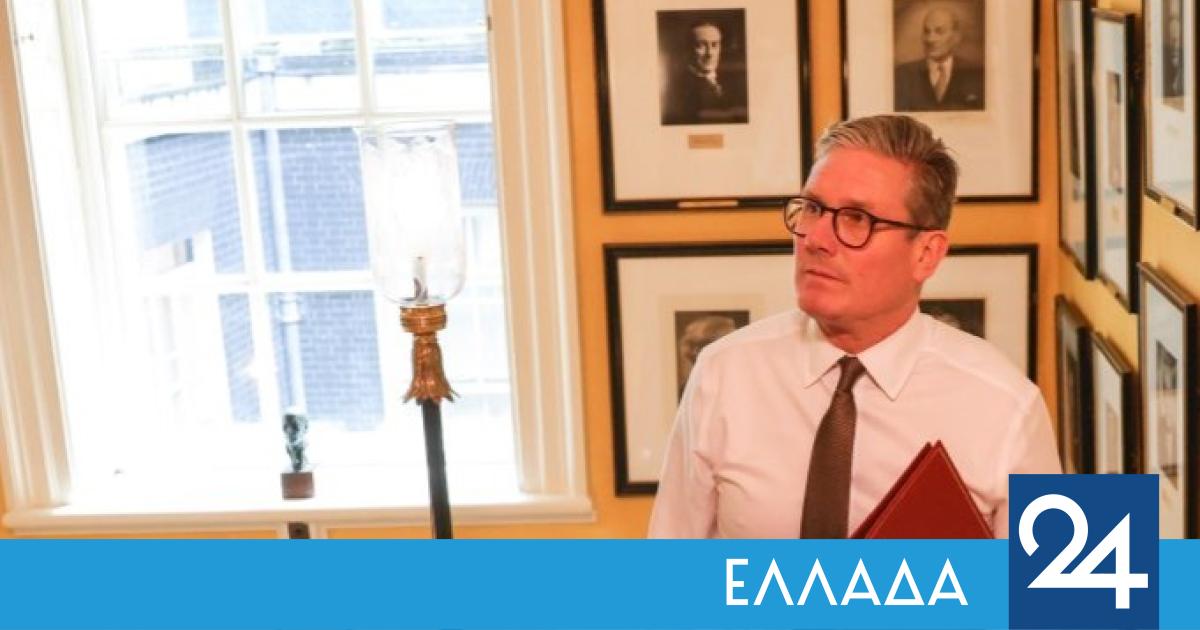
Although appearing weakened, Britain’s Prime Minister Kir Starmers said today that he wants to “continue to govern” despite the deep divisions looming within the Labour Party.
Today, 86 Labour MPs – out of a total of 403 – called for his resignation, according to the BBC, while four junior ministers announced they were resigning in a show of no confidence in the prime minister.
However, at the same time, more than 100 colleagues signed a letter of support for Starmer, according to British media. “Now is not the time to start a process of challenging the leadership” of the party, they say in their letter.
Who is calling for his resignation?
The pressure on Starmer intensified after his speech on Monday, which was aimed at restarting the party after last Thursday’s disastrous local elections. MPs calling on him to leave office want to see him step down immediately or set a timetable for his exit.
However, the process requires at least one candidate to succeed him to challenge for the leadership – something that has not happened so far – after garnering the support of 81 MPs, or 20 per cent of Labour’s parliamentary group.
On the other hand, the main argument of Starmer’s supporters is that a new political chaos like the one in 2022, when the Conservatives changed three prime ministers in four months, should be avoided.
After the cabinet meeting today, Labour minister Pat McFadden told Sky News that Starmer would “get on with the job” and that he had received “great support”. Late in the evening two senior members of his government, Home Secretary Sabana Mahmoud and Deputy Prime Minister David Lammy, also expressed their support for him.
Starmer himself referred to the “real economic cost” of the turmoil that has rocked the government for several months. Government bond yields today reached 5.8 per cent, touching levels not seen since 1998.
How did we get here?
The 63-year-old Starmer’s popularity plummeted after Labour’s landslide victory in the 2024 general election, which ended 14 years of Conservative rule.
Critics point to his multiple slip-ups, setbacks and controversies – notably the scandal surrounding the appointment of Peter Mandelson as ambassador to Washington.
Discontent within Labour intensified after last Thursday’s local elections. Labour lost ground to Nigel Farage’s nationalist, anti-immigrant Reform UK party, even in its strongholds in the north of England and Wales. At the same time, the Greens, positioned further to the left, won him votes in London.
This political storm is occurring against a backdrop of a stagnant economy and an international crisis due to the war in the Middle East. It is also happening on the eve of a watershed moment in British political life: the traditional speech by King Charles III, who is due to unveil his legislative programme for the coming year tomorrow (Wednesday).
The UK is “starting to look ungovernable”, Tony Travers of the London School of Economics told AFP. “The constant psychodrama at the top of the British political scene is clearly not good for public confidence,” he added.
Possible replacements
A possible resignation of Starmer would not lead to a national election but an internal party election. The new Labour leader would take over as prime minister.
The British media have been reporting various names for weeks. Wes Streting, the 43-year-old health minister, who will meet with Starmer tomorrow morning, seems the simplest choice as he is elected to the House of Commons, a prerequisite for being leader of the government.
Andy Burnham, 56, the mayor of Manchester and Labour’s most popular figure in the polls, is also a serious contender. However, he cannot stand as he does not hold a seat in Parliament. Holding a local election could take months and would require an MP from a “safe” constituency to resign in order to concede his seat. Burnham was in London at midday today.
Finally, the name of the former deputy prime minister, 46-year-old Angela Rainer, is also regularly mentioned by the press.