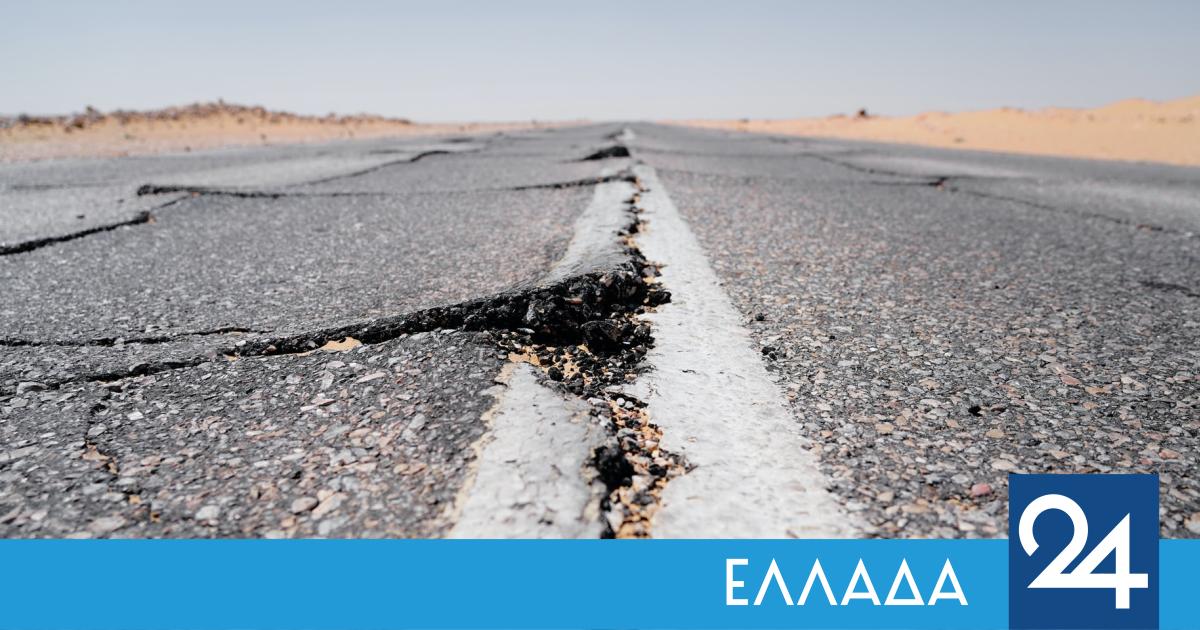
The seismic activity in Central Evia is being “mapped” by the Seismology Laboratory of the Department of Geology and Geoenvironment of the National and Kapodistrian University of Athens, as it monitors the evolution of the phenomenon in real time.
More specifically, the Laboratory noted that the 5.2 magnitude earthquake “may be the main earthquake” and that, based on the development of the epicenters, it was found that “internal faults of the Prokopio Basin have been active, which have limited capacity. On the contrary, the external faults of the North Evian, which have a higher capacity, remain inactive,” the statement said.
Earthquakes and epicenters
As stated in a statement, on June 7, 2026, (12:58:46 local time) an earthquake of magnitude 4.8 Richter, with an epicenter of 28 km. north-northwest of Chalkida, southwest of Prokopios Evia, at a focal depth of 10 km. About four minutes later (13:02:48 local time), a second earthquake, measuring 5.2 on the Richter scale, occurred in approximately the same area, at a focal depth of 8 km. According to the Laboratory, the second earthquake is characterized as strong, as its maximum intensity was estimated at about level VI of the European Macroseismic Scale, while the earthquake was felt in Attica (weak-moderate shaking), with estimated intensities of about III-IV.
As noted, the evolution of the phenomenon so far indicates that the second earthquake “may be the main earthquake of the sequence, which is accompanied by a significant number of aftershocks”. However, it is stressed that scientific monitoring is continuing and additional data collection is required in the coming days to more confidently assess the evolution of the phenomenon.
It is worth noting that in the interval between the two aforementioned earthquakes, another earthquake of magnitude 4.3 (13:00:28 local time) was recorded in the same focal area.
The Laboratory has detected a total of 31 aftershocks, ranging in magnitude from 2.0 to 3.6 by 6:45 p.m. yesterday, Sunday.
“Based on the development of the epicenters, it was found that internal faults of the Prokopio Basin, which have limited capacity, have been active. In contrast, the external faults of the North Euboikos, which have a higher capacity, remain inactive,” the statement said.
Previous seismic activity
As highlighted by the Laboratory, the wider Central Evia region has experienced seismic activity in previous years, with earthquakes of similar magnitude, which, as noted, “confirms the long-standing seismicity of the zone”.
More specifically, on January 4, 2023, a magnitude 4.3 earthquake centered east of Markates was recorded, and on November 3, 2023, a 5.2 earthquake occurred further west, near Prokopi. The same area also experienced three earthquakes with magnitudes between 4.2 and 4.6 in May 2025, with epicentres near Prokopi.
Real-time monitoring
The Laboratory of Seismology of the University of Athens, directed by Professor Georgios Kavyris, Member of the Interdisciplinary Committee for Risk and Crisis Management of the University of Athens, continues to monitor the evolution of seismic activity and presents the seismicity of Greece in real time from recordings of the National Seismograph Network (NEN), at www.geophysics.geol.uoa.gr/stations/maps/recent_gr.html .
.
As stated in the announcement, the Laboratory of Seismology of the UCA has the densest network of active seismological stations in Evia, contributing decisively to the accurate and direct recording of seismic activity in the region. Specifically, the ES-EKPA has installed seismological stations in the areas of Markates (HA.MRKA), Psachna (HA.PSAH), Eretria (HA.ERTR), Elaichori (HA.ELEO) and Karystos (HA.