Six years after the launch of gov.gr, the debate on the digital transformation of the state has now moved beyond announcements and technological innovations. The focus is increasingly on the measurable results that digital services produce for citizens, businesses and public administration. And the evidence shows that the transition to the digital age is no longer just a modernisation project, but a reform with a tangible economic, social and environmental footprint.
The findings are indicative of the scale of the change. The evaluation of 39 digitisation and administrative simplification actions records annual savings of more than €562 million, a reduction in carbon dioxide emissions of more than 43,000 tonnes and savings of more than 205 million sheets of paper every year. These figures do not simply reflect a financial benefit. They reflect time not wasted in queues and travel, administrative costs eliminated and resources redirected to more productive activities.
Behind these results lies a policy choice that began in 2019. From the outset, modernising the state through technology has been one of the key priorities of government policy. Addressing bureaucracy as an organisational issue rather than an inevitable pathogen of the state was at the core of this strategy.
The Ministry of Digital Governance has undertaken the implementation of this strategy, moving towards the creation of a single ecosystem of digital services, the interconnection of information systems and the development of common interoperability standards. gov.gr was the most visible expression of this policy, acting as the single digital gateway of the state and radically changing the way citizens interact with the public administration.
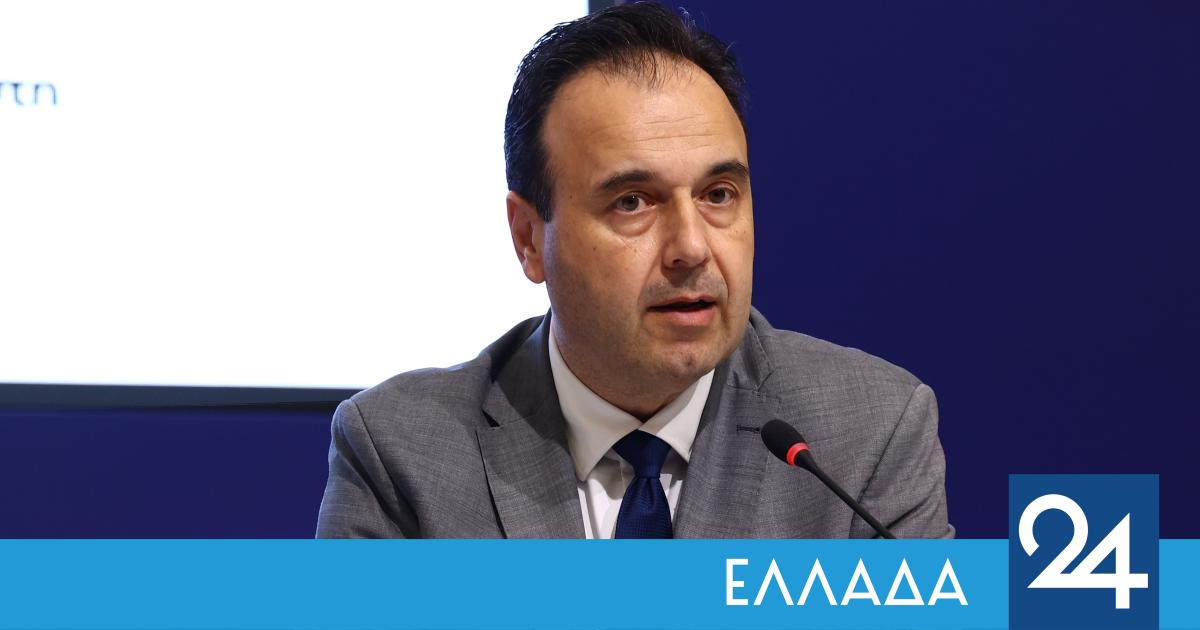
“For decades, the citizen’s relationship with the state went through envelopes, stamps and counters. Often the citizen was asked to prove over and over again what the state itself already knew. Six years after the launch of gov.gr, the biggest change is not the thousands of services that have gone digital. It is the change of mindset. The state is organised around the needs of the citizen, not the citizen around the needs of the state. It is a different concept of public administration, based on trust, transparency and better use of data. Gov.gr is not the end of a journey. It is proof that when there is solid planning, continuity and political will, as expressed over time by Prime Minister Kyriakos Mitsotakis, the state can change. And, above all, it can change for the benefit of citizens,” Minister of Digital Governance Dimitris Papastergiou told the Athens-Macedonian News Agency.
The gov.gr footprint in numbers
The first comprehensive evaluation of 20 gov.gr services captures the magnitude of the change. According to the assessment data, these services generate an annual benefit of €312 million. The time to complete procedures has been reduced by 88% for citizens and businesses and up to 97% for public administration. At the same time, around 19.1 million journeys are avoided each year, more than 62.5 million sheets of paper are saved and carbon dioxide emissions are reduced by around 33,000 tonnes.
These figures take on particular significance when you consider that they only relate to a fraction of the services currently provided through gov.gr. At the same time, citizens record high levels of satisfaction, highlighting ease of use, avoiding physical presence in services and the overall speeding up of procedures as the most important advantages. It is no coincidence that gov.gr is now recorded as the preferred channel of communication with the public administration.
Equally revealing are the findings from the evaluation of ten influential administrative procedures, such as the issuing of digital certificates by ADSE, the renewal of unemployment cards, the granting of heating allowances, the issuing of certificates of military status and other services with a high frequency of use. These interventions lead to an annual reduction in administrative costs of more than €70 million, prevent at least 2.7 million physical movements of citizens, save around 12.8 million sheets of paper and reduce carbon dioxide emissions by around 8,400 tonnes every year.
The metrics also highlight a less visible but equally important dimension of the reform: the high level of digital maturity that processes are gaining. The extensive use of interoperability between agencies, the automation of key stages, the reduction of the need for physical presence and greater predictability in the completion of requests are enhancing the reliability and transparency of the administrative function.
An important chapter of the digital transition is the digitisation of the physical records of the public sector. The flagship action, involving some 1.2 billion pages of records in critical sectors such as Justice, Health, Land Registry, Migration and Asylum, is expected to generate annual financial benefits of €180 million. At the same time, it is estimated that around 130 million sheets of paper will be saved annually, while carbon dioxide emissions will be reduced by around 2,100 tonnes.
Beyond the economic and environmental figures, the importance of the project lies in the creation of new opportunities for public administration. Faster information retrieval, improved data management, enhanced interoperability between agencies, as well as the future use of AI tools and big data analytics are creating the conditions for a different model of administration in the coming years.
The CRM project – Unified Digital Infrastructure for Citizen and Business Services is part of this new service architecture. This is an intervention that attempts to shift the focus from process management to the management of the citizen experience. Through the unified tracking of requests and interactions, the project aspires to substantially improve the quality of service and enhance the human-centric nature of public administration.
The value of measurable reforms
The picture becomes even more significant when the scale of the intervention is taken into account. To date, 39 action evaluations have been completed, another ten are in progress, and more than 4,200 administrative procedures have already been recorded in the National Register of Procedures “Mitos”. For the first time, the Greek state is acquiring a mechanism for systematic mapping, measurement and evaluation of its functioning, creating the conditions for evidence-based policy design and continuous monitoring of its results.
The National Documentation and Electronic Content Centre (EKT) has made a decisive contribution to this systematic mapping and evaluation effort, which, in cooperation with the relevant ministries, applies internationally recognised methodologies for measuring administrative burdens and evaluating public policies. Its contribution is not limited to the production of statistics. It is linked to the creation of a permanent documentation mechanism, which for the first time allows for a systematic assessment of the results produced by state reforms.
The contribution of the EU’s contribution is not limited to statistical data.
The six-year anniversary of gov.gr will be the central theme of the event “6 years of gov.gr. Click and it’s done!”, organised by the Ministry of Digital Governance on 9 June 2026, at Technopolis of the Municipality of Athens. The presence of the Prime Minister, Kyriakos Mitsotakis, who will deliver a speech, adds a special symbolism to an initiative that has been identified with the modernization of the state and the daily experience of millions of citizens.
The event takes place in the framework of the National Recovery and Resilience Plan “Greece 2.0”, funded by the European Union through the NextGenerationEU.
Six years after the launch of gov.gr, as reflected in the statement of the Minister of Digital Governance, the interest is no longer limited to the number of digital services offered to citizens. What is more essential is that digital transformation is beginning to be reflected in measurable results: In less bureaucracy, lower administrative costs, savings and better service. And perhaps for the first time, such a far-reaching public sector reform can be evaluated not by the promises it makes, but by the data it produces.