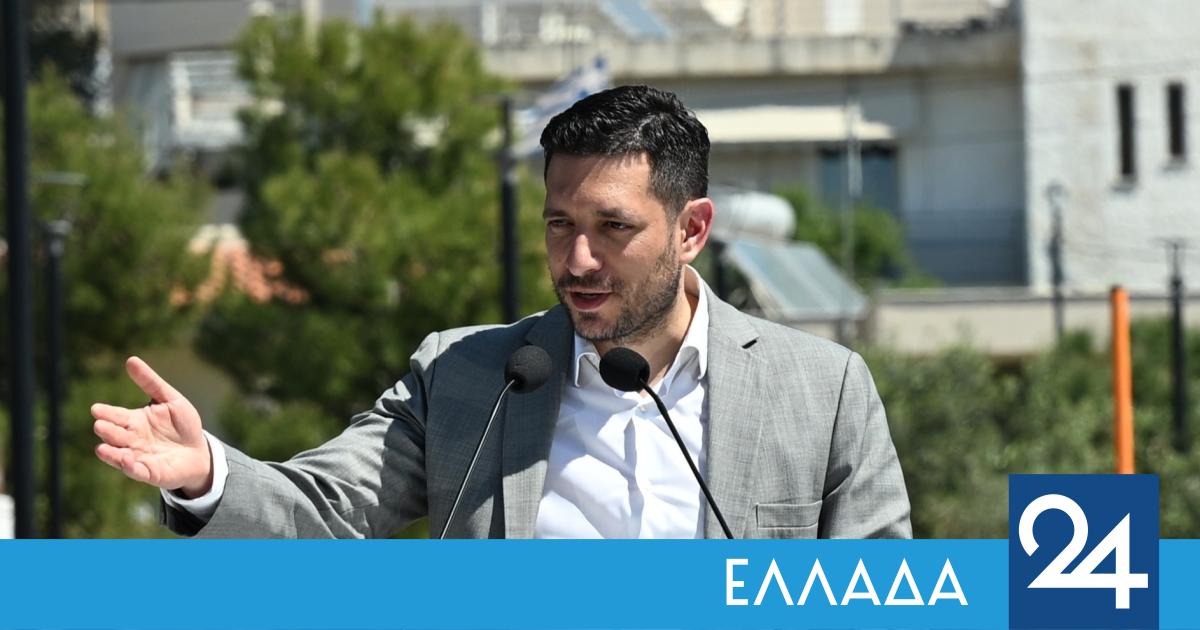
Kyriakos Mitsotakis’ proposal for the nomination of Konstantinos Kyranakis as secretary of the Political Committee of New Democracy, at this political juncture, is not just a typical intra-party change of baton. It is a choice with a clear political and ideological footprint and a clear message for the party mechanism’s stakes in the coming period. It is – as they say from the ruling party – a targeted choice of political, organisational and communication reinforcement on the road to the national elections.
Konstantinos Kyranakis is an executive who comes from the party’s innards and knows the authentic DNA of the party’s voters like few others. From the DAP-NDFK and the ONNED to the Youth of the European People’s Party, of which he was twice elected president, Mr. Kyranakis is a person with a track record and internal party legitimacy, who has climbed the party hierarchy step by step, but also has a strong international network and respect within the European centre-right.
Maximou’s Megaro appreciates that Kyranakis has been tested in difficult circumstances and does not shy away from political risk. On the contrary, he has proven that he can take on high-pressure missions. At the same time, he has a strong presence in the public debate and “frontline” experience in the political debate. As deputy press spokesman of the New Democracy party in 2019, he was at the centre of the debate with the then Tsipras-Kamenos government, building – as they say – resilience under intense pressure.
In addition to the above, he now ranks among the list of government officials identified with major political victories and government reforms. “He is one of those persons who does not shy away from difficult things, always trying to deliver results,” say those familiar with party affairs.
In particular, at the Ministry of Digital Government he was linked to the completion of the Land Registry after 30 years of stalling. Accelerating digitization of processes, reducing bureaucracy and addressing entrenched corruption and dysfunctions make up the picture of a major reform.
As Deputy Minister of Transport, he takes on one of the most difficult and politically “hot” files: In the midst of massive protests over the Tempi, with a pressing demand to upgrade rail safety. The term there is ending successfully, with five additional safety barriers on the railway, infrastructure projects being delivered on time, and the agreement to supply brand new trains being implemented.
According to reports, however, the fact that Kyranakis is a man very close to Kyriakos Mitsotakis himself is also significant. Few people know that he was in the current Prime Minister’s team during the 2015-2016 campaign for the ND presidency. So it is a personal relationship that goes back many years, and as secretary Konstantinos Kyranakis is expected – as they emphasize – to give all his strength and personal zeal to the battle for self-reliance and the re-election of the Prime Minister, with the main objective of all the executives to “sweat the jersey.”
The selection of Kyranakis is another move of the Prime Minister’s practical support to the generation of 30-year-olds of the party, who combine party experience, performances and credentials, as was done similarly with the selection of Pavlos Marinakis in 2021 for the position of party secretary, but also with many other government officials and candidates on the Southwest’s ballots.
Those who read behind this choice insist: it is not just about managing the party apparatus. This is the obvious. The real stakes are different.
The revitalization of the party base and the reactivation of citizens who remain emotionally close to the Southwest, but have moved away from active participation. This is a public that is either silent or watching from a distance.
In this area, K. Kyranakis has a critical advantage: he can speak to both a partisan audience and appeal to audiences that traditional parties have difficulty reaching.
Konstantinos Kyranakis speaks the language of the neo-democrat and at the same time of young people, the ruling party notes.
They say that the crucial question is not only organizational readiness in view of elections. It is whether New Democracy can appear more extroverted, more modern, more attractive to citizens who today either remain politically inactive or look in other directions.