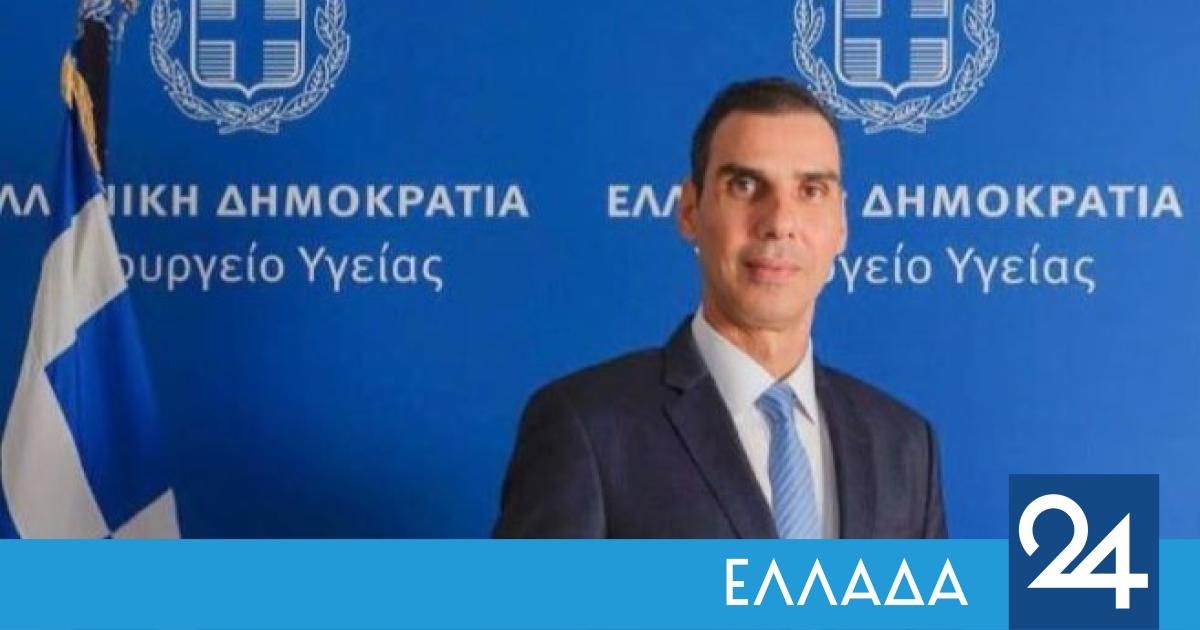
The changes brought by artificial intelligence in health, the improvement of access for citizens in remote areas and islands, diagnosis and prevention, saving time for doctors, as well as the use of the digital patient file, was mentioned by Deputy Minister of Health, Marios Themistocleous, speaking to the “ERTNEWS” TV station.
“If I had to choose one change that artificial intelligence will bring in the next decade, it would be the improvement of access to islands and remote areas,” Mr. “Greece has a difficult geographical terrain and AI can bring diagnosis and easier access where there are objective difficulties today.”
He went on to say: “a citizen on an island will be able to have an ultrasound in the presence of a person who does not necessarily need to be a technologist, while the guidance of the procedure and the diagnosis can be done from Athens. This will change things enormously”. At the same time, he stressed that: “AI is not limited to access, but is about diagnosis, treatment, research and hospital management” and added: “citizens who have difficulty getting to a doctor or making all the required visits will be able, especially in the beginning for simple instructions or advice, to be supported by AI tools”. Finally, he also stressed that the most important element is the doctor-patient relationship, which cannot be replaced by any artificial intelligence, no matter how much it evolves.
Themistocleous noted that “the foundations have already been laid for what is to come, as the country has taken very big steps in the digitalisation of the health system”. Specifically on administration and time management, he said that “according to examples from hospitals where artificial intelligence is already being implemented, a doctor in the United States saves about a week a month. Time currently spent on bureaucratic procedures, filling out forms and certificates can be returned to the doctor and dedicated to the patient.” He noted that after a regular outpatient clinic, instead of the doctor taking about 10 minutes to record what the patient said, what was said, what treatment was recommended and proceed to prescribe, all of this can be assisted by AI.
In terms of AI in drug research and development, he said that “a drug takes years of research and clinical trials to produce. By using artificial intelligence, this time can be significantly improved, resulting in a gain of 5 years.” This, he added, “means that new drugs can come faster and cheaper, as the reduction in time also leads to a reduction in cost.”
Themistocles noted that: “the whole philosophy of the Ministry of Health is changing, as until now, not only in Greece, but also in other European countries, the systems have been operating as ‘Ministries of Illness’, waiting for the citizen to become ill to be treated. Today, everything is based on prevention and AI will “revolutionize” this field, as it will be able to predict, monitor and alert citizens who belong to high-risk groups or are experiencing a problem.”
Regarding the single digital record and Greece’s position, Themistocleous noted that “our country, both in prescribing and in the single digital patient record and MyHealth App, is well ahead. Our country has today managed to have a single digital file and single systems, which even much richer, larger and more digitally advanced countries do not have,” he said, adding that behind the apps are Greek companies in collaboration with large companies at the European level.
The Deputy Minister of Health concluded by saying that “in 10 years we will live more years, more good years and more years as healthy people”. He stressed that artificial intelligence “is here” to help both the citizen before they become a patient and the doctor. It will be able to predict, support prevention and help the citizen even through simple tools such as a smartwatch or a wristband to monitor if they are sleeping well, if their tensions are good and to improve themselves.