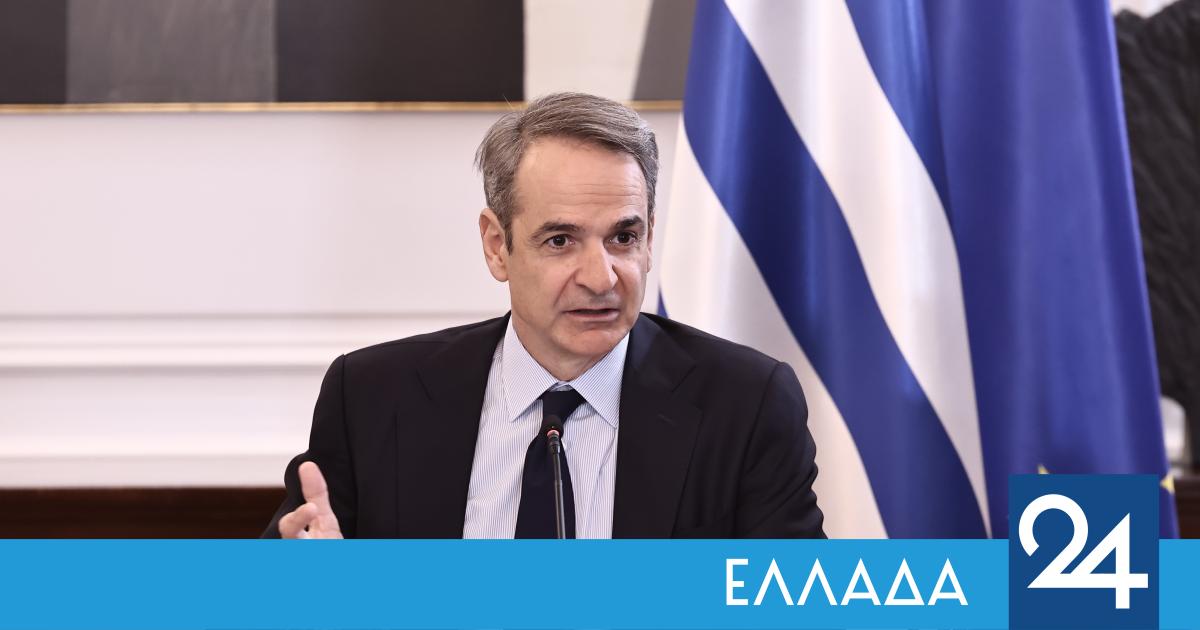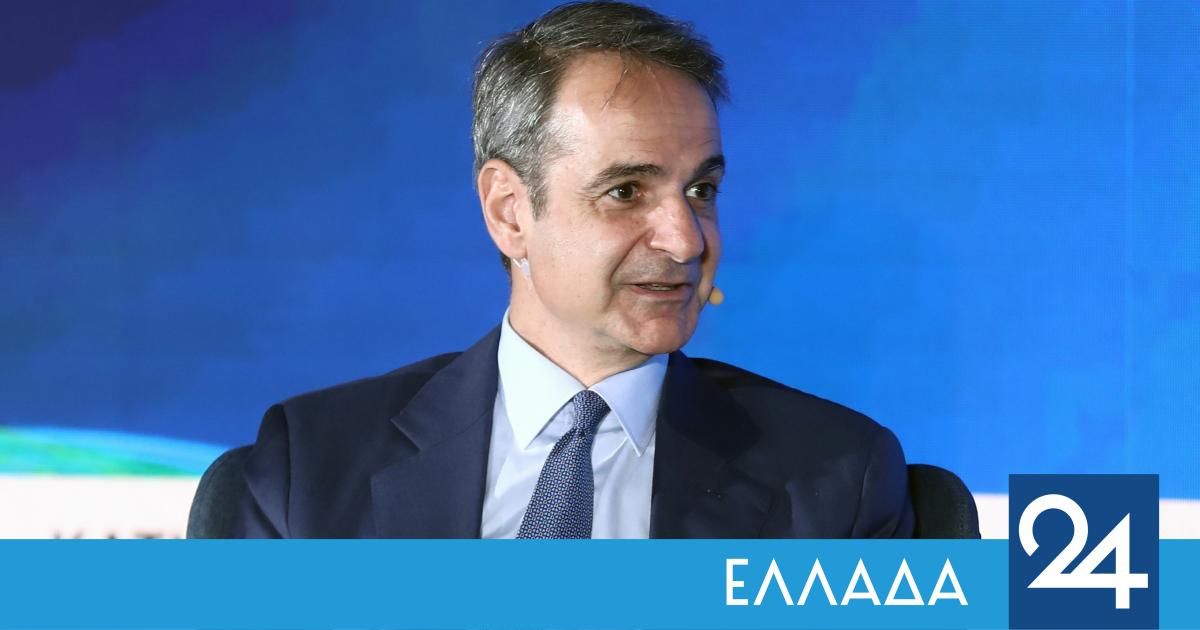
“When I look at Greece, since we gained our independence, we have always looked to the West. The challenge has always been: ‘How can we become a real member of the European family? But nowadays, I think it is much more important to look also to the East, to the South-East, to the South, to Africa. And this, I think, is particularly important in the context of this changing security environment,” Prime Minister Kyriakos Mitsotakis said, speaking yesterday at the leaders’ dinner of the Europe Gulf Forum, held in Costa Navarino, co-organized by the Antenna Group and the Atlantic Council. Through his speech, the Prime Minister highlighted the importance of strengthening relations between Europe and the Gulf countries in the fields of energy, defence, investment, trade routes and regional stability, while underlining Greece’s strategic role as a pillar of security and cooperation in the wider region.
With references to the country’s historical journey, as well as to contemporary international challenges, Kyriakos Mitsotakis presented a vision of extroversion, geopolitical maturity and multidimensional cooperation.
In his speech at the Europe Gulf Forum Leaders’ Dinner, Prime Minister Kyriakos Mitsotakis said:
Thank you very much for this extremely kind introduction. I understand that it is extremely dangerous to talk for too long, because you have had a look at this wonderful menu and I am sure you all have a particular appetite.
First of all, however, I would like to begin by congratulating the Atlantic Council and Thodoris personally for this excellent event, which is taking place in a place of particular historical significance for my country, as right behind us, in this bay, in October 1827, an important naval battle took place. The combined forces and fleets of Britain, France and Russia sank the Ottoman-Egyptian fleet and thus effectively paved the way for the independence of Greece.
Tony and David, we are very grateful that Admiral Codrington ignored the non-engagement instructions he had received and ended up sinking the entire fleet. Had this not happened, Greece probably would not be an independent state today.
It is, however, interesting that we are in a place that, in a way, symbolizes the progress the country has made. It is a wonderful new destination that we have been highlighting for the last 10 years. It was the vision of a very important Greek shipowner who was born in a village not far from here, poor, created his fortune at sea and decided to invest in his homeland. With great patience he gathered a large tract of land and turned it into an amazing new destination. Essentially, I think, it reflects the progress Greece has made in recent years.
However, we are not here today to talk about Greece’s achievements. We are here to talk about what I believe is a high priority for all of us Europeans, which is to establish a much more constructive and productive relationship with the Gulf countries, and I am very pleased that you have had the opportunity today to meet, to exchange views and to discuss openly and frankly the opportunities and challenges of this important relationship.
And when I look at Greece, from the time we gained our independence, we have always looked to the West. The challenge has always been: “How can we become a real member of the European family?”
.
But nowadays, I think it is much more important to look also to the East, to the South-East, to the South, to Africa. And that, I think, is particularly important in the context of this changing security environment. In the European Council we are discussing at length with Georgia about a 360-degree approach to security.
As much as we are concerned about the war in Ukraine, we cannot ignore the fact that there are many opportunities and challenges in other parts of the world. I believe that Greece is a natural bridge between Europe and the Gulf countries. We have stood by the side of the Gulf countries in times of great difficulties, supporting them militarily with all our forces. I believe that now is the time to strengthen this cooperation in several priority areas, energy being clearly one of them.
In Europe we are talking a lot about the pace of the green transition. We remain committed to our climate targets, but we also know that carbonisation cannot be achieved at the expense of our industrial base. We also know that fossil fuels will continue to be part of our energy mix for the foreseeable future. So if we’re going to talk about importing natural gas, about new relationships, strategic partnerships, this is really the region that we need to look at.
When we talk about strengthening our defence base in Europe, let us bear in mind that, as you know, the Gulf countries have made significant progress in the field of defence technology. There are new partnerships that can be built in this area.
When we look at new trade routes, the importance of IMEC (India-Middle East-Europe Economic Corridor), the Gulf countries are right in the middle between India and Europe. There are significant opportunities to explore new trade routes, to look at logistics issues, but also to increase the penetration of European investment in the Gulf, which, admittedly, is still at a relatively low level. We always seek to attract investment from the Gulf to Europe, but we should also be bolder in terms of investing in this part of the world as it is going through a period of profound transformation.
And last but not least, an issue I know Georgia is particularly interested in: Africa. We can and should work with the Gulf countries, despite the fact that, as I understand, our agendas are not always fully aligned, but I think it is in everyone’s interest to help stabilize Africa, to invest in Africa, to look at how Africa can help us diversify our sources of critical raw materials, to manage problems like migration, to make sure that countries like Egypt remain stable and that Libya returns to a state of stability. This is vital for both sides. And I look to Georgia, because we are facing major migratory pressures and we have an interest that I think is consistent with that of the Gulf countries in terms of ensuring peace and stability in that region.
So I don’t want to take up your time. There is no way I can compete with the jugglers and painters that Thodoris has been kind enough to invite, I am sure there will be very interesting entertainment after our dinner – what I can tell you is that there is no way my party’s conference can compete with that, you know how it is, you watch a lot of speeches.
We have an election coming up, May 2027 at the latest, and I need to make sure we prevail again. But thank you very much, Theo, for inviting me, and I really look forward to making sure this forum becomes even more meaningful.
In terms of our role in the European Council, I am confident that the countries represented here today will make every effort to strengthen cooperation and ensure that, at some point, they deliver on their commitments. Greece and Italy are the two countries currently participating in Operation ASPIDES, a naval operation aimed at ensuring freedom of navigation in the Red Sea. We must therefore convince our other European partners that if they want to take this relationship with the Gulf countries more seriously, they must live up to their commitments. I am, however, confident that we will make significant progress in this direction.
Thank you very much again, Fred, for organizing this meeting. Let’s renew our meeting here next year, which will probably be, you know, during the election campaign. Thank you very much.