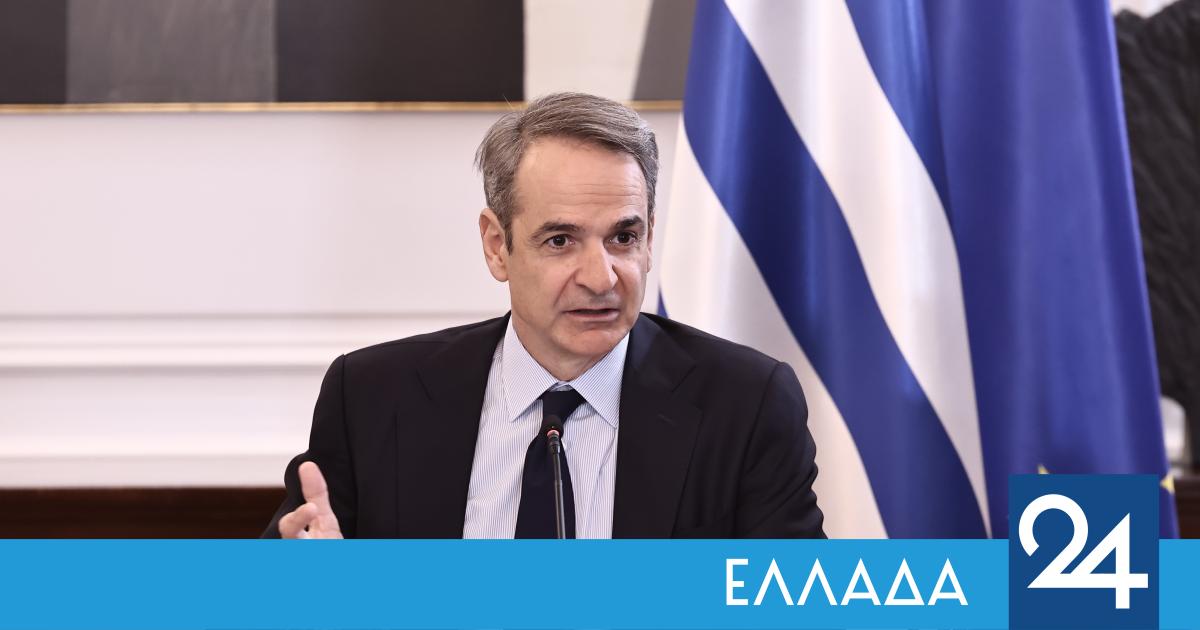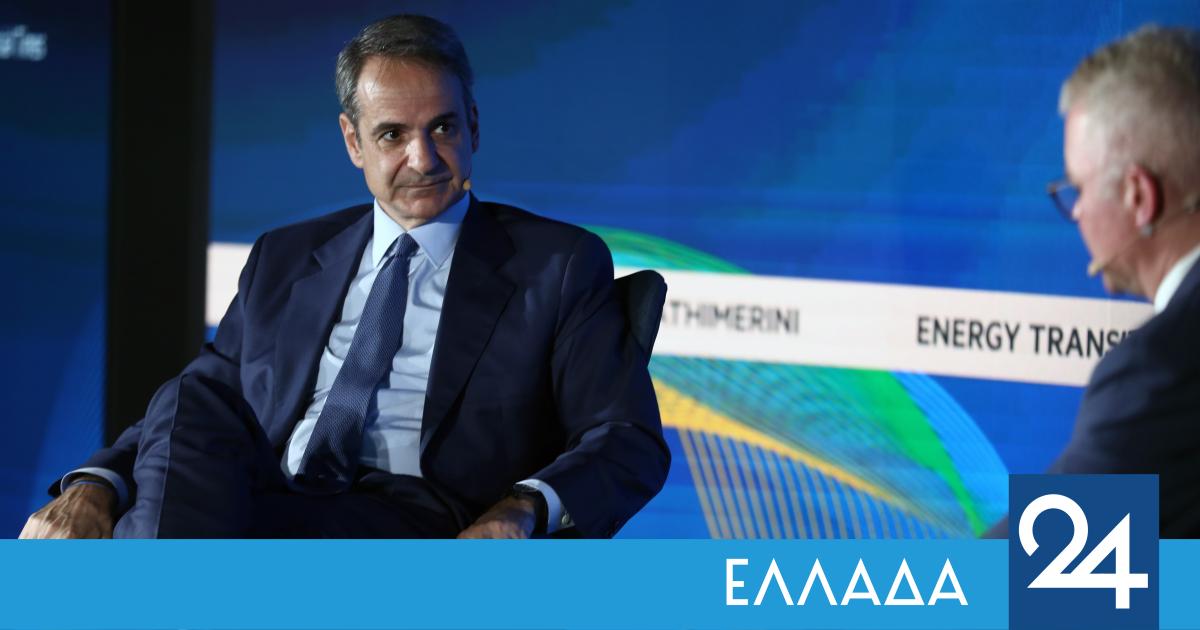
Kyriakos Mitsotakis discussed developments surrounding the US-Iran conflict during his conversation with Ben Hall of the Financial Times at the “Energy Transition Summit: east med & southeast Europe” conference. He stressed that the global situation is characterized by strong geopolitical and economic instability, noting that the European Union continues to support diplomatic resolution of disputes.
The Prime Minister stressed that Iran must not acquire nuclear weapons and stressed the need to fully restore freedom of navigation in the Strait of Hormuz. He noted that the situation sets a particularly dangerous precedent and that these factors will affect the final agreement between the United States and Iran.
He also warned of the possibility of a negative scenario, with a prolonged conflict, increased inflation, lower growth rates and the need for government support to citizens. He said that Greece has fiscal space due to the primary surpluses it is recording, noting that it is among the five European countries that have achieved this.
According to him, countries that have gone through a financial crisis are now showing a better fiscal picture, but national potential is not inexhaustible. He stressed that protecting citizens and economies against a possible prolonged crisis should be an immediate priority, recalling the energy crisis of 2022 and the impact of increased gas prices.
Mitsotakis also stressed that the events in the Straits of Hormuz show that Europe must give greater importance to energy security. He said that the EU has a strategy on climate change, but not a comprehensive energy security policy, and the two issues do not always go hand in hand.
He explained that every week that the Strait of Hormuz remains closed increases the pressure on the global supply chain, warning that such a situation should not be considered normal. At the same time, he noted that the issue also directly affects the United States through the increase in fuel prices, which he said puts additional pressure on the US president.
The Prime Minister pointed out that Greece is energy self-sufficient in fuels, including aviation fuels, while it has strong refineries and significant export activity in oil products. He also stated that he remains committed to the green transition, believing that achieving climate neutrality will also enhance energy security.
He acknowledged, however, that fossil fuels still play an important role in Europe, despite the transition to clean energy. He also referred to the impact the crisis could have on tourism and air transport, but expressed optimism that the situation would normalise and that there would be an increase in last-minute bookings.
On the issue of dealing with the price hike, Mitsotakis said the government intervened in diesel because of its effect on the entire supply chain and on inflation. He added that support was given to pensioners and families with children, noting that the high cost of living is the most important problem facing European governments.
He said competitiveness is directly linked to tackling the issue of price competitiveness, as higher wages, higher productivity and more fiscal space are needed. He noted that precision is at the top of the government’s agenda, clarifying that the measures taken are temporary, targeted and should not boost inflation.
The Prime Minister also estimated that within the year Greece will probably cease to be the most indebted country in Europe, describing this development as a political legacy and an obligation towards future generations. He stressed that all the government’s actions would remain within European fiscal rules.
As regards European borrowing, he said that it can only be used for specific European priorities, such as defence, which he described as a top European public good. However, he clarified that he did not support generalised lending to tackle economic crises.
In another part of the debate, he noted that Greece and Italy have already provided ships to protect freedom of navigation in the Red Sea. He also said that Greece is ready to participate in a possible peacekeeping mission, provided there is an agreement and a UN decision in this regard.
Kyriakos Mitsotakis also referred to the extraction of hydrocarbons in Greek waters, noting that they will benefit both Greece and Europe. He also stressed that the country has managed to reduce electricity prices through the development of renewable energy sources and that it now also functions as an energy exporter.
As he explained, even with a high share of renewables in the energy mix, an additional source of energy will be needed, with natural gas remaining necessary for the coming years. He added that Greece is rapidly investing in energy storage and prefers domestic gas production to imports, as this enhances both public finances and energy security.
Referring to the European energy market as a whole, he noted that it is still fragmented and without adequate interconnections, which hinders the treatment of electricity as a common European resource. He recalled that the Draghi report also emphasised the high energy costs.
Finally, the Prime Minister also referred to the issue of nuclear energy, describing it as the only long-term alternative to natural gas for stable electricity production. He revealed that a working group had been set up to examine the future of nuclear energy in Greece, but clarified that no decision had been taken and that it was a plan with a ten-year horizon.