The Prime Minister’s post today moves between the personal tone and the week’s political agenda, starting with a reference to Mother’s Day and the importance of family, before moving on to issues of the economy, energy, geopolitics and everyday life. The focus is on energy security and renewable energy initiatives, early repayment of public debt and the strengthening of debt settlement through the out-of-court mechanism, while special emphasis is also placed on the country’s international contacts with the United Arab Emirates and Jordan at a time of increased instability in the Middle East. At the same time, interventions in education, the use of AI, school renovations, infrastructure in the periphery, the protection of the natural environment, cultural investments and the country’s new technological capabilities, from microsatellites to the development of audiovisual production, are highlighted.
“The more the public debt is reduced, the more the stability of the economy and the country’s ability to support citizens and businesses is strengthened without falling back into the deadlocks of the past,” the Prime Minister said. He also points out that “Greece is becoming one of the first countries to acquire a comprehensive framework for the introduction and use of AI in secondary education.”
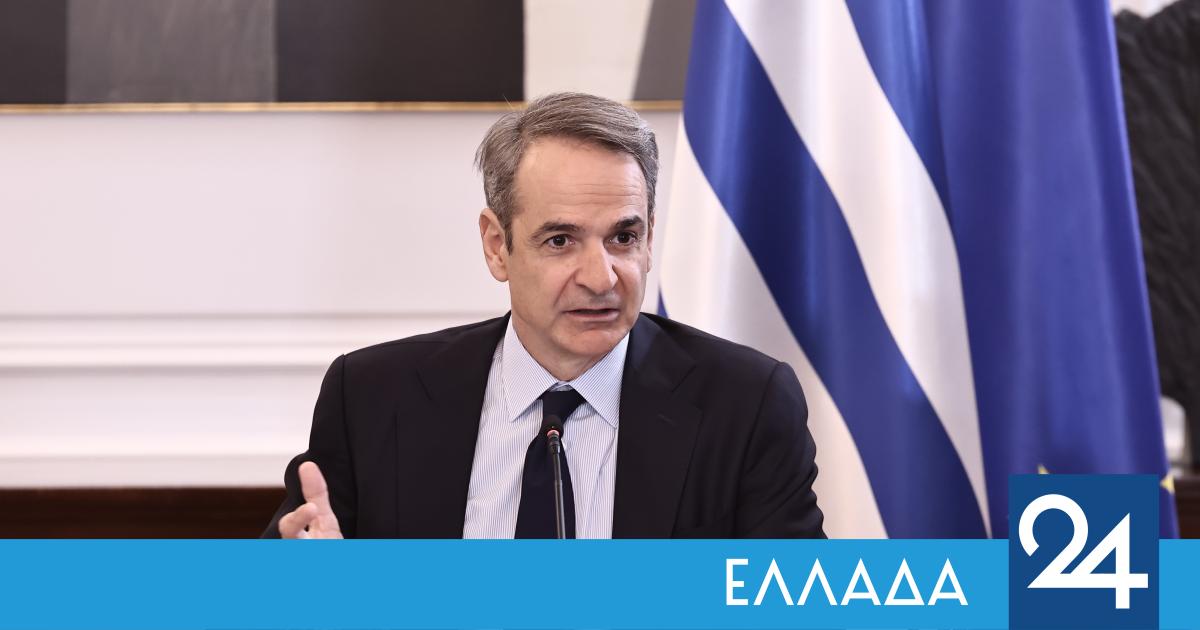
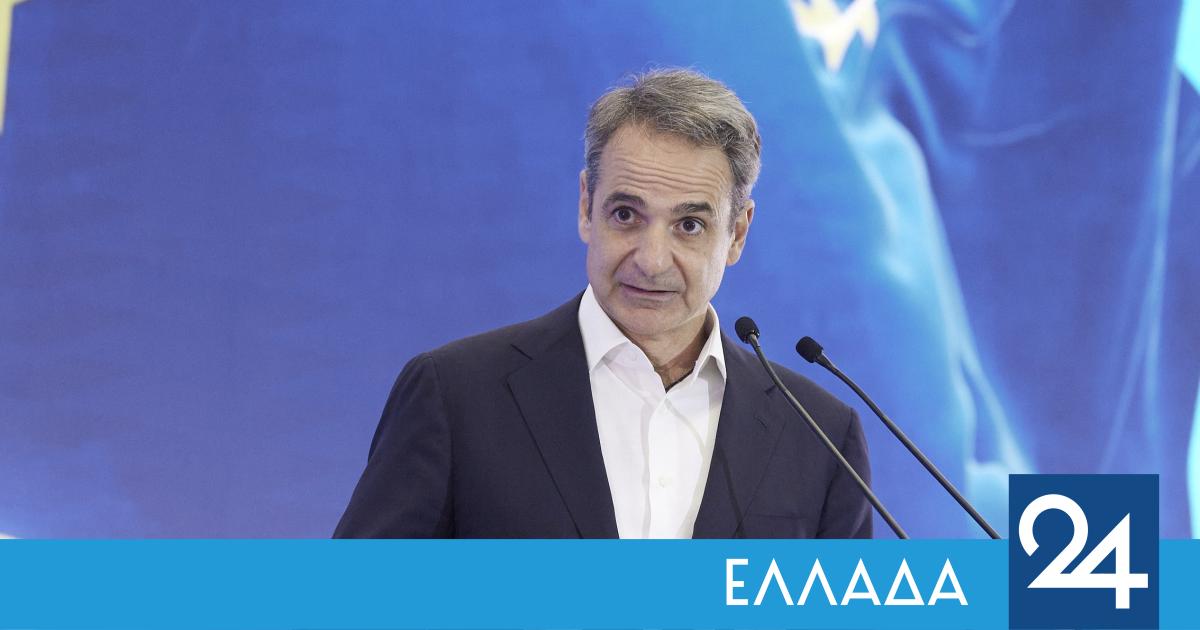
In his post with the weekly review, Prime Minister Kyriakos Mitsotakis said:
“Good morning! Today’s review coincides with Mother’s Day. The first embrace and symbol of the selfless love that accompanies all of us forever. At such moments I also feel my own mother close to me. Marika with her strong personality, but also with her enormous reserves of patience and tenderness. So, happy birthday to all mothers for all that they quietly and daily offer to their families and children. And for those of us who no longer have them with us, let us keep them in our memory and in our hearts. In that special place that only they deserve.
And from these thoughts, I move on to the highlights and interventions of the past week.
I will start with the new regulations of the Ministry of Environment and Energy, which take on even greater significance amidst international uncertainty and the Persian Gulf crisis. The regulations aim to increase renewable energy storage capacity to 700 MW by the end of the year and 1 GW in 2027. The new law provides for more RES, cleaner and more affordable energy, with protection of sites within the Natura network and more operational solutions for citizens and businesses. They are regulations that come in continuation of our collective conquest that Greece has been an energy exporting country instead of an energy importing country for the last 2 years now.
.
The important news of the week is our decision to make another early debt repayment of €6.9 billion against the first bailout loans Greece received from European countries. These may sound technical or distant from everyday life, but in reality they concern all of us. Because the more the public debt is reduced, the more the stability of the economy and the country’s ability to support its citizens and businesses without falling back into the deadlocks of the past are strengthened. Our goal is that by 2027 we will no longer be the country with the highest debt in Europe as a percentage of GDP.
The next issue is related to debt settlements through out-of-court mechanisms, where a 51% increase was recorded in April compared to the same month last year. 2,172 new debt arrangements were completed for initial debts of EUR 588 million, a development linked to the changes in the inclusion criteria, but also to the important possibility that we have introduced, for the first time, to separate the main residence from the rest of the property. To give you an overall picture, since the launch of the platform to date, 60,388 arrangements have been completed, corresponding to initial debts of €18.64 billion, significantly reducing red private debt.
This week I had the opportunity to have a face-to-face discussion with the President of the United Arab Emirates, Sheikh Mohammed bin Zayed Al Nahyan, and with King Abdullah II of Jordan on the challenges to regional peace and security, as well as the broader geopolitical and economic implications of the crisis in Iran and the Middle East. The Eastern Mediterranean, the Middle East and the Gulf constitute an arc of particular importance for the security and stability of the region, but also for Greece and Europe as a whole. We have expressed from the very first moment our support and solidarity with the Gulf States and we call for full respect for their sovereignty and territorial integrity, a position that I have reiterated to the President of the UAE. We also discussed the strategic partnership between Greece and the UAE, as well as the strengthening of our cooperation with an emphasis on trade and investment. The trilateral cooperation between Greece, Cyprus and Jordan, which we reaffirmed at the highest level with our meeting in Amman, is a model of understanding and peaceful coexistence in the region, a message more relevant than ever. We are the natural bridge between Jordan, the Middle East and the Gulf and the European Union. What happens in the region directly affects the security of Europe.
In the context of my visit to Abu Dhabi, we also signed a strategic partnership with the Government of the United Arab Emirates in the fields of Artificial Intelligence, new technologies and digital infrastructure. The agreement provides for investments in the field of emerging technologies, cooperation in the fields of education and health, and the joint development of tools that can enhance the efficiency of public administration. Besides, in the field of Artificial Intelligence, Greece is becoming one of the first countries to acquire a comprehensive framework for the introduction and use of AI in secondary education, both by students and teachers. The Joint Ministerial Decision, which was signed last week by the Minister of Education, Religious Affairs and Sports and the Minister of Digital Governance and AI, sets the rules for the responsible, safe and creative use of AI in the classroom. In recent comments, Andreas Schleicher, Director of Education and Skills at the Organisation for Economic Co-operation and Development (OECD) and architect of the PISA programme, praised Greece for introducing new technologies in education.
Another important intervention from the education sector concerns our schools, as the “Marietta Giannakou” School Building Renovation Programme enters its second phase of implementation, with new interventions in more than 200 schools across the country. I recall that the interventions involve repairs, improvement of infrastructure, accessibility and the overall school environment, so that students and teachers are in safer and more functional spaces. Already, through the first phase of the programme, interventions have been carried out in 431 school units, in 245 municipalities and in the 13 regions of the country, with priority given to special schools, border and island areas, as well as schools affected by natural disasters.
News from the region, with the first train from Thessaloniki to Florina whistling again after more than three years. Since last Thursday, the beautiful border town of Western Macedonia has been reconnected to the railway network, following the completion of the necessary works and inspections, which was a reasonable request of the local community. I would like to add here, since we are talking about transport, that the ‘Clean Line’ operational action is continuing to restore the image of the stations and trains of the Electric Line by removing graffiti and slogans. The truth is that incidents of vandalism have now been reduced to a minimum compared with a year ago, thanks to more checks and the use of new technological means. Of course, improving the image is not enough so we are not content with that alone, but it is certainly something that is needed.
Second news: another 13 areas, from the small Cyclades and Lemnos to Crete and Lefkada, have been added by the Environment Ministry to the list of “Unspoilt Beaches”, bringing the total number to 251. These are beaches of particular ecological and geomorphological value, where any activity that may alter their character and natural environment is now prohibited. You can find them all here: https://ypen.gov.gr/wp-content/uploads/2026/04/παράρτημα-απάτητες.pdf.
And we come to Ioannina, where we are upgrading the Panepirotic National Sports Centre of Ioannina, with projects worth €4.1 million, in addition to a permanent increase in annual funding of 81.4% from 2024. We expect all interventions to be completed by the end of 2027. For the record, Ioannina is a strong sports region with 125 clubs, 8,641 athletes and 198 coaches. Now they will have better and safer places to train and compete as they deserve.
Finally, it was with great emotion that I inaugurated yesterday the new “Thessaloniki Metropolis” Museum, the 29th new museum from 2019, an ark that encloses a wealth of imprints of the long history of Thessaloniki and all of Macedonia, with thousands of exceptional finds from the excavations for the construction of the Metro. The museum is housed in the former Pavlos Melas camp in Western Thessaloniki, and joins the city’s new cultural landmarks, along with the Metro stations. I believe that such infrastructure is not just about culture, but about the overall quality of life and development of a region, especially in neighborhoods that for years felt left behind.
But we also have space news – literally, with Greece now having 17 microsatellites in orbit, following the recent launch of 6 new microsatellites -2 of the Hellenic Space Dawn mission and the other 4 are thermal, specially designed for early detection and near real-time fire monitoring. Their data are integrated into the Governmental Earth Observation Node, providing a single operational tool for Civil Protection and Public Administration, enabling faster response of firefighting forces. At the same time, microsatellites can detect ships, floods and changes in the environment, giving the country possibilities that until a few years ago seemed quite remote.
In last Sunday’s review I mentioned the establishment of a Public Professional School of Film and Audiovisual Creation, following the recovery of the sector and the attraction of major international productions to the country. What I did not tell you about is the second five-year ‘Greece on Screen’ action plan, worth EUR 750 million, to give the country a coherent and fully funded national plan for the whole of audiovisual creation. Greece has already entered the map of international productions, but I believe that there is even greater potential in the coming years, attracting productions from new markets such as China or India. This package ensures sufficient resources for Greek productions that have never before received similar financial support from the state.
I’ll leave you here. Next Sunday we will not have the usual review, as I will be at the New Democracy Conference. We will be back as normal the following week, with all that will have taken place in the meantime. Happy Sunday to all!”