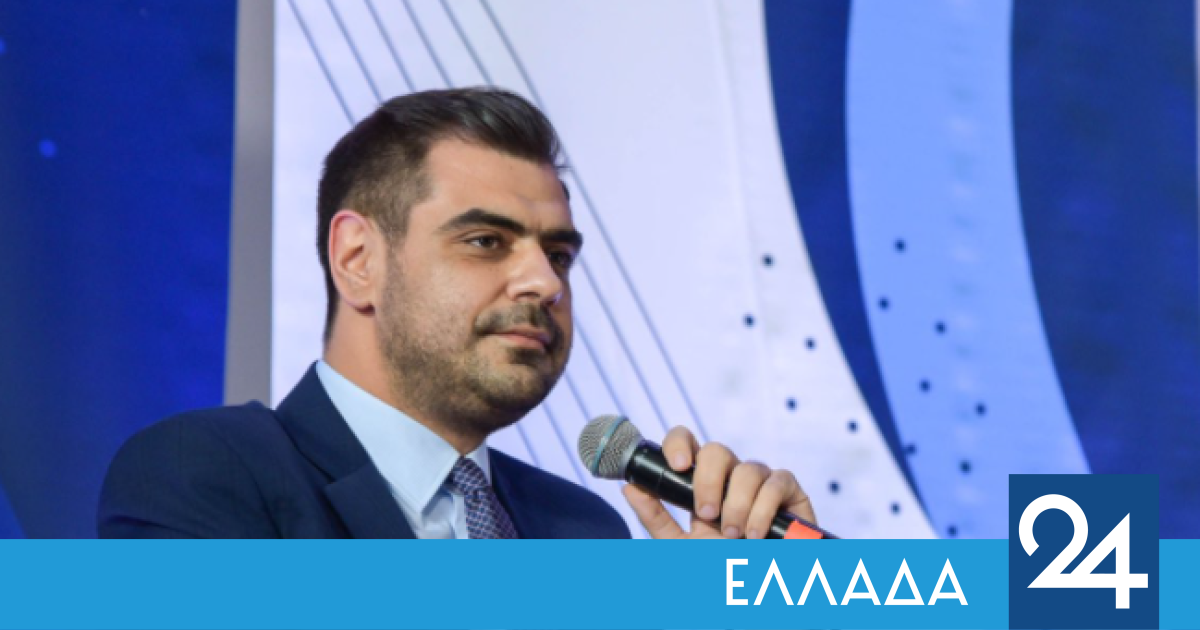
“I was trying to think how many important conclusions can be drawn from this competition, from the organizers’ insistence on the goal,” said government spokesman Pavlos Marinakis in his address at the Award Ceremony of the 2nd Pan-Hellenic and Pancyprian School Newspaper and Journalism Competition at the Stavros Niarchos Foundation Cultural Centre.
“There are some obvious ones. The commentators, the columnists, the reporters of the next generation may emerge from these newspapers. It’s not a small thing at all, it’s very, very important. There is something else also special. The cooperation of the teachers, the students, with each other creates a team atmosphere that will be an asset for these children throughout their lives. And many other things, such as the time spent writing, researching and not over a screen. All of this is not at all to be underestimated,” Marinakis said, referring to the “Cultivating Critical Readers” program, a pilot program of the Ministry of Education in 35 schools across Greece, which, once funding is approved, will be expanded to all schools.
“This initiative of “Vima”, Alter Ego and all this effort that you are making is creating the citizens of tomorrow, strengthening democracy. I used to say, as the Deputy Minister responsible for the press, communication and information, that one of the biggest crises, not one of the biggest problems, one of the biggest crises that we are experiencing and will experience with greater intensity is the crisis of misinformation. It does not only ‘threaten’ politics, political dialogue, it can potentially influence electoral results. It threatens national interests, too many times spreading fake news, toxic discourse, but it also threatens our own lives and much more so because of the use of social media, children, schoolgirls, students everywhere. A message that may contain a toxic post, a misrepresented piece of information, can affect in a very bad way a very important choice of a young child, can cause them to make the wrong decisions, to talk to people they shouldn’t. And because I don’t represent a think tank, but the government, we have taken, I think, important initiatives in that direction, that is, restricting use on social media, and now the debate has started on anonymity online. But no matter how many measures you take, no matter how many interventions you make, if you do not invest in critical thinking, if you do not invest in argument, you are not going to achieve anything. We need many more reporters in the narrow and broad sense, journalists, analysts, researchers, but we need more readers. Newspapers bear the signature of their editors and the responsibility of their publishers in both the narrow legal sense and the broader journalistic sense. You know who writes what. You know who bears the responsibility. You can cross-check the information and the one who reports it has the corresponding collateral consequences. Newspapers take a lot of effort to get out. There are people here who have given their whole lives to them. They have written their own history. What you’re doing is something similar. Not just the winners, those of you involved, not just the students and teachers. And this initiative, in conjunction with any similar initiative, is vital to this effort. The battle against misinformation, the misinformation crisis, is not a battle that the government alone or part of the political system has to fight. It is a battle to be fought by the whole of society so that it can survive in the years to come,” he said.
Congratulating the initiative, Pavlos Marinakis wanted to close by referring to a personal experience: “My dream, and not when I was very young, just before I went to university, was to become a journalist myself. That’s why every initiative, from primary school to high school student newspaper, I was at the forefront. Eventually attending law school changed my career direction. But everything I have done since I was a kid in every such initiative, every participation, nothing has been wasted.”
“So, whether today’s winners become tomorrow’s journalists or not, what you have done over these years, these days, these months, every minute you have spent will be a huge investment that will pay off in the years to come. No effort is wasted,” Marinakis stressed.