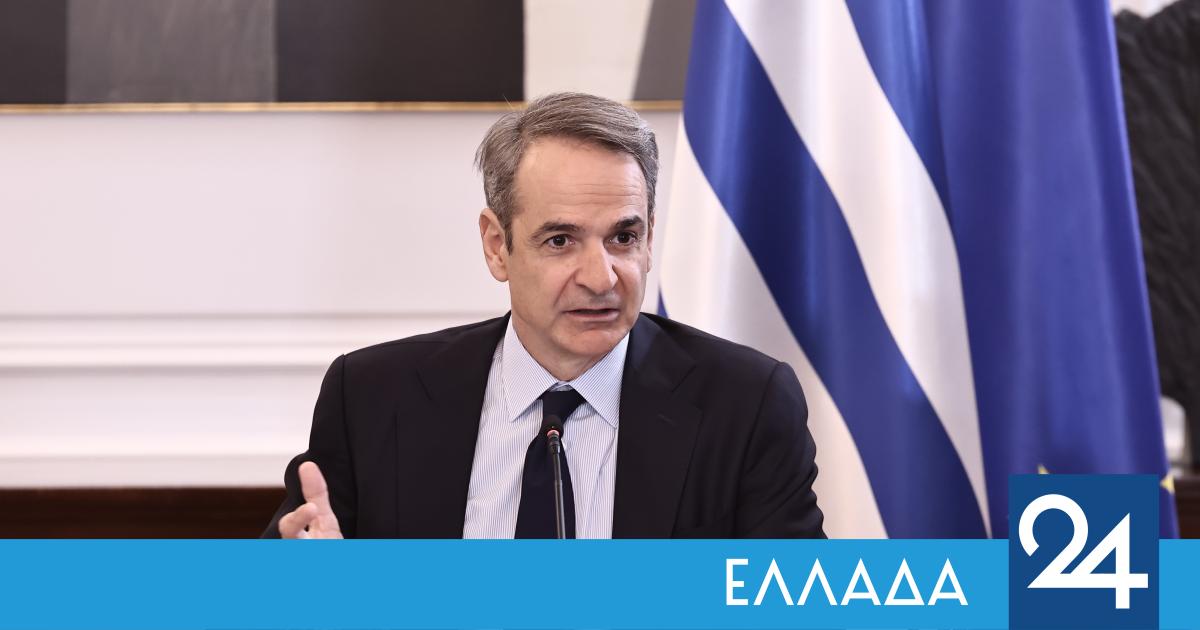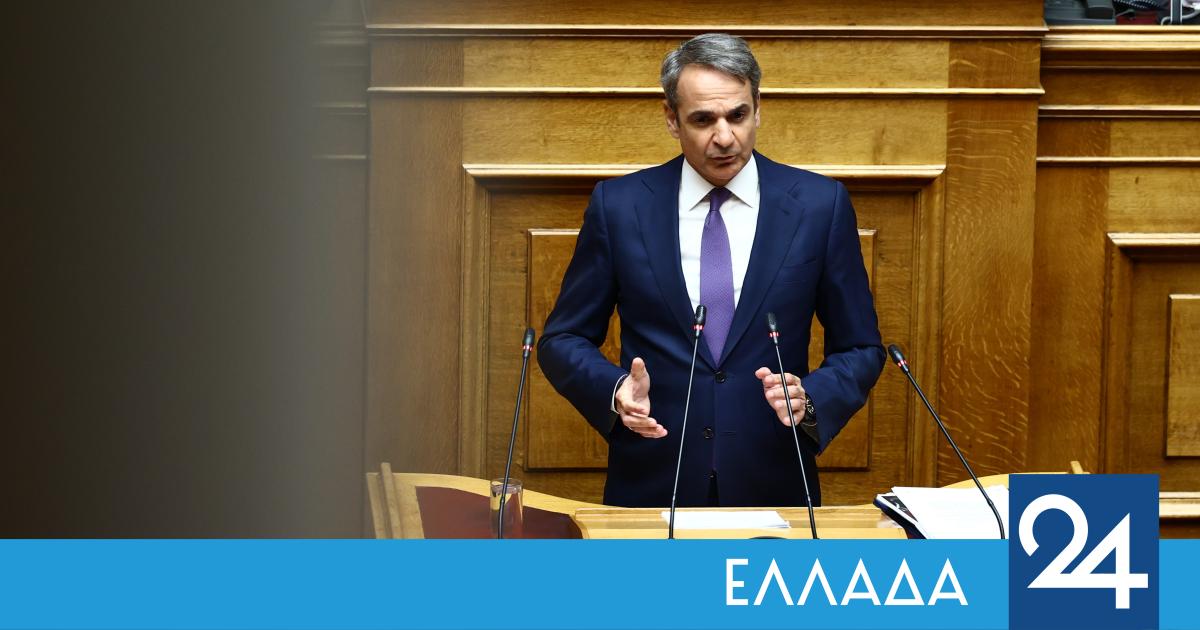
The meeting of the Southwestern parliamentary group has been concluded. A total of 43 MPs spoke in a debate that lasted over 6 hours.
“I saw more than half the Members in a very active mood for this debate that we had. I would like to schedule a meeting for July in order to discuss proposals for the Thessaloniki International Fair as well,” Kyriakos Mitsotakis said, closing the meeting.
“Today we have heard many social and economic proposals and we have had the opportunity to discuss with the Parliamentary Group and to take into account your concerns and suggestions. In terms of tone and climate, I am glad that all those who expected us to be here for five hours arguing have been proved wrong. The positions were substantive and dignified, which one would expect from a Parliamentary Group that has fought and won great battles.”
“As a Member of Parliament, when I was a constructive critic, I never thought I was a foreign body or that I would be treated as a rebel, and the same logic applies today, which we have confirmed in a very meaningful way.
In the case of having a single ballot paper, it is something we are discussing in the Home Office, there is a way to do it, it is something that will allow us to move forward. If we have the agreement of the Parliamentary Group I have no problem with making point changes to the electoral legislation. In terms of the individual articles that were raised for discussion and on which there was commentary following the proposals that both I and Euripides made, I think there is a core of articles to be revised which is enough to move forward with the submission of the proposal and the formation of the Committee,” he continued. Mitsotakis.
“On the question of the role of the MP in a parliamentary democracy, I have heard different opinions. Since we have a parliamentary democracy, it will always rely primarily on its MPs to form the government. There is discretionary power for the Prime Minister to use non-parliamentarians, but at its core the government will be made up of parliamentarians. This raises legitimate questions about possible incompatibilities. However, these are complex issues for which there are no obvious answers, nor are there any definite and final thoughts to be submitted. They are issues that need to be discussed, just as issues not directly related to constitutional revision, such as in the electoral system, the cross, need to be discussed. I believe that the cross is a comparative advantage for our party. On the other hand, there are advantages and disadvantages in terms of the sizes of constituencies, large constituencies require a different kind of politics, small constituencies have a different kind of political relationship which may create a suspicion of dependency. The task is complex and we have to be very careful in the proposals we put forward. One thing is certain, the role of the Member of Parliament must be strengthened. For me, the MP does not only represent the territory, he must also represent his constituency and we must somehow constitutionally guarantee that the MP’s communication with the public administration in terms of transparency and impartiality is not something that is reprehensible,” Kyriakos Mitsotakis added. He added:
“There have been cases of colleagues who have had their immunity lifted and will face the European Public Prosecutor’s Office when MPs themselves have tabled questions in Parliament and this was considered to be undue interference in the public administration. The further strengthening of the role of the Member of Parliament will be of great concern to us. We have spoken too many times about the buffet. There is no Member of Parliament who has a political office who has not been called upon to make some kind of intervention in the public administration as a result of a request made to him or her by a citizen. As the state modernises and becomes more digital, objects of intervention of the past are being eliminated.
Editorial state. I have heard, despite estimates to the contrary, good things about the staff state. Obviously it is open to improvement, but the fact that we have a process of planning, coordination, targeting is an achievement for our government. And certainly where inter-ministerial coordination is required, the staff state sometimes more effectively, sometimes less, gives the government a broader ability to regulate issues such as road safety. I can’t imagine how a country can be run. The support you have given to the staff state is the best answer to all those who were quick to discount today’s debate and that the staff state is possibly some ministers, who are easy targets for throwing darts. You have positioned yourself very honestly and courageously on what the executive state does well and what it does less well. On the need for us all to sweat the jersey together. It is very important that we all sweat the jersey together and I am the first to say that, and I am doing everything I can to keep the party at the level it is at.”
The Prime Minister said that “the truth is that there are divergences in the enthusiasm with which some people support the government’s work” and noted: “This also applies to the functioning of Parliament. It also concerns ministers who want to go into a protected environment and speak. It is about executives who ought to go out and speak and wriggle and support difficult government policies and not hide when things get complex. We all know that if we can’t stand the heat we shouldn’t be in the kitchen. But we are in this position to fight tough battles, not just easy battles. In this effort we will rally and unite, the better the outcome the more we all benefit. We want self-reliance and that means electing the maximum number of MPs possible. Our interests here are completely aligned. On the polls, we have every reason going into the election to see the glass half full. Not only because we are leading the second party by more than double, but I will also say this: There is a silent majority of Greek society who are progressive people, people who wake up early, who see that Greece is heading in the right direction, who would like to move faster, but who have identified their future and that of their families with the policies that New Democracy stands for. With this policy. This percentage is higher than the percentage that New Democracy gets in the polls.”
And concluding his speech he said: “And there is no other political force that can express these fellow citizens. Because the opposition has chosen the path of populism. We have a field to work on and convince the citizens that only we can express them. Not only as a force for stability and security, what citizens want is prosperity for themselves and for their children, and we must speak their language. The biggest problem in society today is the cost of living and that is our priority. There are no easy solutions, there is no other way than rapid growth and the creation of surpluses and a policy that supports disposable income with specific targets. Ultimately the game will or will be lost where it is usually won. In the field of economics. I close by thanking you again for this meaningful six-hour session and renewing our appointment for the July meeting. Trust in ourselves, there is no little we have achieved. Looking at the rest of Europe, talking to other leaders, seeing how fast governments are being dismantled, we have achieved something that is important. And we have the potential to achieve something that has never been done before. No party has ever won three consecutive elections before. It can be done. It’s not easy, but it’s a common goal in which the individual interests of all of us intersect and the collective interests of the country, and I’m confident that we will achieve it.”
</html