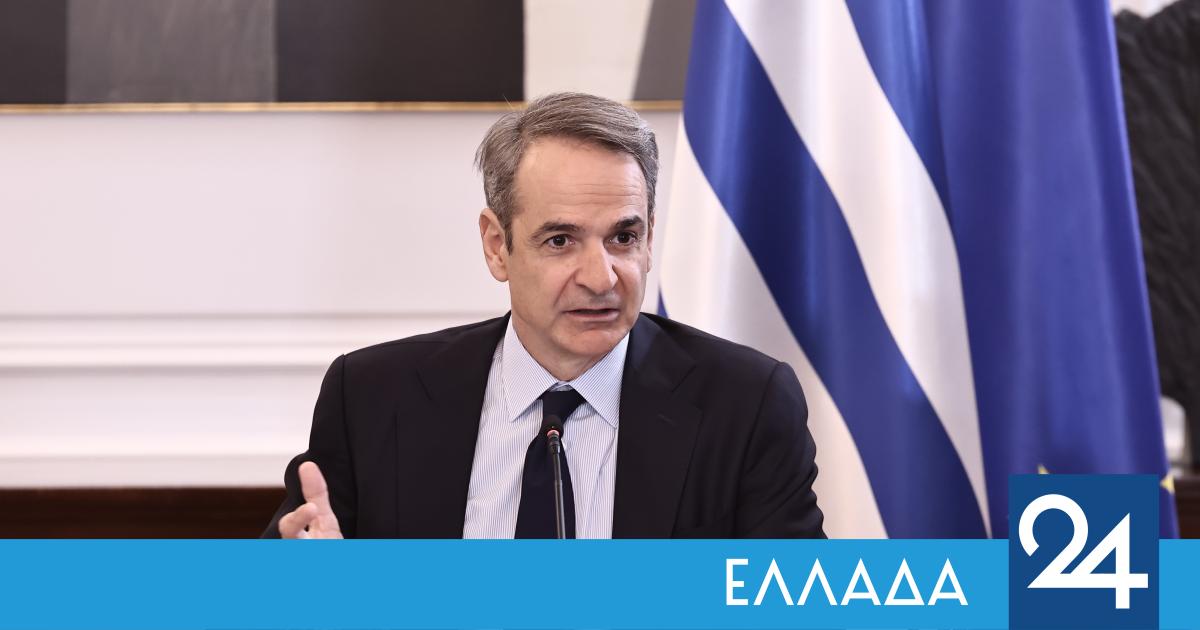
The parliamentary group of the New Democracy party is meeting today at 11:00 under Prime Minister Kyriakos Mitsotakis, which will be very important as it will be the start of the debate on the constitutional revision.
The meeting will begin with speeches by the secretary of the parliamentary group, Maximos Charakopoulos, and Prime Minister Kyriakos Mitsotakis.
Following the speech of the Prime Minister, who will set the framework for the debate, the speaker of the New Democracy party, Evrypidis Stylianides, who will present the main proposals of the government majority, will take the floor.
Soon afterwards, the MPs who have been registered on the list of speakers will take the floor, noting that more than 40 MPs have registered to speak.
The proposal that will be presented at the meeting of the parliamentary group of the South-West parliamentary group will essentially be the basis for discussing 30 articles of the constitution to be revised, which has emerged from the synthesis of the thoughts publicly expressed by the Prime Minister and the proposals submitted by the South-West MPs. Indicative of the great response from the members of the parliamentary group is the fact that more than 50 MPs have submitted proposals on which the composition of the 30 articles to be presented was based, and about 20 ac
It is worth noting that the grid of articles to be presented, which is an update and supplement to the 2018 ND proposal, is not binding and does not constitute the final proposal of the ND, as the government remains open to other proposals or corrections, so this is a dynamic process that will continue.
According to government sources, the Prime Minister and the South West, with the constitutional review process and the articles proposed for review, have 3 objectives:
-To restore the citizens’ trust in the state, the institutions, the political system,
-A functional and efficient public administration,
-To establish a functional and efficient public administration,
-A modern constitution that responds to the challenges of 2026, not 1975, given that we have a 50-year-old constitutional charter that has served its purpose, but does not respond to modern challenges, from artificial intelligence to affordable housing, which the current legislature should take into account.
The government’s intention is to start the process in parliament in May, when the relevant proposal will be tabled by the South West (50 MPs’ signatures are required) and then, by decision of the speaker of parliament, the constitution review committee will be constituted and start its work, which is also expected to happen in May.
According to reports, Kyriakos Mitsotakis will make a profound institutional speech at the meeting of the parliamentary group of the Southwest party, focusing on the constitutional revision, which he is addressing in two ways:
-First, as a set of rules that comes to provide a comprehensive solution to issues concerning the functioning of the constitution and public life that come from the past and,
-Second, to pave the way for major reforms as the country moves into the fourth decade of the 21st century.
At the same time, the prime minister will also outline the tasks of the parliamentary group ahead of the constitutional revision, the congress of the Southwest on May 15-17 and the election year, which is 2027.
He said his colleagues were saying that he is putting emphasis not on his own positioning but on what the ND MPs want to say.
Finally, the prime minister is also expected to address the opposition’s embarrassment over the institutional changes he is proposing.
So far, the Southwest has put the following provisions up for public debate for review:
-‘Article 5 (Free development of personality, personal freedom) to protect the freedom of the individual and his/her safety from artificial intelligence
-‘Article 16 (Education, art, science) for the establishment of non-state universities
-‘Article 16 (Education, art, science) for the establishment of non-state universities’.
-‘Article 30 (President of the Republic as regulator of the constitution) for a single six-year term of office of the President of the Republic
-‘Article 51 (Election of deputies, electoral law – specifically on postal voting) and ‘Article 54 (Electoral system, constituencies, State deputies) for the electoral law
-‘Article 51 (Election of deputies, electoral law – specifically on postal voting) and ‘Article 54 (Electoral system, constituencies, State deputies) for the electoral law
-‘Article 86 (Prosecution of members of the Government, Special Court) on criminal liability of ministers
-‘Article 90 (Supreme Judicial Council) on the selection of the leadership of the judiciary
-‘Article 101A (Independent Authorities) for the Independent Authorities
-‘Article 103 (Civil Servants) redefining the tenure of civil servants
-In addition, it has raised the following issues:
–Merima on affordable housing
-Fiscal “cutter”
-Operation of political parties
-Climate crisis.
</html