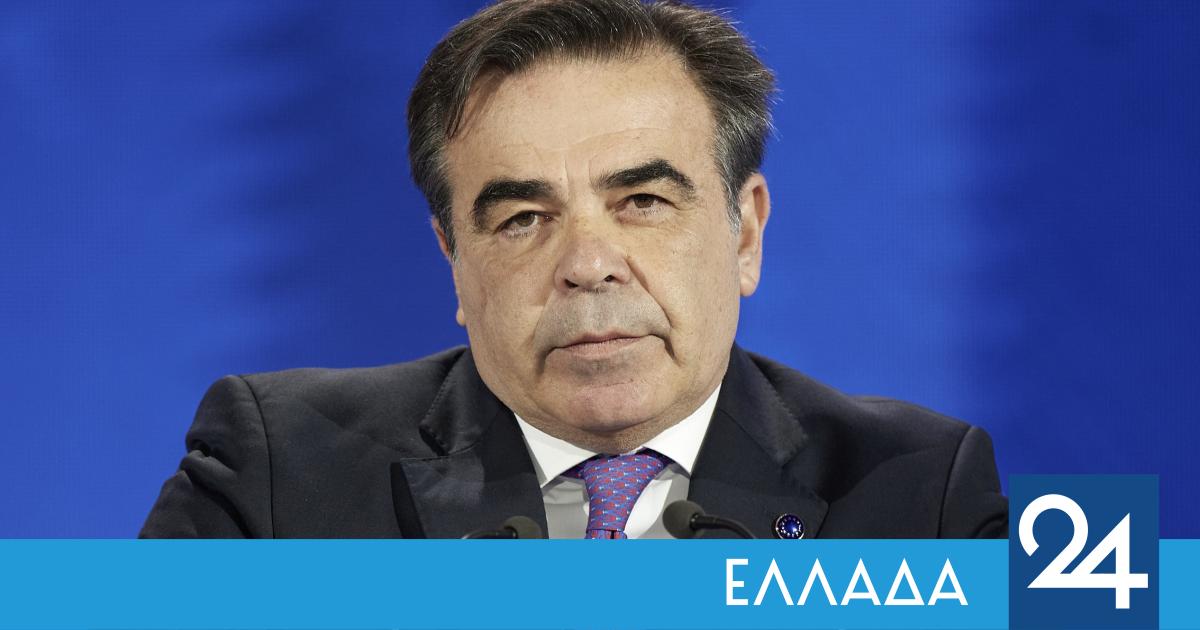
The need for a more effective European policy to support farmers and fishermen in the face of successive crises was highlighted from Nicosia by the Minister of Rural Development and Food, Margaritis Schinas, during the Informal Council of Agriculture and Fisheries Ministers of the European Union and MedFish4Ever.
Mr. Schinas presented the Greek positions on agriculture and fisheries, emphasizing the need to protect the agri-food sector at a time when producers are facing increased risks.
In the debate on agriculture and agro-climatic risk management, he underlined that Europe is now facing a permanent and complex crisis environment, which directly affects production and food security.
He said climate change, water scarcity, epidemics and market volatility were creating new pressures on producers. For this reason, he stressed that a shift from the post-disaster compensation model to an integrated strategy of prevention and resilience building is needed.
The minister pointed out that the current Common Agricultural Policy (CAP) tools for crisis response remain complex and difficult to use in practice, especially by small and medium producers, calling for simpler and more functional support tools.
She made special reference to the need to invest in infrastructure, smart irrigation, biosecurity and modern digital early warning systems so that producers can prevent the impact of crises and not just be compensated afterwards.
The Greek interventions also focused on water scarcity, which Schinas described as a structural risk for Mediterranean countries. He stressed that a more coordinated European response was needed, as the problem directly affects production, costs and the sustainability of farms.
He also highlighted the need for substantial support for young and small farmers, as well as the creation of a European agricultural risk reinsurance mechanism, with the contribution of the European Investment Bank. The aim, it was stressed, is to ensure a level playing field for all producers.
On the fisheries side, Schinas welcomed the evaluation of the Common Fisheries Policy by the European Commission, noting that it highlights the need for improvements in its implementation and effectiveness.
For Greece, the key priority is to simplify the institutional framework and reduce the administrative burden, so that the rules can be applied more easily and effectively by industry professionals.
Schinas paid particular attention to the small-scale coastal fishing industry, which he described as a crucial pillar of the Greek economy and social cohesion, as it accounts for the majority of the country’s fishermen. He stressed that the protection of fish stocks must be combined with the development and survival of coastal communities.
On the international dimensions of fisheries policy, he raised the issue of a level playing field with third countries, as well as the need to strengthen the fight against illegal, unreported and unregulated fishing, which, it was pointed out, is reaching alarming proportions, particularly in the Aegean.
In the same context, he stressed the role of the General Fisheries Commission for the Mediterranean and regional organisations in the management of shared fish stocks.
A reference was also made to aquaculture, which Mr Schinas described as a strategic sector for sustainable development and strengthening food sufficiency. Greece is promoting its development in terms of environmental sustainability and social responsibility.
In the margins of the Council, the Minister held bilateral meetings with his counterparts from EU Member States, including the Minister of Agriculture of Italy Francesco Lollobrigida, the Minister of Rural Development of Sweden Peter Kullgren, the Minister of Agriculture of Ireland Martin Heydon and the Minister of Agriculture of Lithuania Kęstutis Navickas.
These contacts confirmed the common interest in strengthening European cooperation in the agricultural sector, particularly on issues of risk management and support for producers in the face of market pressures.
Finally, particular importance was also attached to coordination with Ireland and Lithuania, as the two countries, together with Greece, will hold the Presidency of the Council of the European Union in succession. The aim is to ensure continuity in legislative work and policy interventions for the agricultural sector.