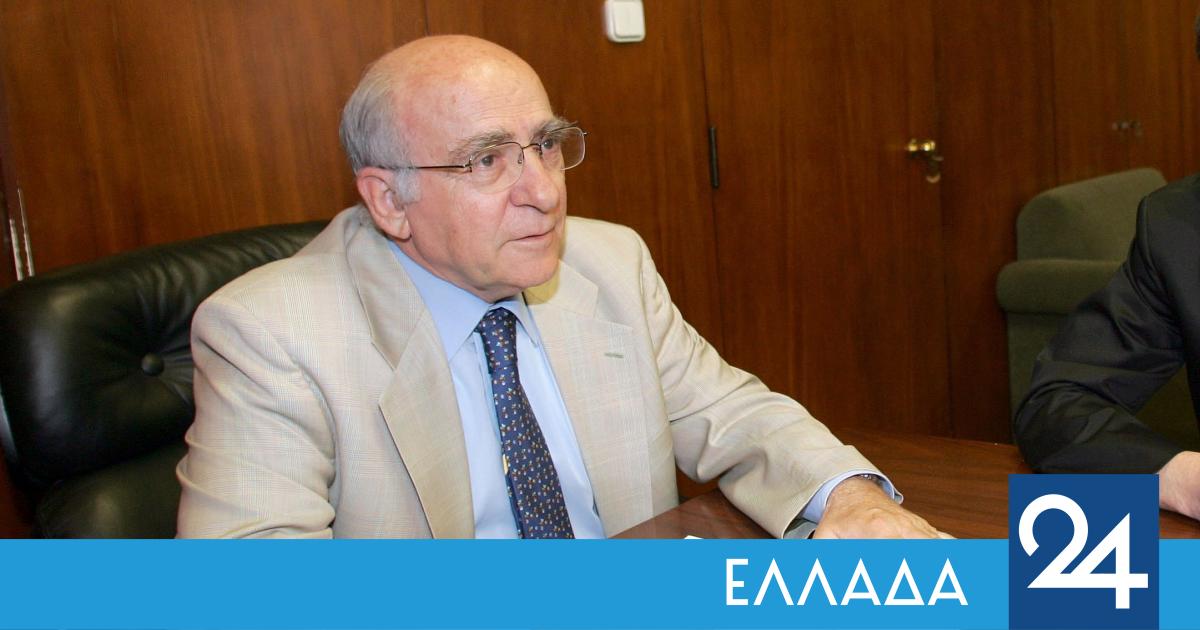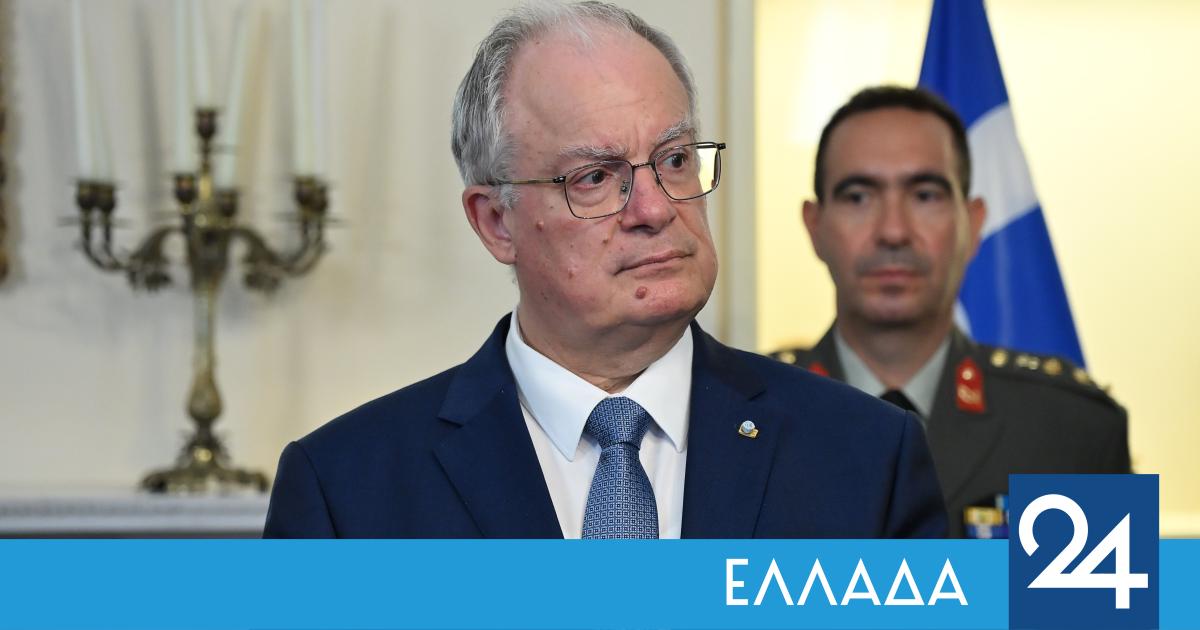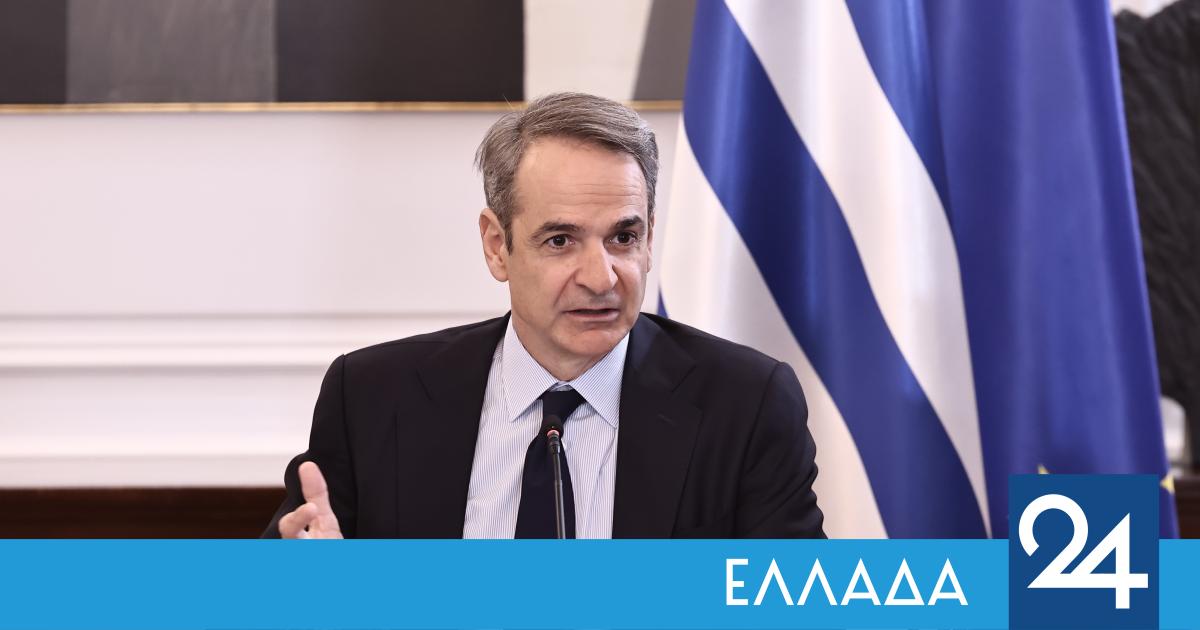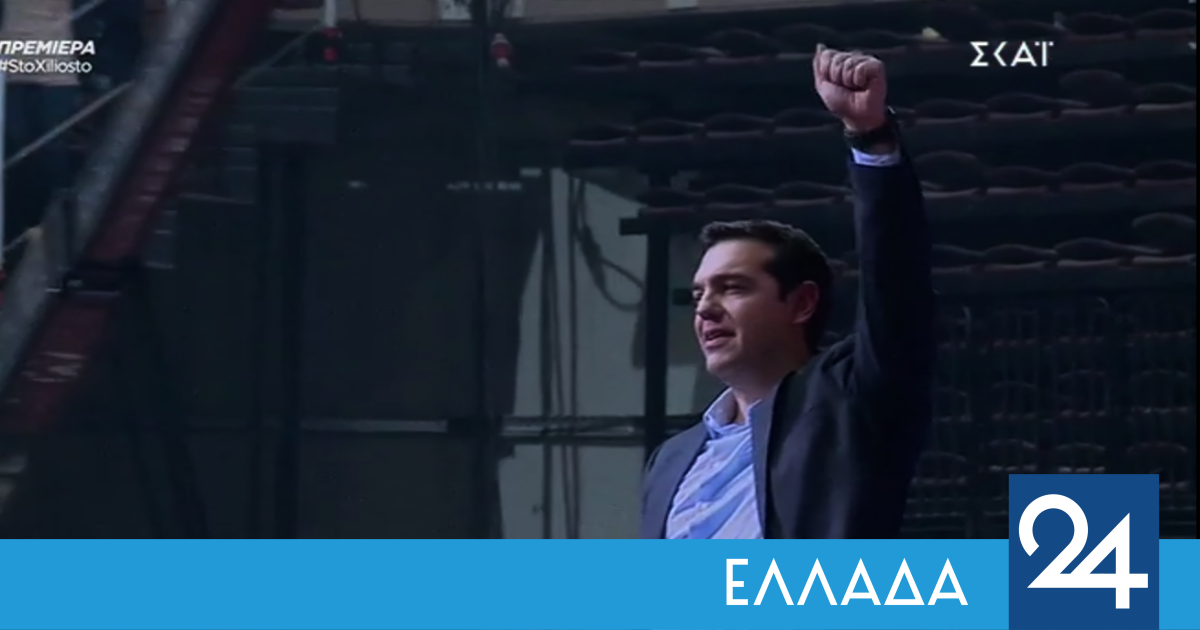
Unfamiliar aspects and critical testimonies from the turbulent period that stretches from the beginning of the crisis in 2009, the entry into the memoranda in 2010 and the prevalence of SYRIZA in 2015, highlights the new documentary of SKAI “In Chiliost”.
The first episode, titled “Who swims naked?”, focuses on the pre-election atmosphere before SYRIZA’s victory, the announcements of that period and the increasing pressures that shaped the context of the developments.
Special emphasis is placed on the so-called “Thessaloniki programme” and the commitments presented by Alexis Tsipras at the 2014 Thessaloniki International Fair, shortly before he took office, with officials who were active participants at the time making revealing statements.
Lafazanis: Cheap populist slogan that we will abolish the memoranda with a law
Panos Lafazanis describes the mood of the times and the Thessaloniki programme presented by Tsipras, noting: “We thought he was bloviating, but the ears were happy,” adding that “any of these measures presupposed the abolition of the memoranda. They did not come with paper and pen, while he assured that there would be no problem with the troika.”
Referring to the typical phrase about abolishing the memoranda “with a law and an article”, he underlines: “To abolish the memoranda requires a comprehensive review of the country’s legal framework. This cannot be done with a button. I kept telling him that this is a demagogic, populist and cheap slogan and his response was: “this is what the people want”.”
He added that “the belief of the leadership team at the time was that because SYRIZA PS would show agility as a government, the Troika would back down, changing the course towards fiscal consolidation”.
Stathakis on the “pentozali in the markets”: there is also the thymic that we have to maintain
For his part, Giorgos Stathakis commented on Alexis Tsipras’ pre-election reference that “the markets will be dancing pentozali”, referring to “a pleasant pun” on former Prime Minister Alexis Tsipras’ slogan that “we will play the lyre and they will dance pentozali”, while admitting: “Real politics follows its own rules and the markets knew it. In election periods, there is also the thymic that must be maintained.”
Tsakalotos: It was a mistake that we did not vote for a PM and the Samaras-Venizelos government fell
Euclid Tsakalotos is taking a self-critical approach to the 2014-2015 election, saying that the decision not to vote for the President of the Republic proposed by Antonis Samaras and Evangelos Venizelos was a mistake.
As he points out, “The most important choice was not to vote for the President of the Republic, leading to the fall of the Samaras-Venizelos government. I still think it was a mistake and did not contribute positively to subsequent economic policy.”
In contrast, Nikos Pappas defends the attitude of that period, arguing that “political parties that seek to play a leading role should take responsibility when the moment comes”.
Tsipras’ secret meeting with German ambassador
The documentary also reveals a previously unknown meeting between Alexis Tsipras and the then German ambassador in Athens, Peter Soof, in 2014 at Koumoundourou. As he says: “It was just the two of us. Despite the public confrontational rhetoric, it was polite. My impression was that he wanted me to convey to Berlin that there was no cause for concern and that SYRIZA, as a government, would cooperate.”
They were very friendly.
“It made the situation more difficult that he said we were all crazy,” then-Eurogroup chairman Jeroen Dijsselbloem said of Yanis Varoufakis.
“I think he thought it was clear which side was the one asking for something and which side was in a position to say yes or no. It was about a show of force,” he concludes, underlining that he himself did not agree with this, understanding that the new government came to power democratically – with the vote of the people – and so Europe had to cooperate with it.”
Tsipras’ call to Draghi at Stournaras’ urging
Central banker Yannis Stournaras revealed that after Yanis Varoufakis’ episode with Jeroen Dijsselbloem in front of the cameras, when the then Finance Minister also called the Troika a “loosely structured committee” with which the government had no intention of cooperating, he contacted the then Prime Minister, Alexis Tsipras, who wondered: “He said such a thing. What can we do now?”
Then, as Yannis Stournaras revealed, he was given the phone number of Mario Draghi, who was contacted by the then Prime Minister, assuring him that what the then Finance Minister said, that they were not going to cooperate with the Troika, was not true.
Daiselbloem v Varoufakis
“All this was of course said in Greek, so I could hear the tone of his voice but I couldn’t understand what he was saying,” describes Gerun Dijsselbloem, adding that, for some reason, the interpretation was very late.
“So I found myself sitting next to a guy who was subverting everything I was trying to do to calm everyone down and have a constructive discussion.”
As for the meeting at the finance ministry, Gerun Dijsselbloem recalls a particularly strange atmosphere, with the building almost empty. After the friendly initial discussions, the then Eurogroup president was struck by Yanis Varoufakis’ intention to sack hundreds of ministry employees, as he felt they could not be trusted.
For George Stathakis, however, the atmosphere, as recalled by Mr. Dijsselbloem, was very good, as some very introductory first thoughts were said by both sides, without, however, any implicit threats of a “dramatic situation” and fear of “something dramatic not happening”.
Bizzer: Putin instead of Juncker for SYRIZA
Thomas Wieser said that there were, in addition to the Europeanists in the Syriza government, “some ministers who felt more comfortable calling Vladimir Putin than Jean-Claude Juncker,” the then Eurogroup President revealed of Mr. Varoufakis’ intentions.
“For some reason no one would give me headphones so I could listen to the translation,” Mr. Vizier claimed, saying of the Greek finance minister that he “resorted to his radical rhetoric” and that “the situation became very uncomfortable.” At the time, he had confined himself to a physiognomic analysis, concluding that “what Varoufakis was saying was initially aggressive.”
Regling: Europe was ready to listen to what the Greek government wanted
According to Klaus Regling, Greece had been “living beyond its means for 10-15 years” while the Papandreou government, elected in 2009, failed to reduce the deficit, which led to the first memorandum. As he argued, “nothing like this has ever happened in world history,” a development that necessitated the involvement of the IMF.
From the European Commission’s perspective at the time, Declan Costello noted that the required expertise was not available and that the IMF was invited to participate as its experience “was necessary at the time”.
Theodorakis on the Tsipras-Kamenos
As for the days of the processes aimed at forming a government after the January 2015 elections, Stavros Theodorakis, then head of Potami, recalls that “he himself had called me on the night of the elections, I told him ‘good for you, but be careful'”, although in the end the later Prime Minister’s choice of government partner ended up being Panos Kamenos’ Independent Greeks.
Nikos Pappas described Panos Kamenos as “well-meaning and sincere, that is, passionate”, while noting that “Kamenos is not a far-rightist”. For his part, the ANEL president disclosed that he had been in contact with Alexis Tsipras since 2012.
Dimitris Tzanakopoulos, a close associate of the then Prime Minister, presented the rationale behind the government’s cooperation, noting that “it was believed at the time, and I think rightly so, that at the first shake-up both PASOK and Potami would bring down the government”.
Stavros Theodorakis, for his part, claimed that “an abyss separated us”, adding in a typical reference that “Tsipras’ family were contractors, my father was a baker”, against the backdrop of political attacks from parts of the SYRIZA audience.
Source: liberal.gr