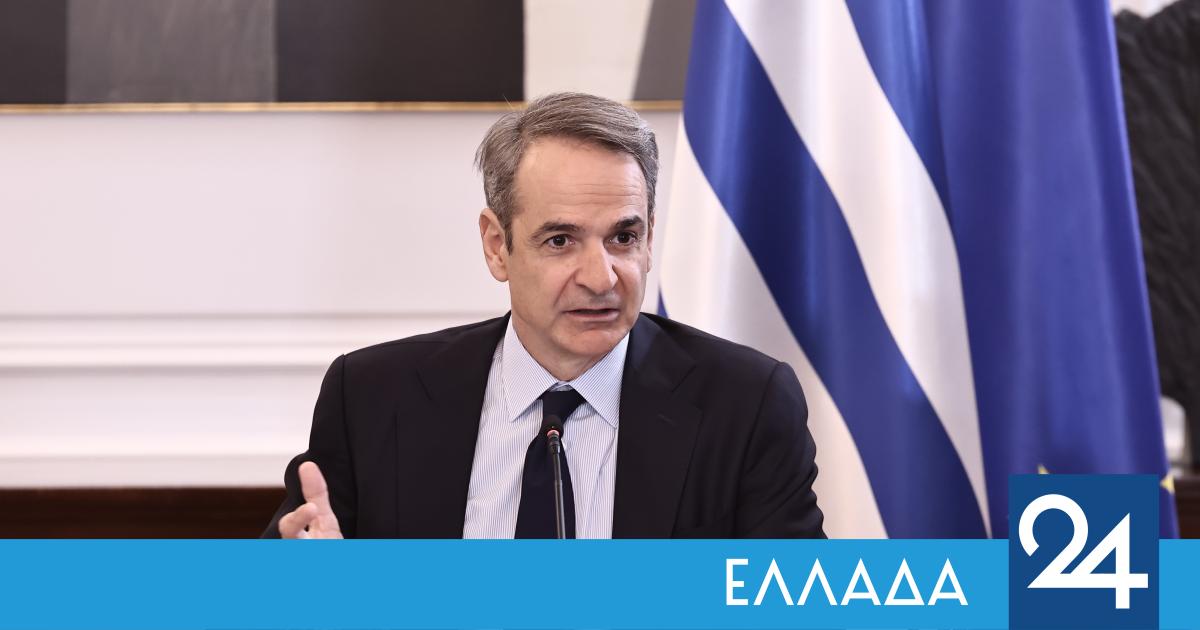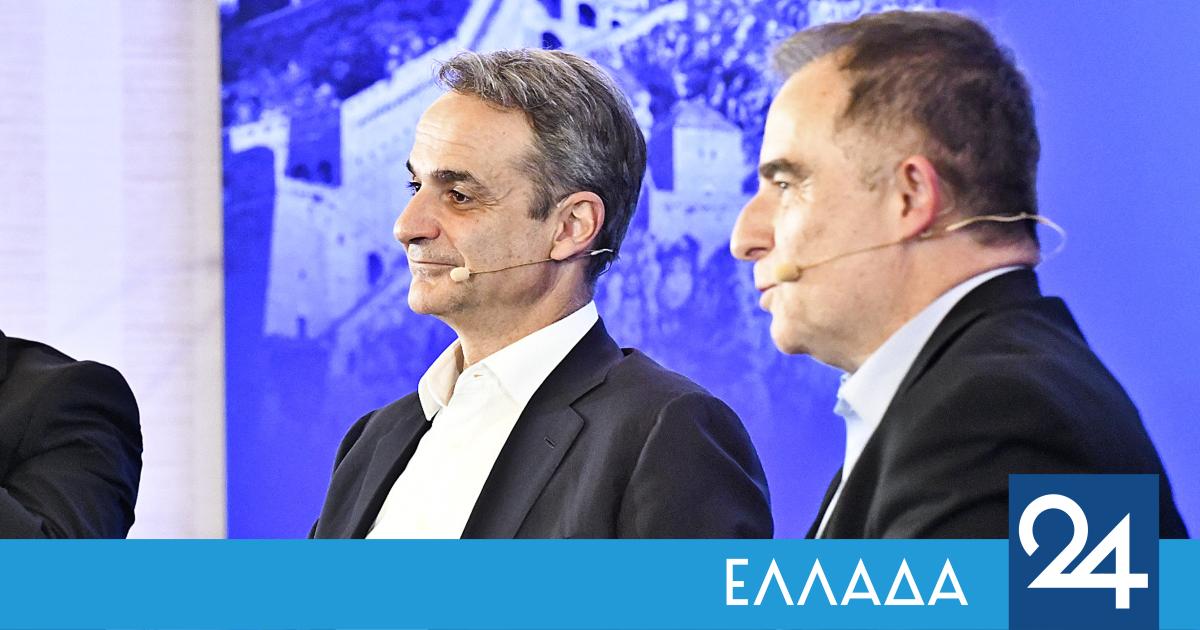
“We have secured 36 billion euros from the Recovery Fund for the benefit of Greek citizens,” Prime Minister Kyriakos Mitsotakis said from Nafplio, where the 5th pre-conference of the New Democracy party on the modern state was held on Tuesday evening (28.04.2026), in the wake of the letter from five “blue” MPs.
At the same event, in the context of the pre-conference dialogue ahead of the 16th Ordinary Congress of the New Democracy Party to be held on May 15-17 in Athens, Mitsotakis noted that “without an executive state and close coordination, these funds would not have been used”.
The prime minister stressed that 2030 will mark 200 years since the founding of the Greek state, which he said is an occasion to examine the country’s path from the past to the present and the goals for the future.
Referring to the reform of the state, he stressed that the first step is to put oneself in the position of a citizen and face problems with an organised plan. He recalled his experience at the Ministry of Administrative Reform during the memorandum period, where, he said, he realised that without a comprehensive view of the state, policies end up fragmented or incomplete.
Mitsotakis described the digital transformation and gov.gr as a particularly successful reform, which contributed substantially to solving many issues and improving the daily life of citizens.
As he said, everything starts from a single logic: the state should serve the citizen. He pointed out that the real change was felt during the pandemic, when citizens received digital messages for vaccination appointments, proving that technology can make life easier.
About the new NHS
Referring to the National Health System, he noted that the citizens’ evaluation presents a more positive picture than the one often projected. According to him, patients recognise that the NHS is in a phase of change.
He reiterated that the €36 billion is being used to upgrade infrastructure and introduce new tools, such as the “patient prioritisation bracelet”, as well as to enhance e-prescribing.
He stressed that the digital state treats all citizens equally, regardless of political preferences or place of residence, and described it as a series of small but important “revolutions” in the day-to-day functioning of the state.
He also referred to the new challenge of artificial intelligence, noting that it can make a decisive contribution in areas such as public procurement.
He stressed that policy should be based on analysis and understanding of problems rather than on slapdash approaches, taking swipes at the opposition and some media.
Social policy
The prime minister referred to measures to support pensioners and families, as well as extraordinary benefits in the context of the tax reform.
He described the digital job card as an important philanthropic reform and recalled the possibility for pensioners to work without a pension cut, taxed only on their earned income.
He also mentioned initiatives to strengthen the medical profession, enabling the legal practice of private work with taxation.
He stressed that the goal is growth combined with social justice, with a focus on entrepreneurship and the region. As an example, he cited investments in the pharmaceutical industry in Tripoli and the linking of education with the labour market through EPALs and training programmes.
Entrepreneurship and the economy
.
Entrepreneur Stavros Stoupas referred to the contribution of the digital state to entrepreneurship, with the prime minister commenting that in 2019 the Greek economy was characterised by over-taxation and low growth.
As he said, tax cuts and the fight against tax evasion have strengthened consistent entrepreneurs and led to increased surpluses, allowing for returns to society and faster reduction of public debt.
He said Greece is now close to not having the highest debt as a percentage of GDP in the EU.
Local government
The mayor of Thermos, Spyros Konstantaras, referred to the new code of self-government and the needs of mountainous areas.
The Prime Minister noted that a relevant presidential decree for a special secretariat for mountain municipalities has been completed and stressed the need for a targeted policy for the country’s specificities.
He stressed that the new code will strengthen municipalities and regions, while reiterating that problems must be tackled close to their source, with cooperation between the state and local government.
He acknowledged that there is a strong toxicity in the political climate, but noted that there is often more constructive dialogue with local government.
Referring to the executive state, he explained that it is a coordination and problem-solving mechanism aimed at the efficient functioning of the state and the implementation of projects such as those financed by the Recovery Fund.
He concluded by stressing that New Democracy operates as a united team with internal dialogue and the aim of continuous improvement, expressing confidence that it remains the dominant political force and will win the next elections.