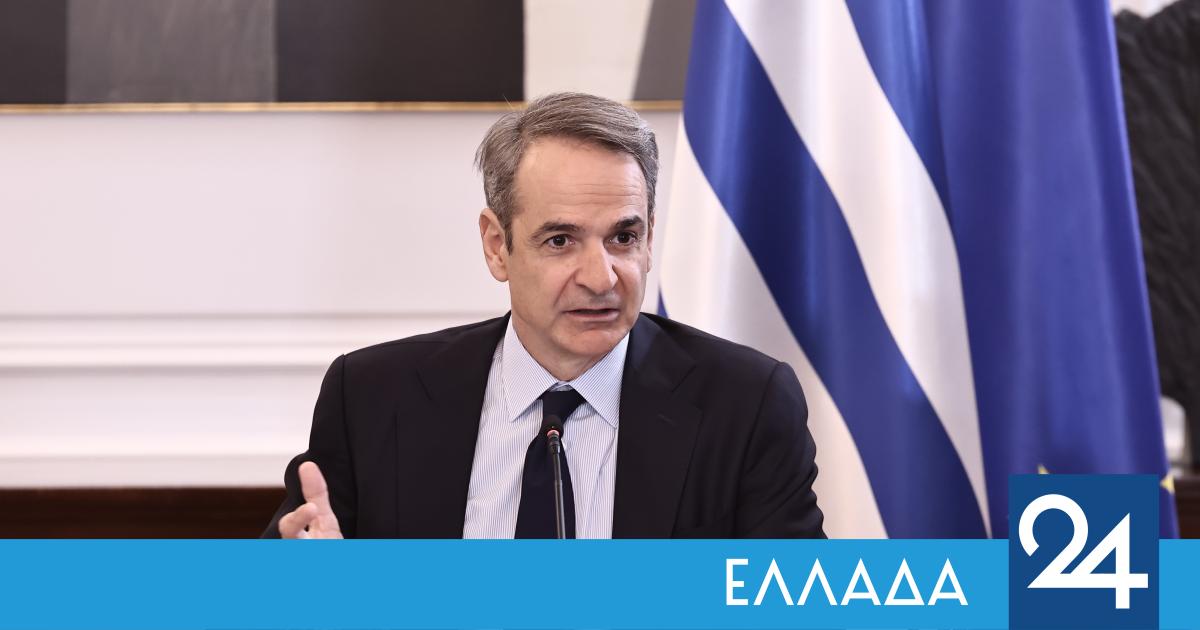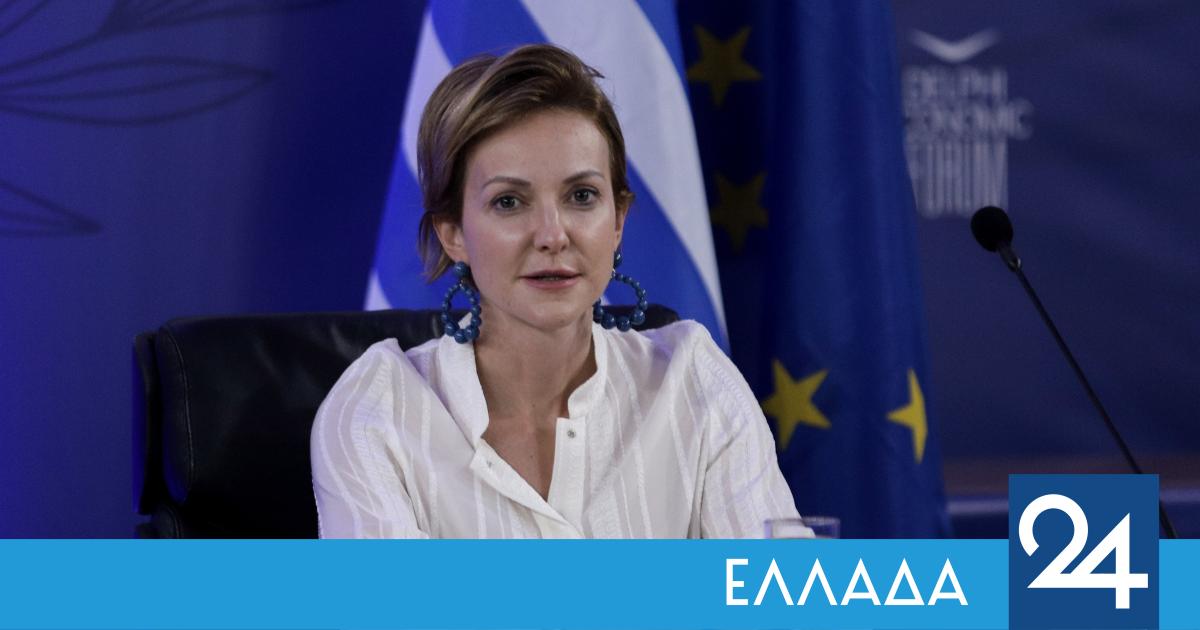
The measures announced by Prime Minister Kyriakos Mitsotakis to support citizens, as well as the political and social message sent out by the government, were mentioned by the press spokesperson of the New Democracy, Alexandra Sdoucou, speaking today on Real FM 97.8 and Athens 984.
“I want to dwell a little on the substance,” he said. “For many years, from the 1980s until the bankruptcy, the country had learned in a pattern: it was handing out money on loan, or worse, handing it out and then looking for where to get it,” he said, calling it “a recklessness and a carelessness that we know very well where it has led us.”
Sdoucou focused on the fact that the social support measures announced today by the Prime Minister are the result of a “different culture” as “for the first time what we are giving is money that we have put aside, as we do at home. We save it for an emergency and from there we use it.” He insisted on this “paradigm shift” which he described as “an idiosyncratic difference between this government and Mitsotakis himself” that strengthens critical social groups without mortgaging the future of the country” as this money is the result of national economic policy, which does not come from overtaxing society, briefly explaining how it came about. “This government, as you know, is constantly reducing and eliminating taxes – over 85 so far – culminating in the tax reform that began to be implemented this year,” while recalling the issue of reducing tax evasion “through the digitization that is happening everywhere,” concluding that “spending as much as our financial capabilities allow us now is a top paradigm shift” and “an important mortgage for our children.”
Commenting on the parties’ positions more broadly, Sdoukou said that “watching the announcement of the measures by the Prime Minister and the interview with Mr Androulakis, we saw two worlds that do not intersect anywhere. On the one hand, a modern politician who knows the limits of the economy and the needs of citizens, and on the other hand, the leader of the opposition, who did not even manage to describe a plan for the future,” saying that in the end “all he did was to try to discredit what is being done.”
Focusing on the opposition’s lack of proposals, he recalled that “they held a whole congress and the main conclusion from there was not that there was a programme for governing the country, but that they would not participate in a government with New Democracy”.
Finally, commenting on the social direction of the measures, he noted that they concern social categories such as families with children, tenants, pensioners, farmers and over-indebted debtors with old debts, while at the same time he focused on the fact that they concern a much wider range of citizens than in the past, showing that ND has social cohesion at the forefront of its policy. Specifically, the expanded criteria now cover 85% of pensioners over 65, 86% of tenants and 80% of families with dependent children.