The housing crisis, the situation we are in today, the policies, the prospects, the short term and long term measures were the subject of the discussion that took place today at the Star Forum in Lamia on the topic “Deepening housing crisis in Greece: Real causes and practical solutions”.
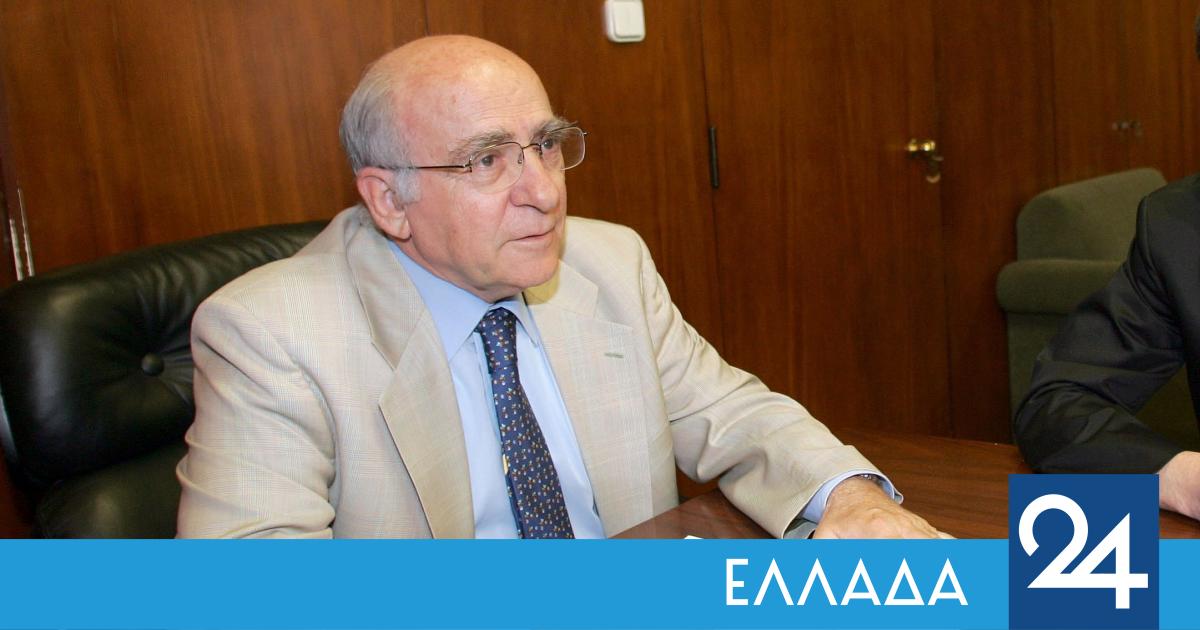
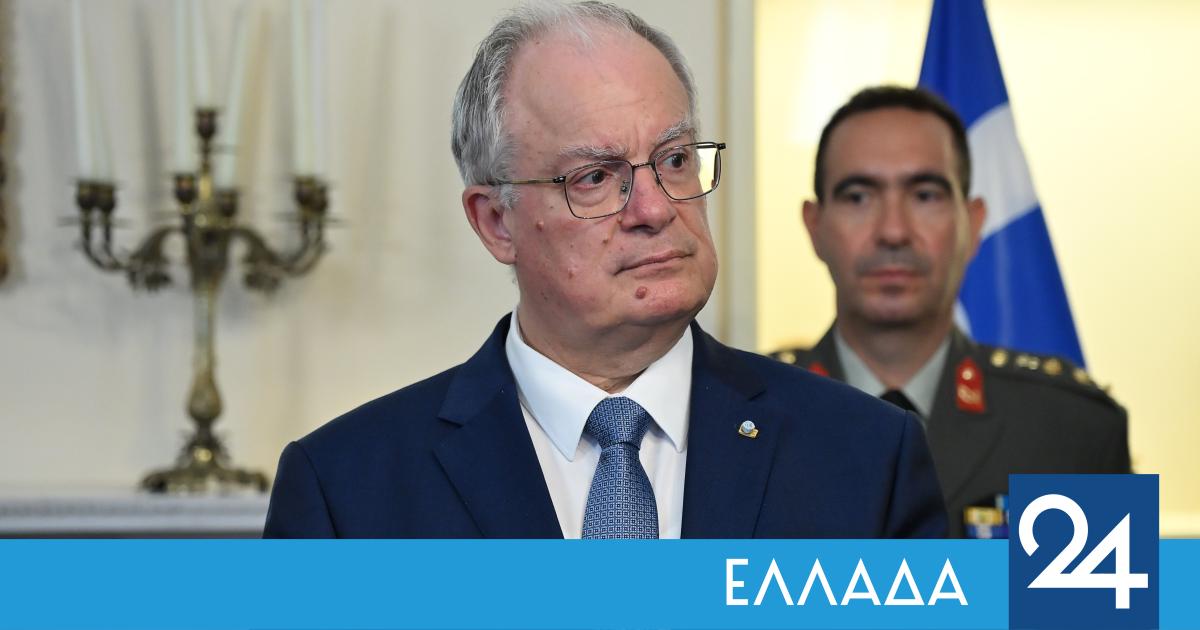
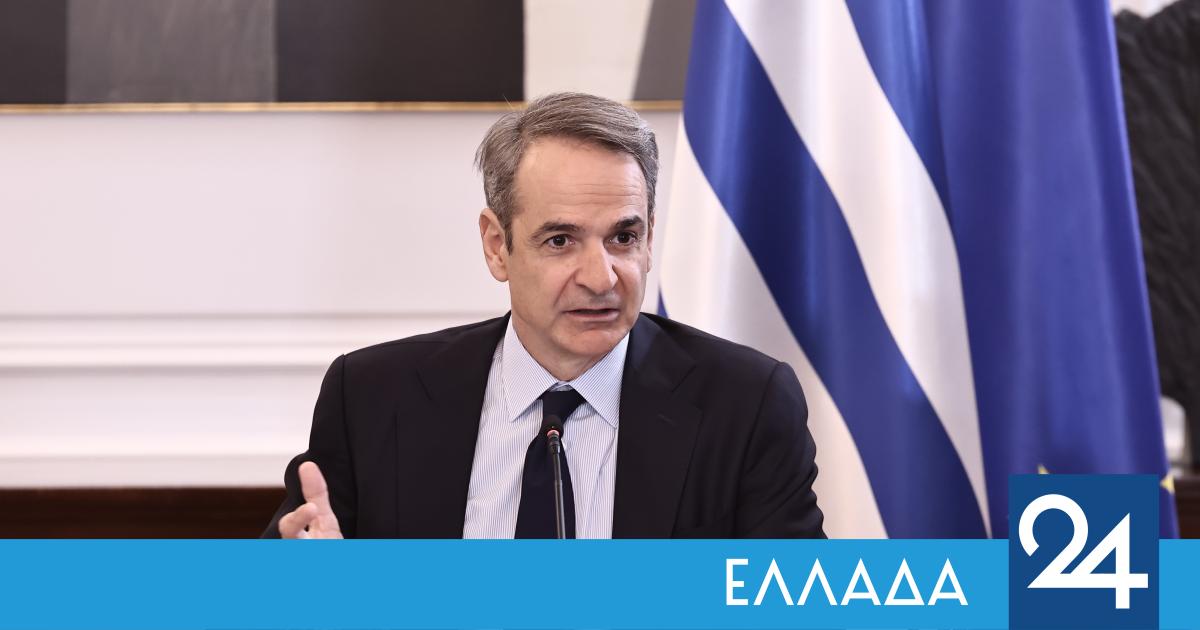
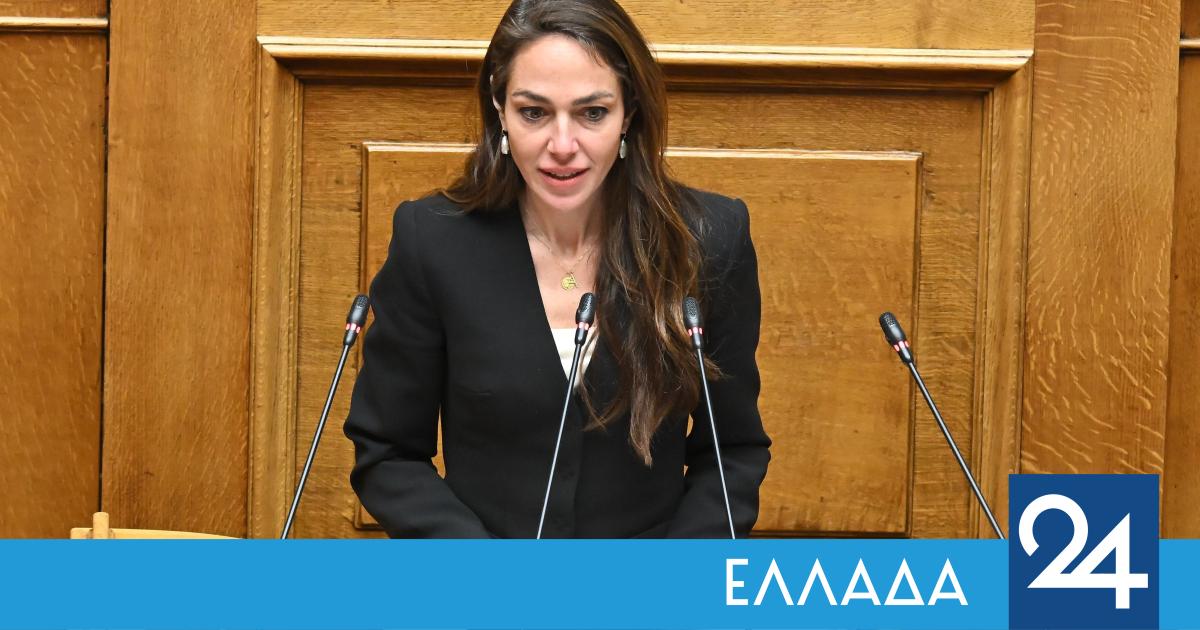
The discussion highlighted both commonalities and different approaches around one of the most pressing social issues of the day. The panel included Minister of Social Cohesion and Family Domna Michaelidou, State MP and PASOK-KINAL Parliamentary Representative Dimitris Mantzos, Regional Governor of Central Greece and Secretary General of ENPE Fanis Spanos, as well as IOBE Director General and Professor of the Athens University of Economics and Business Nikos Vettas.
The panel included the following participants: Dimitris Mantzos, Member of the State Parliament and Parliamentary Representative of PASOK-KINAL Dimitris Mantzos, Regional Governor of Central Greece and Secretary General of ENPE Fanis Spanos, as well as IOBE Director General and Professor of the Athens University of Economics and Business Nikos Vettas.
Michailidou described a crisis linked to the “asymmetry of supply and demand”, presenting a package of 43 measures worth €7 billion, with a focus on rent subsidies, social rent, the use of inactive camps and the “Renovate – Rent” scheme.
For his part, Mantzos emphasized boosting supply through social housing, utilization of public and private closed properties, limiting Golden Visa and tighter regulation of short-term rentals.
Spanos moved the discussion to the regional dimension, arguing that the answer cannot be exhausted in Athens, but must be linked to jobs, infrastructure, teleworking and incentives to return to the countryside.
Vettas, finally, gave the big economic picture, explaining that the problem is the result of decades, is linked to the changing social structure and requires upgrading the existing stock, institutional breakthroughs and political consensus.
A common theme among all was that the housing crisis cannot be solved with a single intervention, but requires a plan, duration and a combination of policies.
In particular, Ms Michaelidou stressed that the housing problem is emerging as a top social challenge. She presented at the STAR FORUM in Lamia a multi-level plan of government interventions, acknowledging from the outset the seriousness of the situation. As he stressed, “the housing crisis is a very big issue”, which not only concerns Greece but “is also part of the international and European equivalent problem”, linking the issue directly to demographics.
The minister described a context where the crisis stems from a “great dynamic asymmetry of supply and demand” and added that the demand for housing has increased significantly. “Demand has increased endogenously and even more so exogenously,” he noted, attributing the rise to both social changes, such as the increase in single-person households, and the country’s increased attractiveness to foreign investors, digital nomads and tourists. Factors such as Golden Visa and short-term rentals “blossomed”, further boosting demand.
As Michailidou said, the critical problem lies in supply. “There is a very big difficulty in increasing supply,” she stressed, attributing this lag both to the collapse of construction activity during the memoranda and to structural peculiarities of the Greek market, such as land fragmentation and urban planning restrictions. “Half the population wants to live in Attica,” he said, pointing to the uneven distribution of demand.
In the face of this complex picture, the government is putting forward a wide range of interventions. “We have responded with a package of 43 different measures, 7 billion euros,” the minister said, clarifying that there is no “one big” measure that can solve the problem. Instead, “many gradual interventions” are needed, touching both demand and supply.
In terms of immediate relief, the government is emphasising subsidies. The “one-in-twelve rent rebate” concerns, according to the minister, “nine out of ten Greeks who rent”, while the housing benefit already covers 280,000 people. Public officials working away from their place of residence are particularly targeted, with enhanced subsidies.
At the same time, he stressed that regional decentralisation policies are being promoted, such as the relocation programme with a 10,000 euro subsidy, in conjunction with employment programmes of the DIPA. The aim is to decongest urban centres and enhance life in the periphery.
At the core of the strategy, however, are measures to increase the supply of housing. The Minister singled out three key interventions. First, “social renting”, which is the use of public real estate to build new homes, including social housing at affordable rents. Second, the development of inactive camps, with the aim of creating “1,800 homes” in major cities. “Greece has not seen this kind of housing stock intensity for many, many decades,” he stressed. Thirdly, the €500 million “Renovate – Rent” programme to put closed apartments back on the market. She acknowledged that, despite the interventions, the results will not be immediate. “You need to understand the time horizons,” she noted, explaining that large projects take years to pay off. The stakes, therefore, are twofold: immediate relief for households on the one hand, and a gradual restoration of balance in the market on the other.
He concluded by noting that the housing issue has no easy solutions, but requires coordinated action. “We need to be all together,” the Minister stressed, calling for a broader political and social consensus. In a problem that “runs deep, especially among three out of ten younger Greeks”, the success of the measures will be judged by whether they can turn gradual intervention into substantial relief.
In the same STAR FORUM panel, Dimitris Mantzos, parliamentary representative of PASOK-KINAL, attempted to clearly differentiate the opposition’s strategy from the government’s approach, emphasising the strengthening of supply and the regulation of the market in terms of social justice.
From the beginning of his statement, he made it clear that “PASOK never does nothing but criticise”, stressing that he had already submitted “a comprehensive framework of support” from 2024. Describing the social dimension of the problem, he noted that “too many of our fellow citizens reach too old an age to leave their childhood home”, while others are burdened “disproportionately more than the European average” with housing costs.
In terms of analysis, he identified the cause of the crisis mainly on the supply side. “There is a supply issue,” he said, rejecting the idea that this is an imported phenomenon. “We cannot have an imported housing crisis,” he said, adding that the problem is related to structural characteristics of the Greek market.
He was particularly critical of policies that he said exacerbated the situation. On short-term hiring, he stressed that “it should be regulated especially in pressure zones”, while on the Golden Visa programme he noted that “it was a medicine” in difficult times, “but it has turned into a poison”. In his assessment, government interventions, such as the “My House” programmes, “stimulated demand” without adequately boosting supply.
Against this, Mantzos presented a different policy model, focusing on creating new housing stock. “For us, the issue is to be able to support supply,” he said, suggesting the use of unused properties owned by the state, municipalities and regions. As he pointed out, this is a “capital stock” that remains inactive and could contribute directly to the de-escalation of prices.
According to Manzo, a central element of the proposal is the development of a social housing system, where Greece is lagging significantly behind. “Our country has 0% social housing,” he said, comparing the situation with other European countries. In this context, PASOK proposes a renovation programme with tax incentives so that private owners can include their properties in a “social housing pool”. The aim is to add “40,000 homes” to the market.
The proposal is accompanied by specific regulatory measures. These include the “abolition of the Golden Visa in urban centres and islands” with intense housing pressure, and a restriction on short-term rentals. “We are flattening the price of rent,” he said, describing a policy aimed at containing rents rather than boosting purchasing power.
Mantzos also placed particular emphasis on the social groups most affected. These policies, he said, are aimed at “working people, young couples” and public servants who are unable to find housing, particularly in island areas.
He also referred to the role of banks, noting that they have a large number of properties that “need to be put back on the market” rather than remain inactive. Similarly, he called for the full registration and utilisation of closed properties of the local government.
He concluded by linking housing to the country’s broader development model. “Housing should be a right for all and not an expensive privilege for a few,” he said, noting that the issue is not only economic but deeply political. Dealing with the crisis, he said, goes through public policies that enhance regional development and reduce social inequalities.
As Mantzos stressed, PASOK’s proposal attempts to shift the debate from strengthening demand to a more structural intervention in the market, focusing on supply and regulation.
Fanis Spanos, regional governor of Sterea Ellada and secretary general of ENPE, gave the panel a purely regional dimension to the housing issue, linking it directly to demographics and the country’s growth model. He began by agreeing with the preceding analysis, but gave a simpler, almost iconic description of the problem, saying that “an Athens that fills up in a beastly way and a province that empties in a beastly way too”. For Spanos, therein lies the heart of the crisis.
Spanos acknowledged that immediate measures to support housing in Athens are necessary, but warned that in the long run they are not enough. “As long as you subsidise rents, rents will just go up,” he said, describing a mechanism that he believes does not solve the problem but recycles it. In his approach, the effective response must be strategic and aimed at moving population and activities to the region.
In his positioning, the housing issue appears not only as a cost crisis, but also as an infrastructure crisis. An over-concentrated capital city, he said, is pressured not only by expensive rents, but also by the inability of key networks to serve increasingly large populations. Roads, water, sewerage, lighting, schools: all enter into the same equation.
His key suggestion is that the state should direct a “generous fraction” of housing resources to the Greek periphery. Not just with rent subsidies, but with a comprehensive package of incentives: development of rail and other networks, institutional and technological facilitation of teleworking, and “strong investment incentives for job creation in the province”. The logic put forward is clear. For young people to stay or return to their home country, “they must be willing and able”. “Want” is linked to quality of life, “can” to jobs.
Spanos spoke of the need for “50 cities” to emerge as new poles of residential and developmental balance, rather than continuing the suffocating concentration in Athens. He even invoked the European slogan “The right to stay”, insisting that “staying in your place is not just an exercise, it is a right.”
Spanos’ intervention highlighted a different reading of the housing issue. Not just as a housing market, but as a field of national spatial and social policy. For Fanis Spanos, the solution will not only come with more houses, but with a new balance between the capital and the periphery, aiming for a better quality of life and less inequality.
Nikos Vettas, combining his capacity as head of IOBE and as an academic at the Athens University of Economics and Business, approached the housing issue in terms of macroeconomic analysis and historical continuity, attempting to explain why the crisis cannot be solved immediately.
As he pointed out, the current picture is not conjunctural but the result of decades. “From 1950 onwards […] Greeks put their money in their homes,” he said, describing an economy where housing was a key investment pillar. In 2007, at the peak of growth, ‘two-thirds of investment was in houses and construction’. However, the decade of crisis completely reversed this balance. “For about 10 years the country froze,” he noted, explaining that both incomes and construction activity froze.
This freeze, he said, is still affecting the market and “will continue to do so for at least the next 5-10 years.” That is why, he said, “problems that come from decades are not solved.” The recovery of the economy in recent years is not enough to make up for lost ground, especially when demand continues to change.
A central element of his analysis is the changing social structure. “There has been a decline in home ownership”, not because houses have been sold en masse, but because “where we used to have four or four people living, more people are now living on their own”. The rise of single-person households and an ageing population are creating new demand pressures that will intensify in the coming decades.
Faced with this reality, Vettas appears wary of easy solutions. “I’m not even sure we need … to build new houses,” he said, emphasising the need to upgrade the existing stock. Energy renovation, better geographic distribution and the use of existing housing are, in his view, more realistic directions.
At the same time, he stressed that housing is directly linked to economic activity. “Where there is manufacturing industry … there will be jobs,” he noted, highlighting the role of investment in the region. However, he warned that the trend of concentration in large urban centres is difficult to reverse: “You swim against the tide,” he said.
On the policy front, he acknowledged that existing measures “mitigate the problem” but do not solve it. He pointed to lags, such as in student accommodation and social housing, and structural barriers, such as bureaucracy in transfers and a lack of transparency in rents. “Even now … it can take a year and a half to sell a house,” he said.
He placed particular emphasis on the need for “tough decisions.” From the possible redevelopment of residential areas to large-scale interventions in urban centres, he argued that “the more you dare, the faster you can run.” However, he stressed that such choices are beyond the horizon of one government and require a broader consensus.
In conclusion, Nikos Vettas highlighted the big picture: housing is not just a market problem, but a complex challenge linked to demographics, growth and the country’s long-term planning. “These are issues that need consensus,” he stressed, setting the framework for a debate that goes beyond the electoral cycle and requires a strategy of depth.