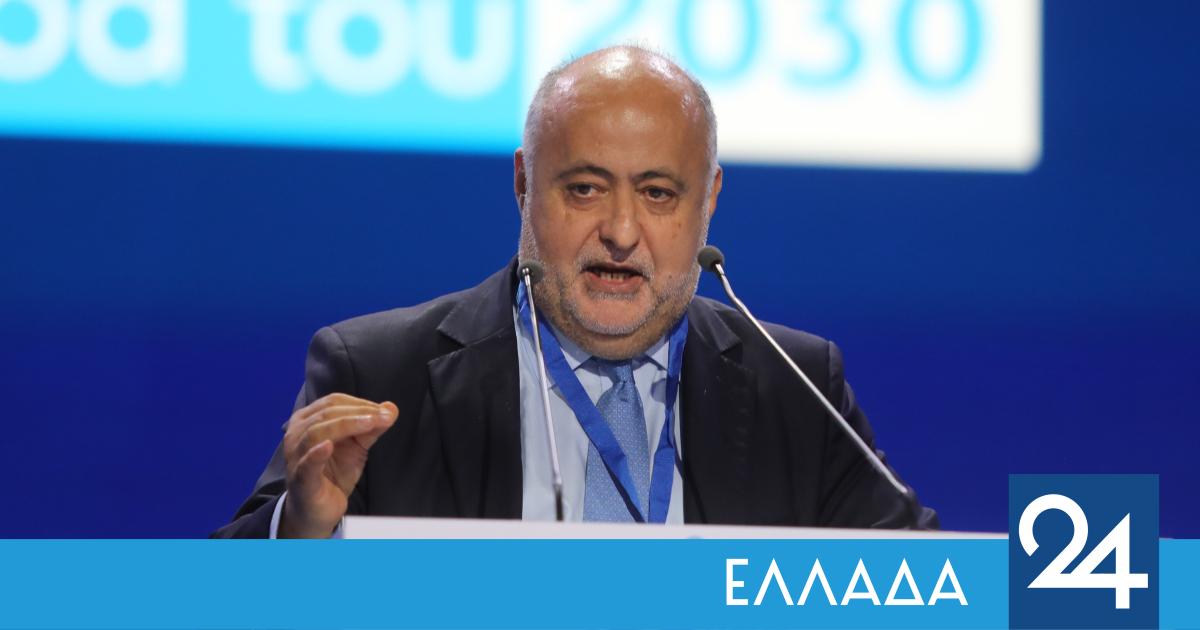
Member of the European Parliament Dimitris Tsiodras, from Rhodes, where he is today, expressed the need for Europe to move towards deeper integration and to strengthen its productive and technological base in order to maintain its competitiveness in the international environment.
As he said, in the presence of Dodecanese MPs Manos Consolas and Vassilis Ypsilantis, as well as the President of the Dodecanese IEPC, Efi Charalampopoulou, the European Union faces the risk of being reduced to the role of a global tourist destination, while production and technological innovation are being transferred to other regions of the world, mainly to the United States and Asia. She noted that the absence of European giants in the fields of technology, digital platforms and artificial intelligence is an indication that Europe is lagging behind in critical areas of development.
He argued that the problem is not due to a lack of human resources or capital. Instead, he pointed out that Europe has top universities, high-level scientific staff and significant savings, but these are not sufficiently channelled towards investment and development initiatives.
According to Tsiodras, the key priority must be to complete the single market so that the 450 million European citizens can truly function as one economic power and not as 27 separate markets. At the same time, he stressed the need to adopt common European policies that will allow the financing of investments in cutting-edge sectors and enhance the Union’s growth prospects.
He made particular reference to the discussions on the new multiannual financial framework of the European Union, noting that the financing of new priorities should not be at the expense of the Common Agricultural Policy or Cohesion Policy. He stressed that development must be a matter for the whole of Europe and not just for certain regions or Member States. For this reason, he advocated increasing the European budget and seeking new own resources for the Union.
In the field of defence, the MEP stressed that geopolitical developments have made it necessary to strengthen European defence cooperation. He said that the model that dominated after the Second World War, with Europe’s security based mainly on American protection, no longer met today’s conditions.
Tsiodras argued that Europe must move towards common defence policies, treating the external borders of member states as common European borders. While he acknowledged that the creation of a single European army remains a long-term goal, he noted that the discussion on deeper defence integration is now on the table.
Referring to the economy and trade, he stressed that European production must be strengthened and protected from unfair competition. He argued that products imported into the European Union should meet the same safety, quality and environmental protection standards as European companies, in order to ensure a level playing field.
In conclusion, he noted that the European Union is fully aware of the challenges it faces and is called upon to take decisions that will strengthen its production, innovation, defence and cohesion, while maintaining its social and developmental character.