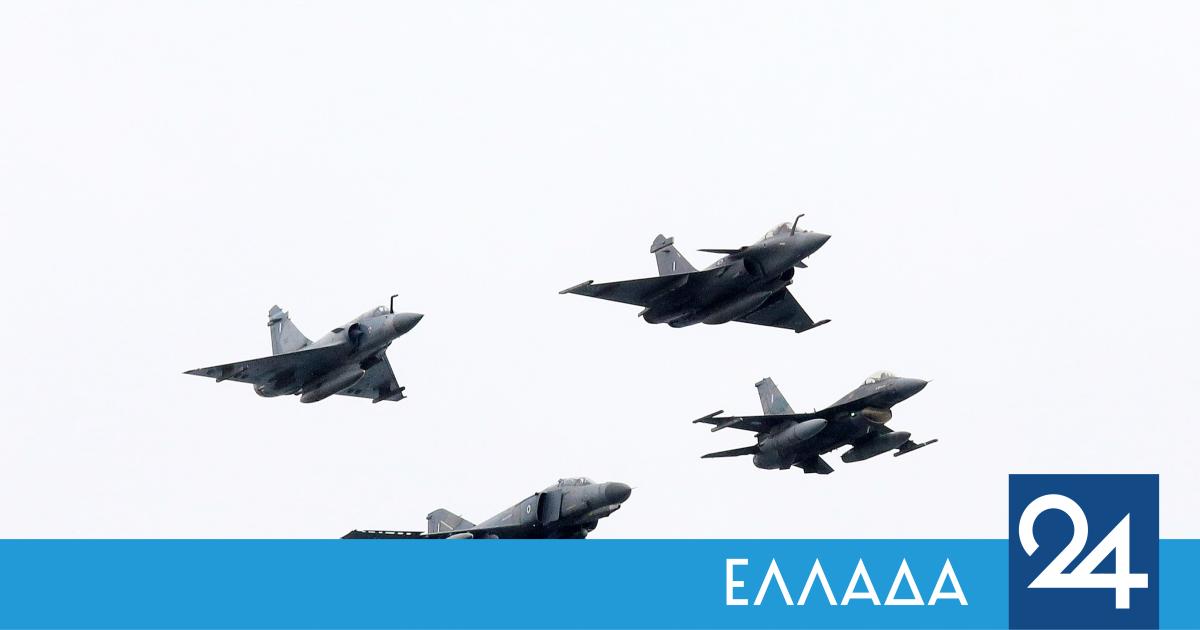
In a ceremony at the Elefsina Air Base, the Air Force honored with a memorial service and the laying of wreaths at the Fallen Airmen Memorial 1940-41, the Greek and British airmen who fought “wing to wing” over the Greek skies, giving their lives to repel fascist Italy, and later Nazi Germany, culminating in the Battle of Athens on 20 April 1941, where the last fifteen remaining British fighters fought an unequal battle with the German Luftwaffe, before Hitler’s swastika was raised on the Holy Rock of the Acropolis.
As Mr Athanasios Hadjilakos, an honorary member of the Royal Air Forces Association (RAFA), tells the Athens-Macedonian News Agency, “Fifty-two Greek airmen died and eighty-two British airmen lost their lives coming to our aid in those critical hours for the Homeland. This is the account of the air battle that ended on 31 May 1941, culminating in the Battle of Athens.”
The Battle of Athens – The RAF’s “Swan Song” in Greece
The British airmen who rushed to our aid immediately after the war began, moving from airfield to airfield, found themselves with the last 15 Hurricanes on 19 April 1941, at Elefsina airfield, under the orders of their brave commander, Major Pat Patl, Mr.Hadjilakos points out.
“From this airfield, under the Attica sky, on 20 April, the British fighters took off and repeated aerial battles were fought, during which these fifteen Hurricanes, most of which were in poor condition, instead of being condensed in Crete, as ordered, dared to confront over a hundred, up to two hundred Luftwaffe fighters and light bombers in one of the fiercest air battles of the Second World War,” he adds. Athanasios Hadjilakos.
According to testimonies on that sunny morning of April 20, 1941, as German fighters were charging against Piraeus and Elefsina, Major Patl was running a high fever, huddled in his campaign cot, racked with shivers, and at just 5.30 in the afternoon he managed to get up to board his plane, as a new wave of German fighters was approaching the Elefsina airfield.
“Repeatedly, the British Hurricanes, pierced by German fire, even with whole sections of their planes detached, returned to Elefsina to refuel with ammunition and fuel, and rejoined the battle. In this furious air battle, Patl shot down three more enemy planes. But in his attempt to defend a comrade-in-arms, who was under attack by three Messerschmitts, he was fatally hit and his plane, on fire, crashed into the bay of Elefsina, which remains his watery grave to this day.” Surely the fatigue and overexertion of the five and a half months that he fought continuously in the Greek skies, from the Albanian front to Athens and Piraeus, must have contributed to his loss, he adds.
April 20, 1941, is recorded as the day of the last air battle on Greek soil, and the RAF’s top ace Major Pat Patl as its last casualty, aged just 27.