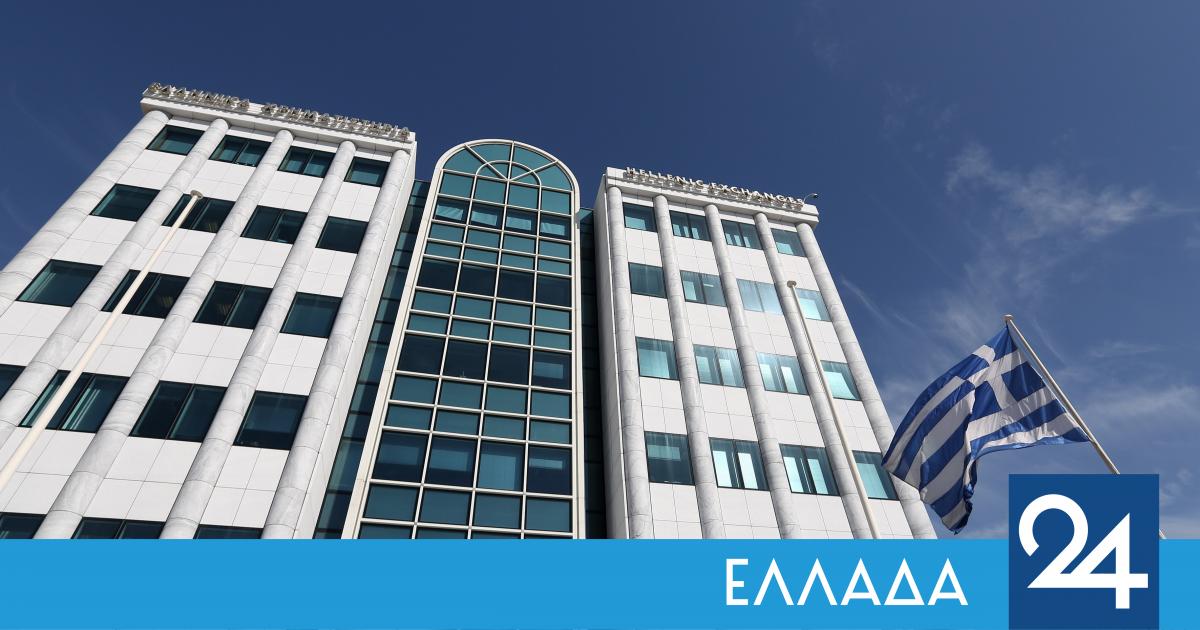
Now, all major international index providers (S&P Dow Jones, FTSE Russell , MSCI and STOXX) recognize Greece as a Developed Market. This is another important milestone for the Greek capital market, a development with a strong symbolic and substantial footprint, reflecting years of reforms, improving market quality and strengthening investor confidence.
The upgrade to Developed Market status is expected to further enhance the visibility of the Greek market in the international investment community and support the attraction of broader institutional capital.
Greece’s reclassification to developed market status represents a historic return, after more than thirteen years in the emerging market category.
The Greek stock market was the only Eurozone stock market that was downgraded as of 2013. There has been no similar downgrade for any other developed market stock market.
Greece is returning to the core of developed economies, not only in terms of government bonds, but also in terms of capital markets. This development strengthens the country’s credibility, attracts investment capital, broadens the base of international investors and creates new financing prospects for Greek businesses.
In the next period, the bet for the Greek stock market is to prove that it can stand its ground in the new environment of “mature” markets.
Success, according to stock market analysts, in the long term will depend not only on the flows of passive funds, but on the ability of listed companies to attract active, stable and long-term investment interest.
In the short term, Axia-Alpha Finance believes that the market may experience technical volatility due to index restructurings. In the medium term, however, the upgrade is expected to broaden the investor base and help reduce the risk premium of Greek equities.
According to the Athens Exchange, the transition from emerging markets to Developed Market status will have the following benefits:
– Access to Global Capital: Unlocks trillions in assets under management from global funds mandated to invest exclusively in Developed Markets.
-Expansion of the Investor Base: Broaden shareholder mix by attracting high-quality, long-term institutional “power players.”
– Confirmation of Structural Reforms.
.
-Increasing Passive Flow: Triggers mandatory purchases from huge ETFs that track developed market indices FTSE , MSCI and S&P.
-Increased Corporate Visibility: Enhances global analyst coverage and puts listed Greek companies on the radar of international portfolio managers. Although the technical revaluation will take place in 2026, the market has already entered a ‘pre-integration’ phase, characterized by an institutional review of the value of Greek assets.
-Improved Flow Quality: Shifts market activity from speculative, high-volatility trading to stable, institutional positioning.
– Coordination with Investment Grade: Consolidating Greece’s dual position as a developed jurisdiction for both the government bond and equity markets.
-Highest Standards of Transparency: Enforces enhanced ESG and transparency protocols, aligning SA companies with international best practices.
The inclusion of X.A to the Euronext group
The upgrade in developed markets combined with the X.A to the Euronext chariot gives the Greek market the opportunity to make the most of this momentum, further enhance liquidity, attract new capital and support the long-term growth of Greek companies.
Market participants stressed that by the time X.A passes to the Euronext group, Greece ,which is at the central core of the European Union, which among other things is a single economic area, cannot have a different status from the rest of the European countries.
With the integration of the Athens Stock Exchange into the Euronext ecosystem, which is expected to be completed in June 2027, one of the leading market infrastructures in Europe, through the Euronext Single Order Book, Athens will be connected to a deep, pan-European liquidity portfolio, offering improved pricing, spreads and execution quality, while the move to a single clearing/settlement framework will streamline post-trade operations and enhance market efficiency.
One of the biggest moments, perhaps the biggest, in the history of the Greek Stock Exchange is its inclusion in the Euronext group, a market twice the size of the London capital market. Euronext’s single European integrated market carries out around 12 billion trades a day, more than double the number of trades carried out in London.
The Hexagora of X.A from Euronaxt allows participants in the Greek financial markets to join a network of more than 1,800 listed companies with a total market capitalization of more than €6 trillion.
What joining the Euronext float brings is a connection to a pan-European, global market.
There will be a transition from a local infrastructure to a pan-European technology platform, called Optiq technology, which is a single technology platform, a single order book and a single pool of liquidity with a total capitalisation of about 6.5 trillion euros.
Greek companies, regardless of size, will gain increased visibility and access to Europe’s largest liquidity pool. Today, many Greek companies operate in a limited market and are often forced to leave the XA or seek dual listing in foreign markets. Joining the Euronext network will allow them to remain listed in Greece while accessing a wider European and international investor base across Europe.
This will enhance their liquidity, competitiveness and attractiveness, attract more investors and possibly encourage Greek companies, such as from the shipping sector, to return to the Athens Stock Exchange.
The Greek market will benefit most from its inclusion in Euronext as it comes at a time when Europe is attracting capital from the rest of the world. Since last year, we have seen a significant inflow of capital from the US, simply because Europe is seen as cheaper than the US.
But there’s another trend that’s even more important: Funds from the rest of the world, from Asia and the Middle East, are generally heading to Europe because they believe they are too concentrated in the US and that sound management and risk diversification logic requires a greater and more strategic allocation of capital to Europe.
In this environment there is an opportunity for companies, as long as they are connected to a market that has significant depth, such as the pan-European integrated market of Euronext.