School lunches are celebrating ten years in elementary schools this year. As the school year draws to a close, APE-MPA spoke to the Minister of Social Cohesion and Family, Domna Michailidou, teacher Efi Bakoyannis and Fotini Patramanis, a mother of a schoolgirl, for an assessment of the programme and the prospects for its implementation. They stress the importance of the measure, but also set parameters to improve its implementation.
What is included in a school lunch
The weekly menu structure is fixed and includes: once a week meat (white or red), once fish, once legumes and once greens/vegetables. Each meal is accompanied by a fresh salad and fruit, says Ms Michaelidou. The food, which follows the principles of the Mediterranean diet and has been designed by the scientific team of Harokopio University, “is prepared the same day it is distributed, using the cook & serve method, without refrigeration or pre-freezing, and is delivered to the students in closed individual packages. The preparation, packaging, transportation and distribution are done by contractors selected through public tenders,” it adds.
The School Meals Programme is currently being implemented in 1,986 primary schools across the country. The available rations amount to 235,742 per day, while student registrations reach 183,726. With this year’s expansion, the programme now covers 159 municipalities, with a special focus on island, mountain and border areas.
“A day when you know your child will eat school lunch is a carefree day to prepare for school”
At the elementary school where Ms. Patramanis’ daughter attends in Neapolis, Athens, school lunches are served daily. “I am grateful that the school lunch program is available as an option at our school and I think our children and we as parents are very fortunate to have this option. A day when you know your child will eat school lunch is a carefree day for their preparation,” Patramanis described.
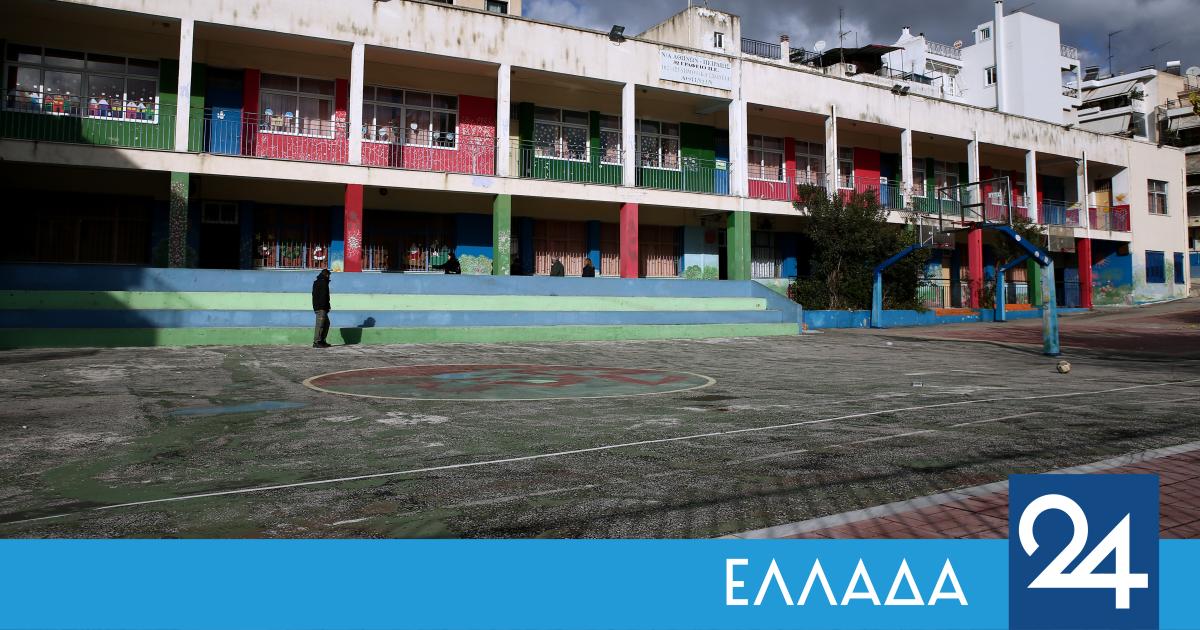
The school where Ms. Bakoyannis works in Abelokipi, Athens, has about 85 students, 70 of whom have signed up for the school lunch program. In the years she has worked in public schools she has been involved in different types of feeding programmes, the existence of which she considers to be “essential and necessary for society”. Among the positive points she lists the universal acceptance of school meals by the school community, parents and teachers. “Families facing financial problems ensure a meal for their children, families lacking healthy eating habits are put in touch with a balanced feeding programme,” she stresses, adding that “a single meal for all students breaks down class divisions and children cease to compare the eating habits of others.”
Ms. Michaelidou says she is “satisfied with the progress of the program, precisely because year after year it is expanding and gaining more coverage. Furthermore, she stresses that “school meals are not just about feeding. They are care, prevention, equal opportunities and support for the family through the school itself.”
Children are influenced by their peers
How do children deal with school lunches? Some kids eat them, some don’t. According to Mrs Bakoyannis and Mrs Patramanis, the closure in the plastic packaging often destroys the appearance of the food and consequently it is not attractive to children’s eyes. An important factor is that children are influenced by each other. That is, “a large percentage of children don’t eat the meals because they get carried away with one another and if the majority don’t eat them, then even if some would possibly eat them, they end up not eating them,” says Patramanis. Also, more than a few parents, because of their anxiety that their child might not eat the school lunch and go hungry, give their children alternative food from home, resulting in children despising the meal they are given. This has the added impact of making the rest of the children jealous.
“Teachers try through health education programmes and developing healthy eating habits to encourage students to try foods that many times they may not have even tried, such as pulses and oils, but it doesn’t stop one child from being influenced by another,” elaborates Ms. Bakoyannis. She goes on to criticise the fact that “we are not informed about the origin of products and their ingredients”. She has also noticed that the daily salad and bread has been reduced.
Ms Patramanis’ daughter has a dairy allergy and has stated that, despite this, she has almost always been served mashed meat. After constant reminders, this stopped. Quite often, however, she finds herself without the choice of so-called ‘allergic food’ because the portions have not been calculated correctly. Once she even went without any food at all, Patramanis notes.
It would be better if the children ate in a dining hall rather than in the school hall
Bakoyannis disagrees with the plastic packaging that food comes in schools. She remembers in the old days, for example, school lunches were served straight from the pot to a plate. Patramanis agrees: “if the same content was served on a plate it would be more likely to be eaten”. Meal acceptance rates among students would be higher, she continues, if there were a school dining hall rather than children eating at the desk where they do their homework. On the other hand, no school facility has the proper dining facilities “to foster the right culture among students,” Bakoyannis says. She also warns that hot and closed food in plastic “poses risks of bacterial growth etc.”
France, like most European countries, has dining halls with trays where food is served at school and students are trained in manners, Bakoyannis describes. When she had met 6-year-olds from France, “they ate using a knife and fork fully concentrating on their food and at the end of the meal they asked us for dessert. When I commented on the fact and in particular, how concentrated they were (to remind at this point that the majority of infants in Greece are now fed in front of screens), their mother told me that the way they ate, their diligence, even the dessert was the result of their daily education in their school environment”, she said.
Where the appropriate infrastructure and necessary organisation is in place, “it is obviously positive that children can eat in a more structured and enjoyable environment that encourages participation, socialisation and better eating habits”, he says. On the other hand, Ms Michailidou says, “we must also take into account the actual conditions of each school, because not all units have the same available space or the same organisational capacity”. Therefore, improvement “can come through better use of school infrastructure, better organisation at local level and continuous cooperation with the educational community”. More generally on the issues raised, Ms Michaelidou stresses that “we see the programme not as something static, but as a policy that can be constantly improved in practice”. Beyond that, because we are talking about such a large and vibrant programme, “monitoring is continuous and improvement is constant,” she explains.
Patramanis concludes that “the school lunch program costs the state quite a bit of money and it is a shame that we, parents and students, are not getting the most out of it.”
</html