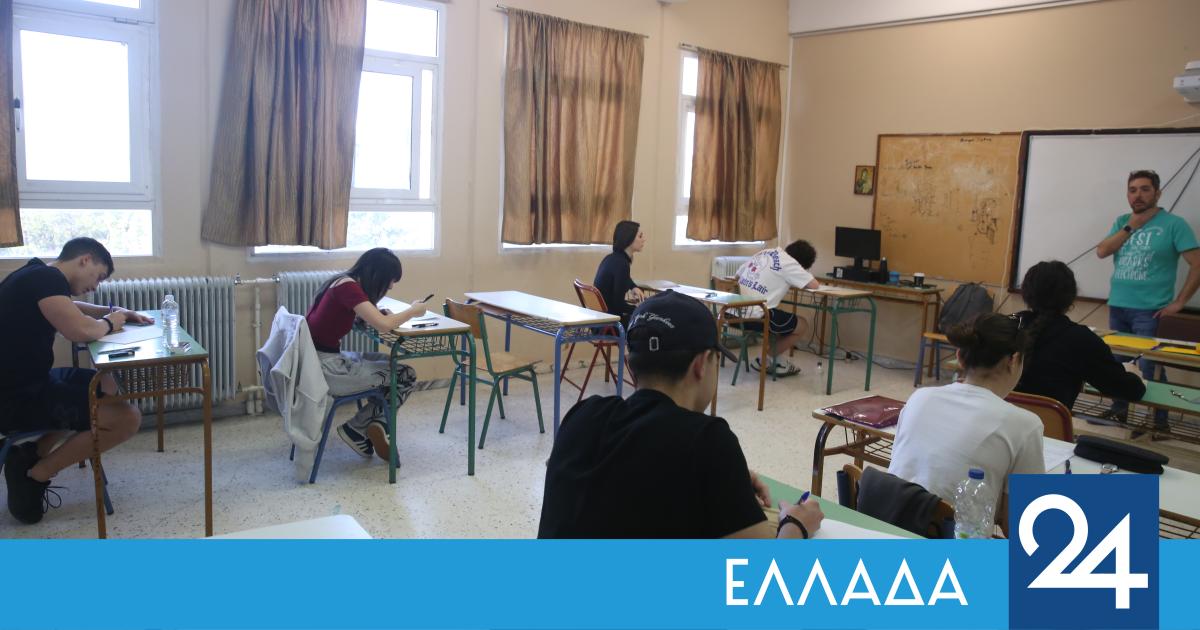
On the occasion of the start of the 2026 Panhellenic Examinations at the end of this week, the Ministry of Education, Religious Affairs and Sports is implementing an extensive and organized system of free psychological support and counseling for the candidates of the 2026 Panhellenic Examinations and their families.
More specifically, on the initiative of the Minister, Sophia Zacharaki, a telephone line with the number 1550 was created, with psychologists from the Centres for Interdisciplinary Assessment, Counselling and Support (KEDASY) of the territory and the Ministry of Health, in order to provide psychological support services to candidates for the Panhellenic Examinations and their families. The calls, for all subscribers of the telecommunications companies, are free of charge and will operate from today, Monday 25 May until 30 June 2026.
“The Panhellenic Examinations are, admittedly, a demanding process for candidates and their families. We are with them. We do not leave any child alone,” Ms. Zacharaki said, noting at the same time that a strong message is sent to the children: “Speak up. Keep persevering to claim your dreams.”
“Through the psychological support line, on-site expert interventions and counselling sessions, information activities for parents and teachers, stress management programmes and the “Panhellenic Examinations – APC” YouTube module, we enhance mental balance and create a safe and supportive environment for all candidates. I want to reassure the children that our support is not situational. Their mental health is a constant priority for the State and strengthening the relationship in the school-children-family triangle is of key importance and our shared responsibility,” the Education Minister added.
It is worth noting that alongside the operation of the telephone line, a nationwide network of interventions has been activated in all 13 regions of the country, through the Regional Directorates of Education, the KEDASY, the School Networks of Educational Support (SDEY) and the support structures of education.
Specifically, the network of interventions includes:
– psychological support hotlines,
– systematic on-site visits by experts to school units,
– possibility of scheduling consultative meetings,
– information activities for parents and teachers,
– stress management and mental resilience programmes,
– operation of a thematic section entitled “Panhellenic Examinations – APR” on the official channel of the Central Macedonia MTE Actions – YouTube.
As stated by the Ministry of Education in a press release, the aim of the initiative is “to provide meaningful support for students during the demanding examination period, to enhance the supportive role of the family and to create a safe and supportive environment for all candidates”.