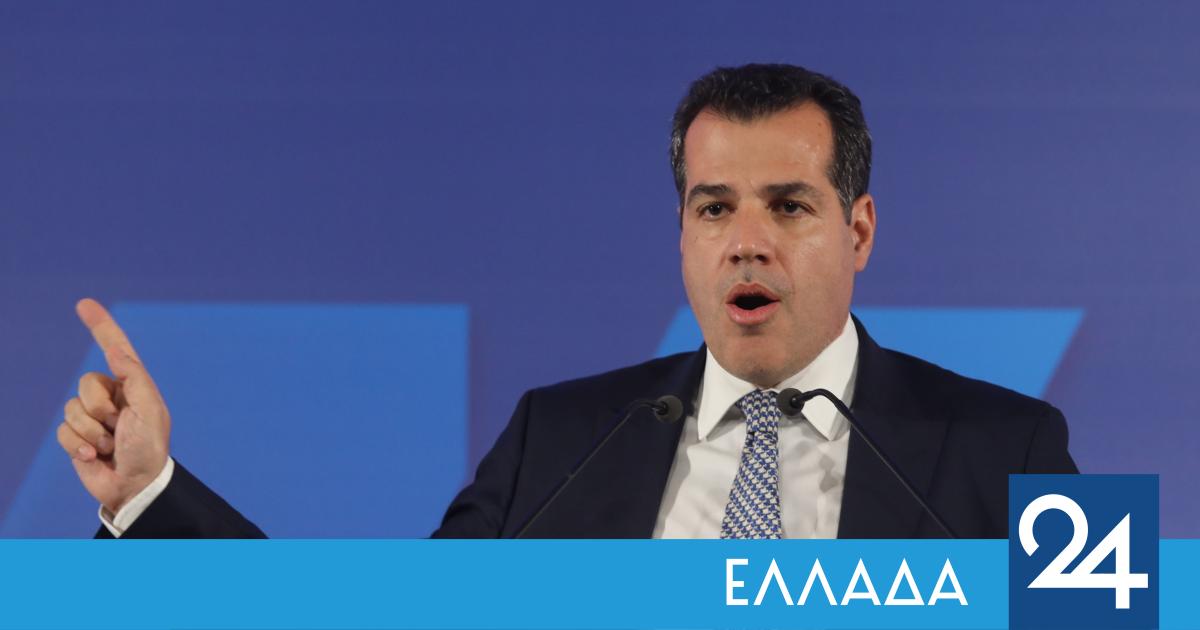
“Europe cannot have a credible migration policy without effective returns and strong protection of external borders,” said Minister of Migration and Asylum Thanos Pleyris during his participation in the proceedings of the MED9 Ministerial Meeting, which is taking place in Rovinj, Croatia, on 18 and 19 May 2026, under the Croatian Presidency.
The Summit was attended by the Ministers of Interior and Migration of the MED9 member states, representatives of the European Commission, as well as representatives of the European agencies Frontex, Europol and EUAA, on developments in the migration issue and the strengthening of internal security in the Mediterranean region.
During his intervention, the Minister stressed the need for effective protection of the external borders of the European Union, strengthening of returns and intensification of European action against migrant trafficking networks. At the same time, he presented the recent initiatives of the Greek government to tighten the framework for returns and speed up asylum procedures.
“Those who are not entitled to international protection must be returned immediately. Illegal stay cannot be turned into indirect legalisation,” Plevris said, adding that “the Greek authorities will not apologise for applying the law and protecting the European borders with self-denial.”
Special emphasis was placed on cooperation with third countries, on strengthening the external dimension of European migration policy, as well as on the need to develop innovative practices, including return hubs outside the European Union.
‘Worth mentioning, the ministry said in a statement, was Commissioner Magnus Brunner’s remark on the impressive reduction of migratory flows from Turkey to the Greek islands, which is 65% compared to the corresponding flows in 2025.
In the margins of MED9, the Minister held a bilateral meeting with the Croatian Interior Minister Davor Bozinovic, during which they discussed the coordination of frontline states in the face of migratory pressures in the Eastern and Central Mediterranean, the strengthening of cooperation to tackle trafficking networks and the need to formulate a common European stance on possible new migratory flows linked to developments in the Middle East.
At the same time, a meeting was held with Italian Interior Minister Matteo Piandozzi, during which the common challenges faced by Mediterranean countries, the implementation of the new European Pact on Migration and Asylum, as well as the need to strengthen operational cooperation to prevent illegal migration flows from Libya were discussed. The meeting is part of the enhanced coordination between Greece and Italy on migration, following the recent joint statement by the leaders of Greece, Italy, Cyprus and Malta on the need for a unified European response to possible migratory pressures in the Mediterranean.
The Minister of Immigration and Asylum was accompanied by the Commander of the Asylum Service, Marios Kaleas, and the Diplomatic Counsellor of the Ministry of Immigration and Asylum, Ambassador Nikolaos Yiotopoulos.