.
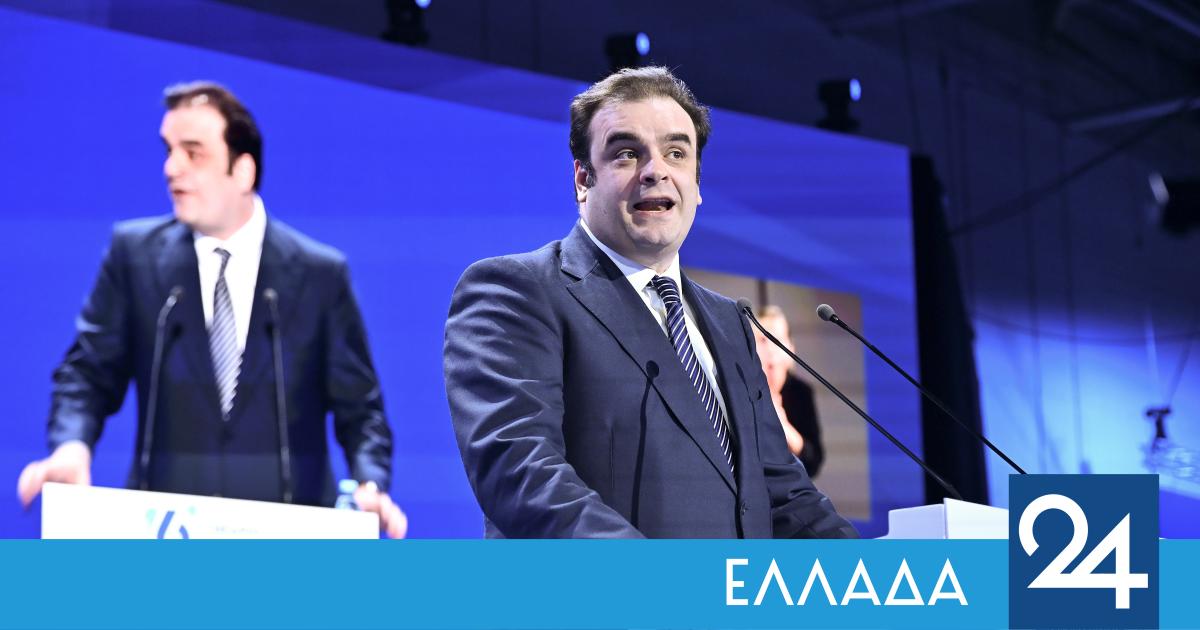
The additional fiscal flexibility allows us to make the necessary investments in energy more quickly, Minister of Economy and Finance and President of the Eurogroup Kyriakos Pierrakakis said in joint statements with OECD Secretary General Matthias Corman at the OECD Ministerial Conference in Paris. He also said that green energy is undoubtedly an area of the utmost importance, in which the necessary and most important investments must be made at European level as soon as possible.
For his part, Mr. Corman said, among other things, that it is really impressive what Greece has achieved in the last five or six years. The turnaround in the country’s course, both in terms of economic performance and fiscal performance, is remarkable. And it is the result of ambitious policy reforms and structural changes.
The statements of Mr. Pierrakakis and Corman are as follows:
Kyriakos Pierrakakis: First of all, I would like to congratulate my good friend Mathias Corman on the successful completion of his first term as Secretary General of the OECD and wish him an even more successful second term.
We are at the OECD today discussing a particularly topical issue: how to get industrial policies right for open markets, growth and prosperity. A topic that, let me note, is particularly timely following today’s decision by the European Commission to allow additional fiscal flexibility for investment in energy security and resilience, taking advantage of the possibilities provided by national escape clauses under the new EU fiscal rules.
Needless to say, this also ties in with the recent finding by the International Monetary Fund that the impact of the crisis in the Middle East is being felt 12% less in Europe than it would have been had we not made the necessary investments in green energy in recent years, from 2022 onwards. So this is undoubtedly a sector of paramount importance, in which we need to make the necessary and most important investments as quickly as possible.
Today is also a very important day for Greece. The OECD’s economic forecasts confirmed the positive performance and resilience of the Greek economy, while the European Commission today removed Greece from the list of countries with macroeconomic imbalances. This is, I would say, a historic decision, which marks the closure of a 16-year period that has included years of trials and challenges for every Greek citizen.
There are two key words here: trust and responsibility. This decision reflects confidence in the Greek economy and Greek society. But it is our responsibility, as policy makers, to turn this confidence into greater prosperity for Greek businesses, Greek citizens, Greek households, Greek society and the Greek economy as a whole. And we intend to achieve it.
.
Matias Corman: It is a pleasure to be here with my good friend and colleague, the Minister of Finance of Greece, Kyriakos Pierrakakis. The two of us have worked together very productively over the last few years.
.
I would just like to say that what Greece has achieved in the last five or six years is really impressive. The turnaround in the country’s course, both in terms of economic performance and fiscal performance, is remarkable. And it is the result of ambitious policy reforms and structural changes. Greece has done the hard work and the results are now visible to all: Stronger growth than much of Europe, a remarkable boost to employment and a significant reduction in unemployment.
There is still some distance to be covered, but the path is clearly in the right direction and in contrast to the trends seen in many parts of the world. Greece, starting from a level of very high public debt as a percentage of GDP, has managed to put it on a steady downward trajectory and this trend is continuing. The country continues to run strong primary surpluses and reduce public debt as a percentage of GDP through a combination of stronger growth and prudent fiscal policy.
We are certainly living in difficult times. Both because of the short-term pressures of the recent conflict in the Middle East and because of a number of deeper and longer-term structural challenges. Of course, Greece is not alone in facing such challenges. Countries across the OECD and around the world are facing the problem of weak productivity growth.
We look forward to continuing to work with our friends and colleagues in Greece to enhance productivity. Both in Greece and in the rest of the OECD countries. Because in doing so, incomes will rise, the living standards of our citizens will improve and the productivity of our economies will be enhanced.
As I said before, it is always a pleasure to be with my good friend Kyriakos Pierrakakis and I look forward to our further discussions in the coming days.