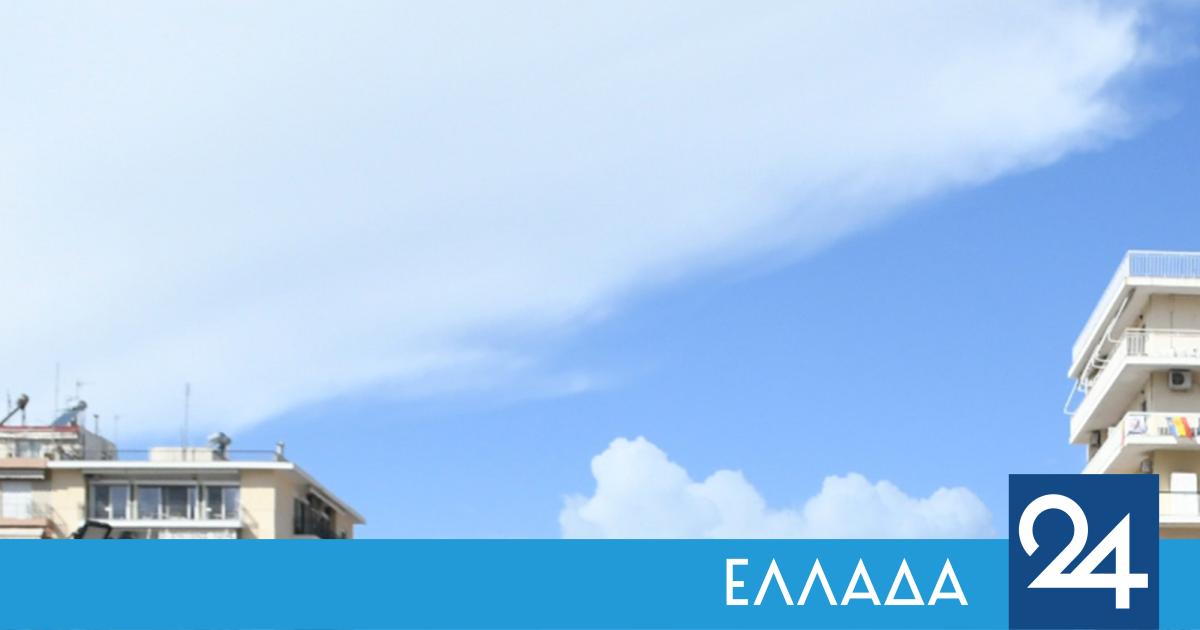
“The situation in the atmosphere of Patras, in terms of particulate pollution, is good, based on European Union guidelines. This is because measurements in the northernmost areas, such as Platani and Rio, are close to five micrograms, which is the limit the World Health Organisation would like, while in the other areas of the city measurements reach 10 micrograms. In essence, it is an average situation, that is, it is not stable over the year, since it is a combination of quite low values in the summer period and quite high values in some parts of the city in the winter period.”
Speaking to the Athens-Macedonian News Agency, Andreas Kazantzidis, professor of the Physics Department of the University of Patras and the Laboratory of Atmospheric Physics, analyses the evaluation of measurements of suspended particles in the atmosphere of Patras, on the occasion of the 10th anniversary of the “Ether” network of the University of Patras.
The main sources
The main source of the elevated levels of particulate matter during winter, according to the professor, “is combustion from fireplaces in the evening hours, especially when the weather conditions are favourable, i.e. apnea and low temperatures”.
But, as he notes, “pollution can reach the city from other areas that are classified as distant sources, meaning that if we stop pollution from sources within the city, for example, prices will only halve,” he adds:
“Almost a third of the pollution we have comes from other sources and the other sources, apart from natural sources, can be for example from the Po Valley in Italy.”
The cars
As far as air pollution with particulate matter from car emissions is concerned, Andreas Kazantzidis tells APE-MPA that “it is not as big as we think, because as the average age of cars improves, the situation is getting better and better, since modern cars emit little or no pollutants”.
The Port
Regarding the pollution of Patras’ atmosphere from the operation of the new port, the professor tells APE-MPA that “any port is a source of pollution, but the port of Patras does not have the traffic of Piraeus, while many times the meteorological conditions help to prevent the smoke from heading towards the city”.
Indeed, he points out, “studies have shown that some of the pollution is due to traffic around the port, that is, cars waiting to board a ship.”
African dust
As regards the pollution of the atmosphere by microparticles due to African dust, Andreas Kazantzidis stresses to APE-MPA that “the dust often does not reach the ground, since the largest quantities of particles are high up in the atmosphere”. He also notes that “the suspended particles are larger and mainly affect the upper respiratory system, while the episodes of concentration occur mainly from early to late spring and this is helped by the meteorological conditions.”
Inside the homes
At this point the professor makes a special reference, speaking to APE – MPE, to the pollution of the interiors of houses by suspended particles.
As he says, “inside homes there is pollution from many microparticles due to household activities such as preparing food, especially fried food, smoking, burning the fireplace, and other activities that can ‘pick up’ dust.” In fact, as he points out, “pollution inside homes can be three times higher than in the outdoor atmosphere”.
In response to the question of what measures could be taken to reduce particulate matter pollution levels, the professor tells APE-MPA that “the basic measure would be to limit the burning of wood by fireplaces, especially when weather conditions are favourable for pollution episodes and at the same time to provide facilities for people who heat their homes with wood”.
The Ether Network
On the occasion of the 10th anniversary of the “Aetheras” network, an event was held in Patras, on the initiative of the Ecological Movement (OIKIPA), which is celebrating 40 years of operation this year.
In this particular event, the operation of the network was presented and an assessment of the situation was made, regarding the records on particulate pollution.
The Ether network is a system for monitoring and recording particulate matter, within the framework of the research activities of the Laboratory of Atmospheric Physics. It consists of sensors for measuring particulate matter, panoramic cameras and a web-based platform that records the air quality in Patras in real time.
According to Andreas Kazantzidis, “we created the network in 2016 because everyone was talking about particulate matter at the time,” he adds: “We were in the middle of the economic crisis and we had an increase in particulate matter pollution because of the large amount of wood burning from fireplaces. Until then, particulate matter was more in the summer, when we didn’t have rain, but we had more dust, but that situation started to change when the economic crisis started.”
The most important pollutant
At the same time, as the professor notes, “particulate matter is the most important pollutant in terms of its impact on the human body by a huge margin over the second most important pollutant, which is ozone,” he adds: “The ratio is about one to 50, so if we assume that every year we can attribute 10 million deaths to the planet because of particulate matter, ozone is second with 200,000 deaths.”
Andreas Kazantzidis also points out, regarding the operation of the “Ether”, that “apart from the citizens’ need for knowledge, there was also the scientific issue of high mortality rates and the subsequent high health costs, because particulate matter is linked to a number of diseases and affects a very large percentage of the population”.
29 stations
“Today”, the professor continues, “the ‘Ether’ network consists of 29 stations recording particulate matter, meaning we have the air quality indicators, we know the days and times of the year when we have the problems and we know whether the particles are small or very small, because the smaller they are, the deeper they enter the respiratory tract, causing greater problems for the human body”.
At the same time, he continues, “we have built a forecasting and information system, meaning that every morning someone can be informed about how conditions will be during the day.”
“This,” he stresses, “proves useful for vulnerable groups of the population because it is a valuable information.”
Private help
On the creation of the Ether network, the professor notes that “the help of private individuals was important in getting it up and running”, while, he adds, “it continues to be important for private individuals to provide space for the installation and operation of the stations”.
The goals
As for the objectives of the Aetheras network, Andreas Kazantzidis tells RES-ME that “we want to continue to study the spatial and temporal variability of the phenomenon of particulate matter, to have a reliable database that can be used for studies on urban management and public health, as well as to inform and raise awareness”.
Finally, the professor notes that “it is important that an effort that started 10 years ago has now been adopted, along with the equipment and methodology, by all the research institutions in the country that deal with particulate matter, so that it is integrated into the Panhellenic Infrastructure for the Study of Atmospheric Composition and Climate Change (PANAKEA)”.