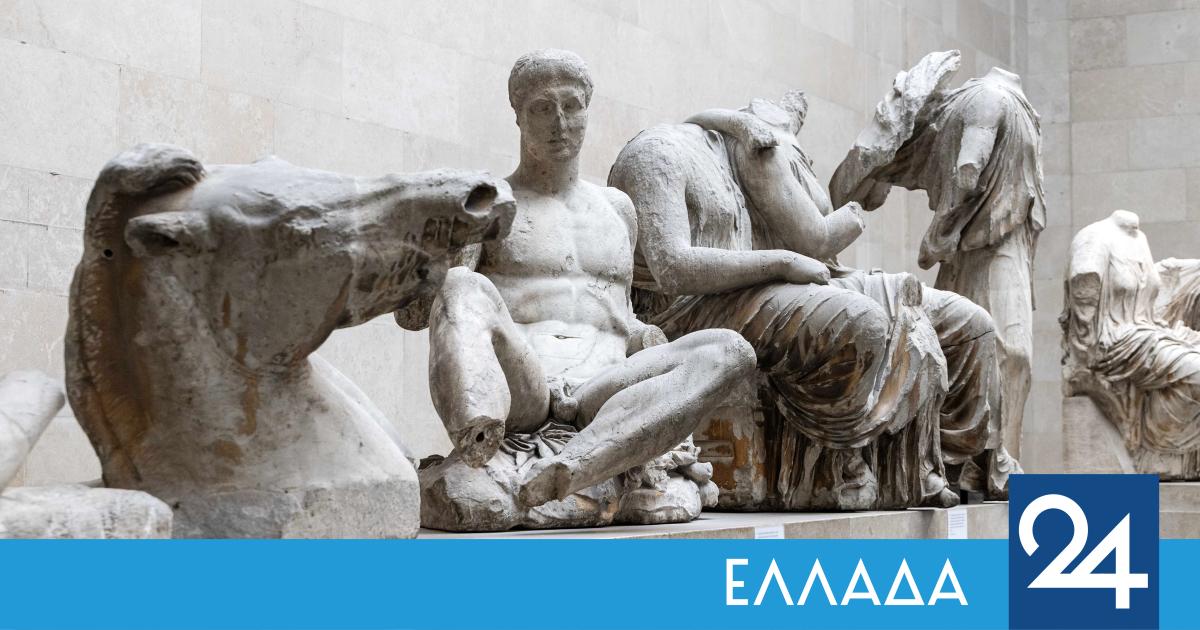
A law has been passed in France paving the way for the return of Parthenon fragments from the Louvre Museum to Greece.
More specifically, the new legal framework that came into force in France in early May brings the issue of cultural heritage returns back to the forefront and creates a new context for the debate surrounding the Parthenon fragments in the Louvre Museum.
Lawyer and researcher Katerina Titi, speaking to ERTnews, said of the law that it “facilitates the return of cultural heritage objects that have either been in French collections or have been illegally removed since 1815.
The Louvre Museum has identified about six fragments attributed to the Parthenon, although for one or two of them there is no absolute certainty as to their origin.”
Katerina Titi said initially.
Four of the six fragments, she said, appear likely to fall within the scope of the new law, as they entered French collections after 1815, a crucial chronological requirement.
How the French law affects the British Museum’s claim
On a political and diplomatic level, any return of Parthenon fragments from France would, according to the analysis, have great symbolic significance, but would not constitute a direct legal change to the claim to the Parthenon Sculptures held by the British Museum. However, it is felt that such a move could increase political pressure on the British side.
In response to questions about other well-known works, such as the Aphrodite of Milos or the Victory of Samothrace, it is explained that they do not seem to fall under the same legal framework, as the time requirement of the law does not cover them.
It is stressed that Greece has already managed to repatriate parts of the Parthenon from the University of Heidelberg in 2006, as well as from the Archaeological Museum of Palermo and the Vatican Museum, gradually reinforcing the international trend of reconsidering past acquisitions.
At the same time, it is underlined that Greece is not the only country that wants the return of cultural treasures, as the debate on the repatriation of objects to countries of origin is intensifying internationally, with the position of the British Museum coming under great pressure from various fronts.
</html