A six-month pilot programme of home-based palliative care, with the Emergency Department of the Larissa General Hospital as a reference point, starts in June, with the aim of extending it to the rest of the country’s emergency departments, starting with the State Hospital of Nice, with which there is close cooperation. The above is stated by Dimitris Babalis, pathologist, intensivist, specialist in Emergency Medicine and director of the ICU at the General Hospital of Larissa, speaking for the program on the FM News Agency and Tania Mantuvalou’s show “104.9 MYSYTIKA HEALTH”. The reason for the interview was a training seminar on palliative and end-of-life care in emergency medicine that took place at the end of April in Larissa, under the guidance of doctors from the major American universities “Yale”, “Emory” and “Northwestern”.
Oncology patients only
Greek health professionals were trained in the programme, which is being implemented for the first time in Europe and was funded by the Thessaly Region. “We have also secured approval from our Health Region, the 5th YPE, in order to set up teams of health professionals, in which nurses will play a central role, trained in detecting palliative care needs at home. However, palliative care services will also be provided by appointment in the emergency departments on days when they are not on call. This will have multiple benefits, so that the on-call rota is decongested and emergency cases are better served, and patients themselves are not crowded for needs that are predictable.” In the initial phase, the pilot programme will involve about 50 patients and, as Babalis explains, the cases in this phase will be for oncology patients, either in the early stages of the disease or in end-of-life management, “with the aim from 2027 to expand to other life-threatening diseases.”
Publication with Greek stamp in “Palliative Care Report“
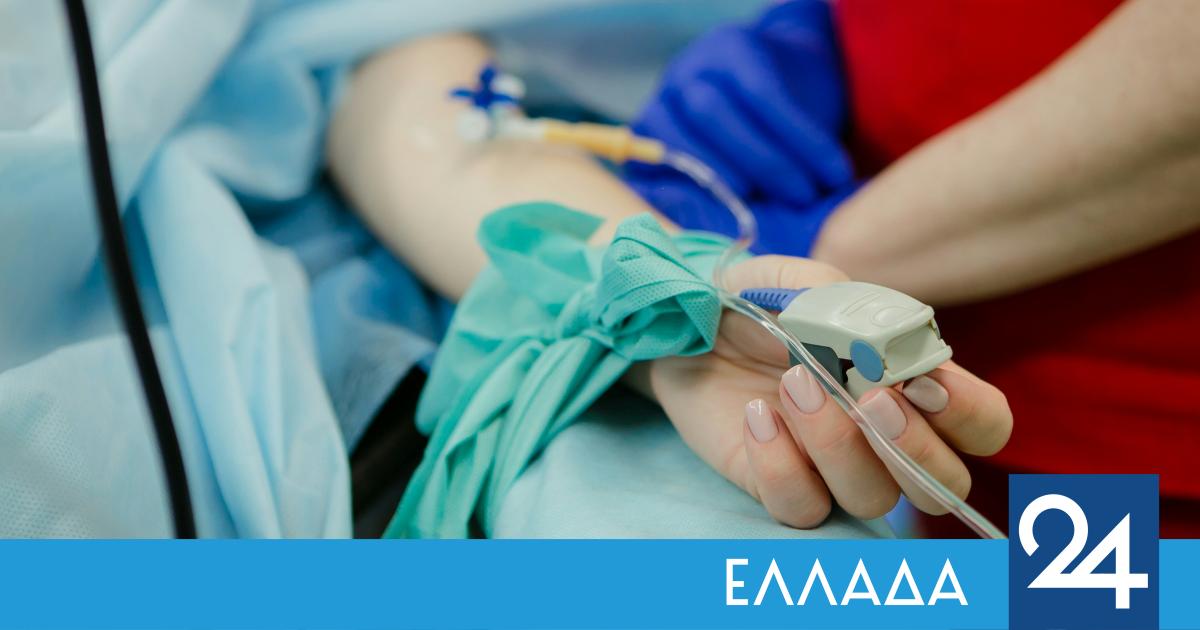
This is an innovative model that aims at a more integrated and human approach to care, bringing health services closer to the patient, says Mr. The study has been published in the scientific journal “Palliative Care Report”, in collaboration with scientists from Yale and Northwestern in Chicago, and has received very positive feedback. As principal investigator of the study, Mr Babalis explains that much evidence has been drawn from international models of home care, which are already being successfully implemented abroad. “However, the idea of having the ICU as the focus came from our passion for palliative care and from the knowledge we gained through international collaborations with American partners. We look forward with great interest to seeing how the model will be implemented in practice, especially in terms of costs, which we estimate will be very low. But this will be assessed through the six-month pilot programme. Importantly, we are talking about organised, scheduled home visits, where telemedicine tools are also used. For example, we have equipment that allows the transmission of vital signs and cardiograms to a central monitoring system, so that the doctor and the nursing team have a continuous overview of the patient’s condition. At the same time, there is also specialised equipment, such as continuous analgesic infusion pumps, for heavy cases requiring palliative care. Experience shows that only a small percentage of these patients really need continuous hospital monitoring. Most can be safely supported at home with proper organisation and monitoring.”
Why Larissa is an ideal environment for piloting a new model
The distinguished emergency physician answers the question of how Larissa and Thessaly in general can become a centre of innovation in the field of health care: “Larissa has this potential on many levels. First of all, for many years now it has had the most rehabilitation beds in the country, unfortunately not public ones, and it has very good cooperation with the country’s nursing schools. It has a medical school, which is developing significantly, and a nursing school, which is also developing significantly and with which, as the General Hospital of Larissa, we have developed very close cooperation. At the same time, we found a substantial response in the person of the regional governor, Mr. Kouretas, who supported the initiative with passion from the very first moment. Indeed, there is already the intention to extend the programme, after its initial six-month operation, to other cities in Thessaly. There is, however, another important element: in Larissa the numbers of patients are more manageable than in Athens, which makes it an ideal environment for piloting a new model.”