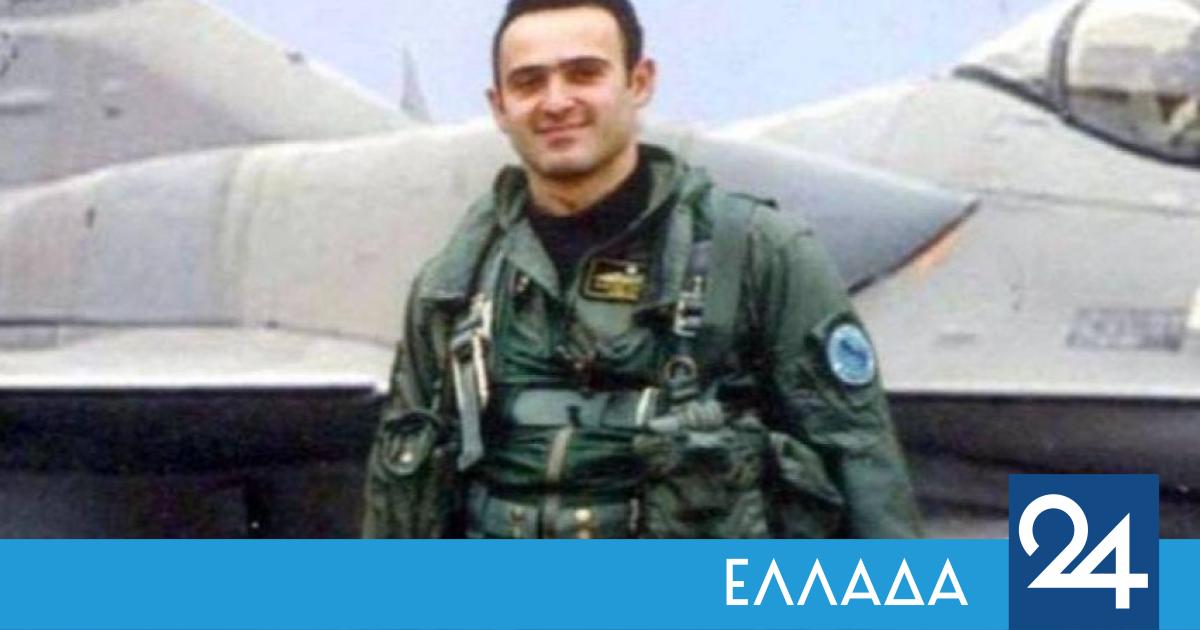
The calendar read 23 May 2006 when Captain Kostas Eliakis died in the line of duty. On that day 4 Greek F-16 fighter jets were ordered to take off from an airfield in Crete. Their objective was to identify and intercept 4 Turkish fighter aircraft, which were the escort of a Turkish Air Force RF-4 photographic aircraft.
The Turkish Rf-4 was to go to the coast of Crete to locate and photograph the locations where the Russian S-300 missile system had been deployed. A Turkish frigate was also in the same place. The Greek fighters approached the Turkish fighters and Captain Kostas Eliakis, approached the photographic aircraft on the order of the Headquarters of the Tactical Air Force in order to record its equipment.
At that moment the Turkish F-16 captain, without warning, made a dangerous maneuver and collided with the F-16 piloted by Kostas Eliakis. The fighter hit the canopy of the Greek F-16, resulting in the Greek captain’s instantaneous death. The Turkish captain was rescued as he used the ejection seat and fell into the sea.
Who was Kostas Eliakis
Kostas Eliakis, the fourth son of Ioannis and Irini Eliakis, was born in Chania, on August 15, 1970. He was the father of two children.
In 1989, he was accepted to the Icarian School, his only choice in the computerized form for participation in the national examinations. Four years later, he was sworn in as a second lieutenant and assigned to the 120 Air Training Wing (120 PEA) to complete his flight training with T2 aircraft.
Subsequently, he was assigned to the 115 AM, and more specifically to the 340 Bombardment Squadron (A-7 Corsair aircraft). During the aforementioned period, he attended the Tactical Weapons School (TOS), attended the Tactical Leadership Program and, combined with his skills and conscientiousness, became one of the most competent professionals in his field. As a result, in 2002 he was part of the core of 10 Airmen sent to the US for training on the new F-16 Block 52+.
In June 2003, he transferred to 340 Squadron, 115 BC, in his beloved “Fox” (that’s the squadron’s emblem) and gained experience intercepting with the new F-16 Block 52+, took part in planning and executing night operations, and became an airborne instructor.
.