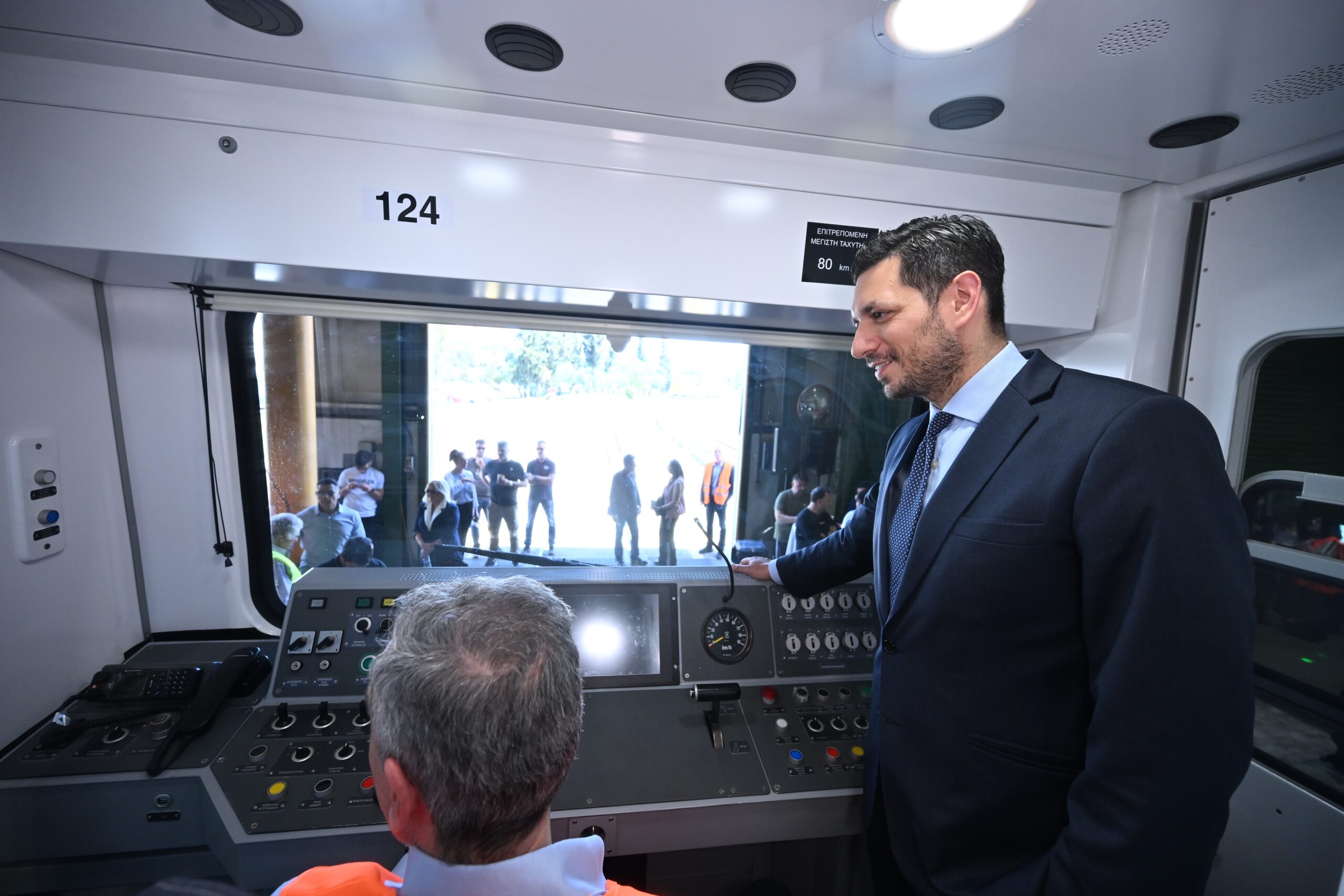
The historic Line 1 trains are entering a new era through a complete reconstruction program that is changing their overall capabilities and image. This was stated by the deputy transport minister from the depot in Sepolia, presenting the first reconstructed train which is due to enter service in the next few months, once the necessary tests have been completed.
“After more than 20 years, a fully rebuilt train returns to the tracks of Line 1, Athens’ most historic urban line. We are not talking about a simple refurbishment, but a complete mechanical reconstruction that essentially gives the HSTP a new train with another 25 years of life,” the deputy minister said
“With 14 rebuilt trains by 2027, our goal is to reduce the frequency of services from 8.5 minutes to 5 minutes for the first time in two decades. This means more reliable and denser public transport for people who use public transport every day.”
Kyranakis thanked the employees, engineers, the executives of STASY and OASA and all those who worked with perseverance and long hours to achieve today’s result. “This is a complex project that has been delayed for years, but today it is becoming a reality. We continue to work towards better and more reliable public transport for Athens,” he said.
The 14 trains of the 8th pickup, in service since the early 1980s, are now getting modern traction systems, air conditioning, new information systems and upgraded safety infrastructure, ensuring at least 25 more years of service.
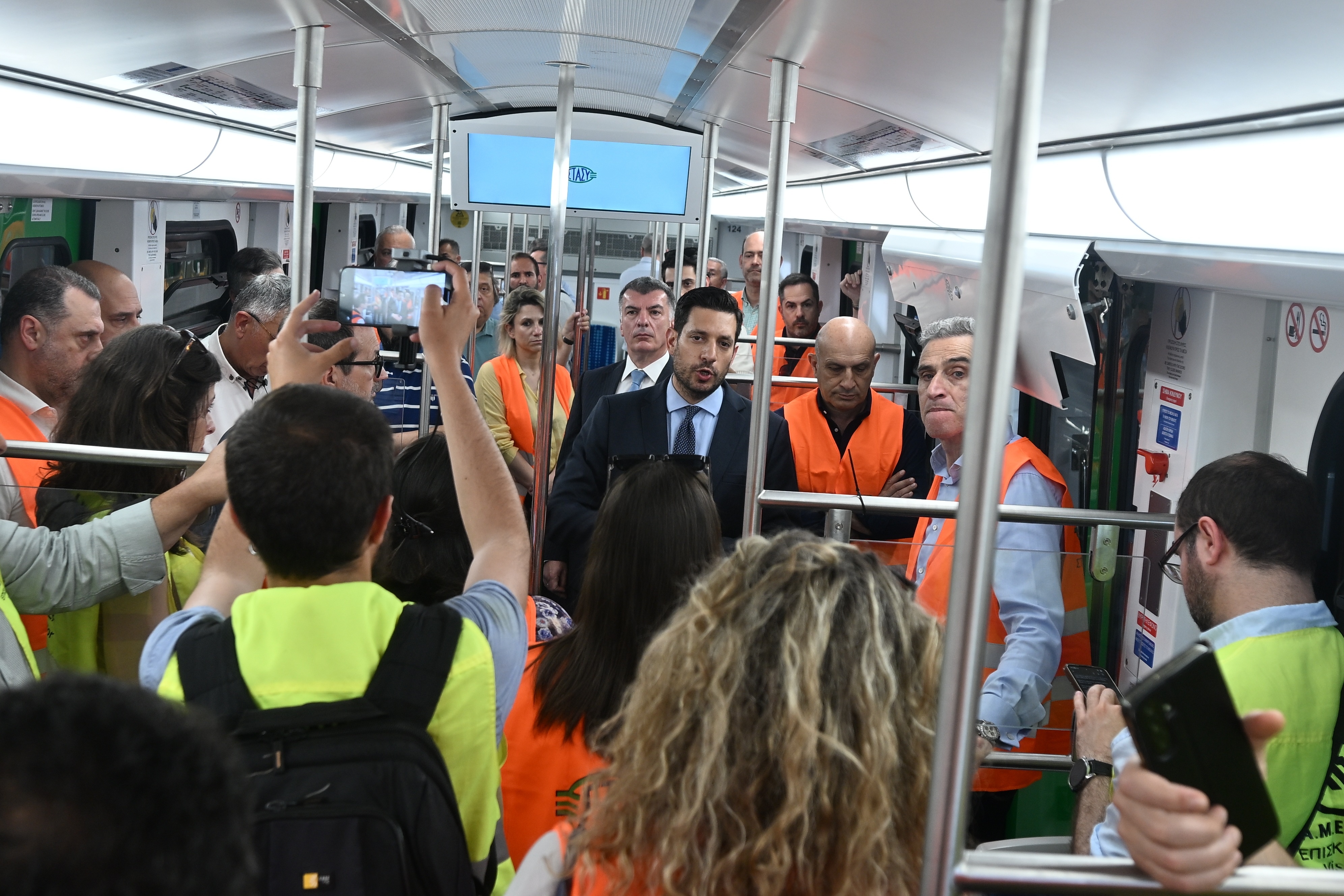
In practice, only the metal body (chassis) is retained from the old trains, while all other systems and equipment are completely replaced. Engines, electrical and pneumatic systems, air conditioning, interiors, lighting and passenger information systems are completely new. Essentially, the trains are moving from 1983 to 2026 with a new technological “heart”
.
These trains entered service between 1983 and 1985 and in recent years have faced increasing maintenance needs due to their age and difficulty in finding spare parts. Their refurbishment is expected to significantly enhance the availability and reliability of Line 1 services.
As announced, the first fully rebuilt train is scheduled to enter service in July 2026. By December 2026, three more will have joined, while the completion of the project for all 14 trains is timed for May 2027.
What’s changing on the trains
The upgrade includes extensive technological and operational interventions:
Replacement of the old DC motors with modern AC motors and a new traction system, aiming at higher reliability and lower energy consumption.
Complete modernization of the air compressors and electrical systems, including passenger doors and key operating mechanisms.
Upgrading the air conditioning system and improving the travel conditions for passengers.
Installation of closed circuit television (CCTV), new screens and passenger information systems.
Accessibility interventions for people with disabilities and safe wheelchair transport.
Complete interior renovation with new LED lighting, seating, flooring, windows and side panels.
Strengthening a hub network
Line 1 remains one of the most important transport axes in Athens, serving thousands of passengers every day. The reconstruction of the trains is expected to contribute substantially to improving reliability, comfort and overall quality of travel on a line with a special historical and transport footprint for the city.
The project is being implemented on behalf of STA.SY., with the Spanish company CAF as contractor, at the Volos facility, and is funded by the NSRF. The contract was signed in December 2022.
Something to upgrade the Metro
The intervention includes replacing outdated systems, adding air conditioning in passenger areas, new information and CCTV systems, as well as diagnostic technologies that enhance service reliability.
The first phase of the project involves 12 trains, with a budget of approximately €109 million and an estimated implementation period of 36 months. These are the only trains on the network that so far do not have air conditioning in the passenger compartments.