The Greek state has been confronted in the last six years with a sequence of crises that have tested its strength. From the pandemic to energy instability and inflationary pressures, and from natural disasters to constant turbulence in the international environment. In this complex context, the challenge was not simply to take measures, but to take them quickly, accurately targeted and effectively to reach citizens. From 2019 to date, Greece has not followed a linear path of digitisation. It took a leap forward, redesigning in practice the way public policy is conducted.
The central exponent of this transition has been the model of digital “passes” through the vouchers.gov.gr platform. Under the coordination of the Ministry of Digital Governance and Artificial Intelligence, a single, functional ecosystem of interventions based on the direct crediting of aid through intangible cards, the elimination of bureaucracy and the interconnection of public information systems was formed. The result was the creation of a mechanism that allows the state to respond in near real time.
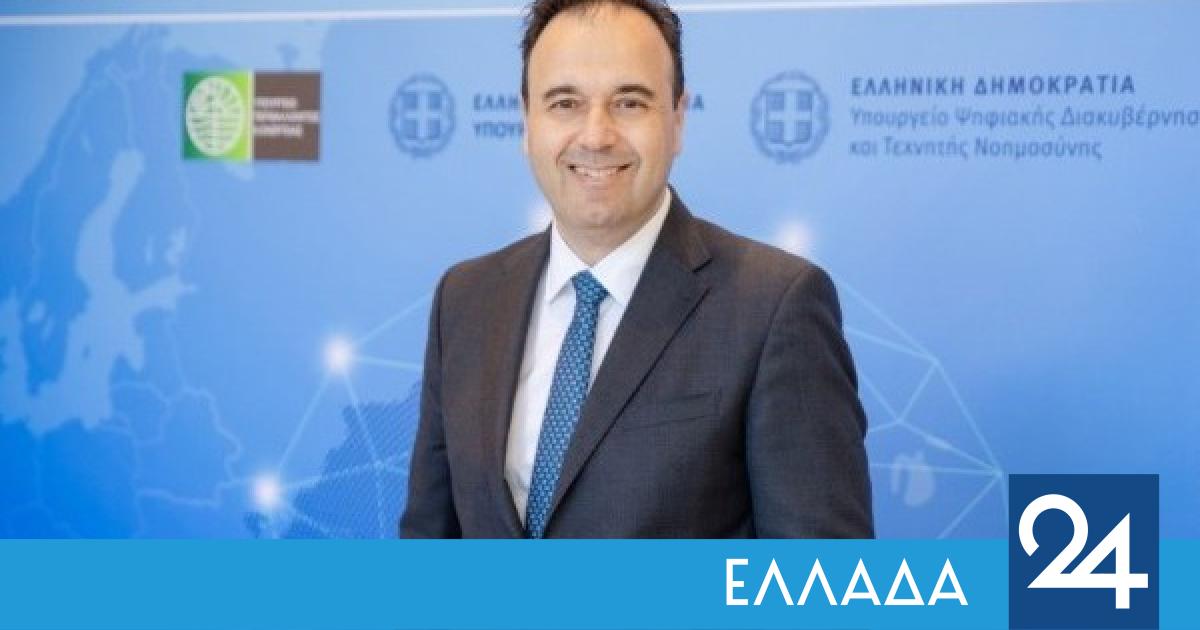
“The digital “passes” through the vouchers.gov.gr platform reflect a state that intervenes directly, targeted and transparently where there is a real need, using technology to get aid to citizens quickly and without bureaucracy. In recent years we have shown that the State can respond quickly and effectively, providing substantial support to society even in times of increased pressure. With modern digital tools, we have channelled significant resources accurately, reducing delays and enhancing citizens’ confidence. We are proceeding with the same approach, building a more functional and reliable state, which provides solutions in practice and is closer to the everyday life of citizens,” Minister of Digital Governance and Artificial Intelligence Dimitris Papastergiou told APE-MPA.
The figures of the many different digital “passes” clearly illustrate the scale of this intervention. Targeted and decisive, since the results show that Greece has created a functional example of digital governance that redefines the relationship between the State and the citizen. And this, beyond the individual amounts and beneficiaries, constitutes the most substantial footprint of its digital transformation.
In detail:
During the 2022 energy crisis, Fuel Pass 1 and 2 covered 5,232,156 beneficiaries, with a total aid amount of €594,982,194. During the same period, the Power Pass supported 2,029,912 citizens with 293,575,366 euros. In total, these two tools alone injected more than €888 million into the economy in a matter of months, with procedures completed digitally in a matter of months.
.
The intervention continued in 2023 with Market Pass, which became one of the most massive direct aid programs. In three cycles, the total amount reached €771,344,963. In the first cycle alone, 2,840,935 citizens received aid amounting to 491,895,233 euros, followed by the second cycle with 244,597,566 euros and the third with 34,852,164 euros. This was a programme that covered a very large percentage of Greek households, acting as a buffer against increases in basic goods.
During the pandemic, the Freedom Pass was a different kind of tool, with a strong social and symbolic character. A total of 555 824 young people took advantage of the programme, with aid amounting to 155 157 556 euros, while the complementary Freedom Pass/Data covered 102 587 beneficiaries with an additional 5 088 309 euros. The importance of these figures is not limited to the financial aspect, but extends to the participation of the young generation in the relaunch of social and economic activity.
The same logic has been applied to targeted development interventions. The “Tourism for All” programme registered 107,204 beneficiaries in 2024 with €17,376,205 and 106,101 beneficiaries in 2025 with an increased budget of €29,020,500, demonstrating the potential to boost domestic tourism demand. Similarly, the North Evia Pass supported areas affected by fires, with 6,550 beneficiaries in 2023 (€830,000) and 5,566 in 2025 (€834,900), while the Thessaly-Evros Pass covered 35.000 beneficiaries in 2024 (€4,450,000) and 11,328 in 2025 (€1,849,200), directing resources to areas at the epicentre of natural disasters.
Special emphasis is also being placed on the younger generation through the Youth Pass, which has seen steady growth in both beneficiaries and budget. In 2023, 139,728 young people were supported with 20,959,200 euros, in 2024 the number increased to 145,688 with 21,853,200 euros, while for 2025 the beneficiaries amount to 154,064 with a total support of 23,109,600 euros. This increase over time reflects not only the expansion of the programme, but also the steady investment in age groups linked to consumption, culture and mobility.
Even in the health sector, the model is proving to work. Dentist Pass 2023 covered 245,652 beneficiaries with a total amount of €5,793,692, confirming that digital targeting can be effectively applied to specific social needs as well.
When the above figures are added up, it shows that billions of euros have been channelled through digital tools in just a few years, with tens of millions of “digital transactions” between the state and citizens. The critical element, however, is not only the financial footprint, but the speed of execution: applications completed in minutes, approvals automated and aid credited almost instantly.
The “passes” model captures a deeper shift. The state ceases to operate ex post and gains the ability to intervene proactively and directly. Technology is no longer a supporting tool, but the main mechanism of policy making. Transparency is enhanced as every transaction is recorded, and targeting is improved through the use of data.
The continuation and expansion of these programs, with new cycles and planned interventions such as the next Fuel Pass and the Chios-Kythira Pass 2026 currently being planned, shows that this model is not a temporary option. It has now been consolidated as a modern public policy tool.
.